

Smartwatches · Fitness Trackers · Smart Rings · Health Sensors
Wearable App Development Company
AppMatic Tech is a wearable app development company in Ahmedabad, India, building iOS and Android companion apps for smartwatches, fitness trackers, smart rings, and health sensors with BLE, Apple HealthKit, Health Connect, and the Google Health API, using Swift, Kotlin, Flutter, and Laravel. AppMatic Tech has shipped six BLE device integrations among 330+ products.
What Wearable Experience Does AppMatic Tech Bring?
The work is the software around the device: BLE companion apps, health platform sync, and back ends, proven on six shipped device integrations.
- 6
- BLE device integrations shipped across medical, consumer, and vehicle hardware
- 1M+
- Scans logged by the SENS BLE contactless scanner
- 330+
- Products shipped since 2017
- 5.0
- Clutch rating across 11 verified reviews
The software around the wearable
What Wearable Software Does AppMatic Tech Build?
- 01
Companion
iOS and Android Companion Apps for Wearables
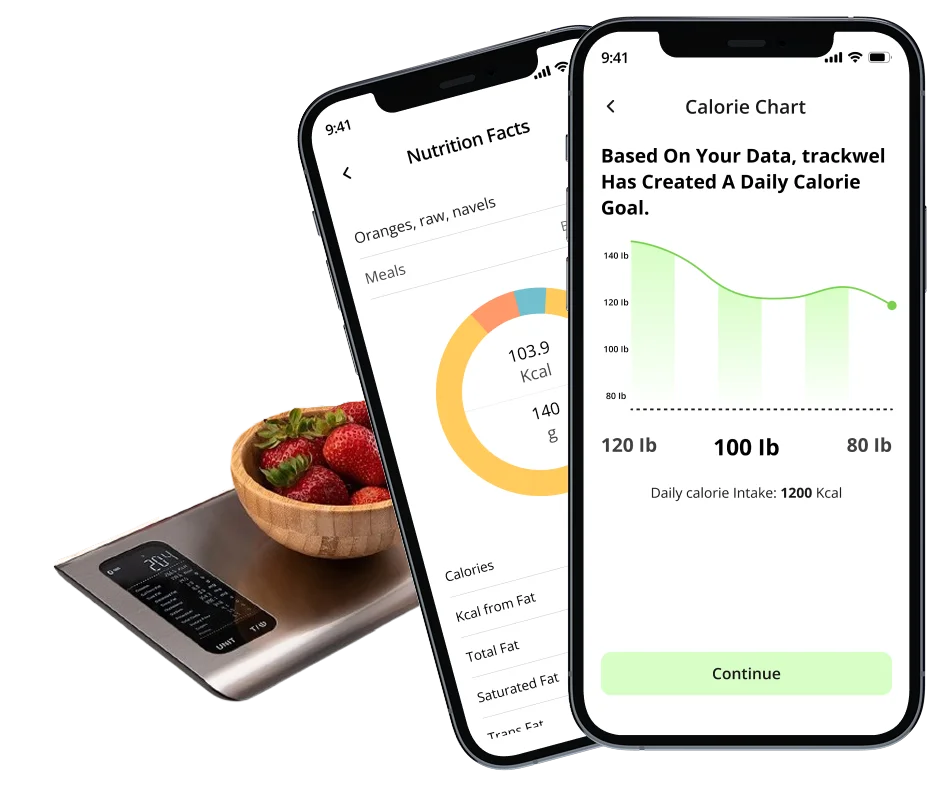
AppMatic Tech builds native Swift, native Kotlin, and Flutter companion apps that pair with wearables over Bluetooth Low Energy, store every reading on the phone first, and sync to a Laravel or Node.js back end. Trackwel shipped with zero app-side BLE errors.
Mobile app development → - 02
Health Data
Apple HealthKit, Health Connect, and Google Health API Sync
AppMatic Tech reads and writes data through Apple HealthKit on iOS and Health Connect on Android, and uses the Google Health API for cloud access to Fitbit and Google devices, with granular per-data-type permissions and no double counting of the app's own data.
Wearable companion app guide → - 03
Sensors
BLE Sensor Integration and Signal Quality
AppMatic Tech implements BLE GATT read, write, and notification flows for standard profiles such as Heart Rate and for proprietary protocols, queues every operation, treats disconnection as normal, and flags low-quality optical sensor readings instead of charting those readings as real data.
BLE cost and timeline guide → - 04
Vendor SDKs
Garmin and Vendor SDK Integrations
AppMatic Tech connects companion apps and back ends to Garmin and other vendor SDKs and cloud APIs where the vendor's developer programme grants access, so one app can show data from several device brands in a single timeline.
IoT application development → - 05
AI Coach
AI Coaching and MCP Servers on Wearable Data
AppMatic Tech adds AI insights, plain-language coaching, and custom MCP servers on top of wearable data, so assistants such as Claude and ChatGPT can query trends with permissioned access and audit logging.
AI engineering services →
Which Wearable Device Types Does AppMatic Tech Build Apps For?
Any Bluetooth Low Energy wearable needs a companion app, and the device type changes what the app must handle: sync windows, sensor quality, battery limits, and how much of the experience lives on a screen.
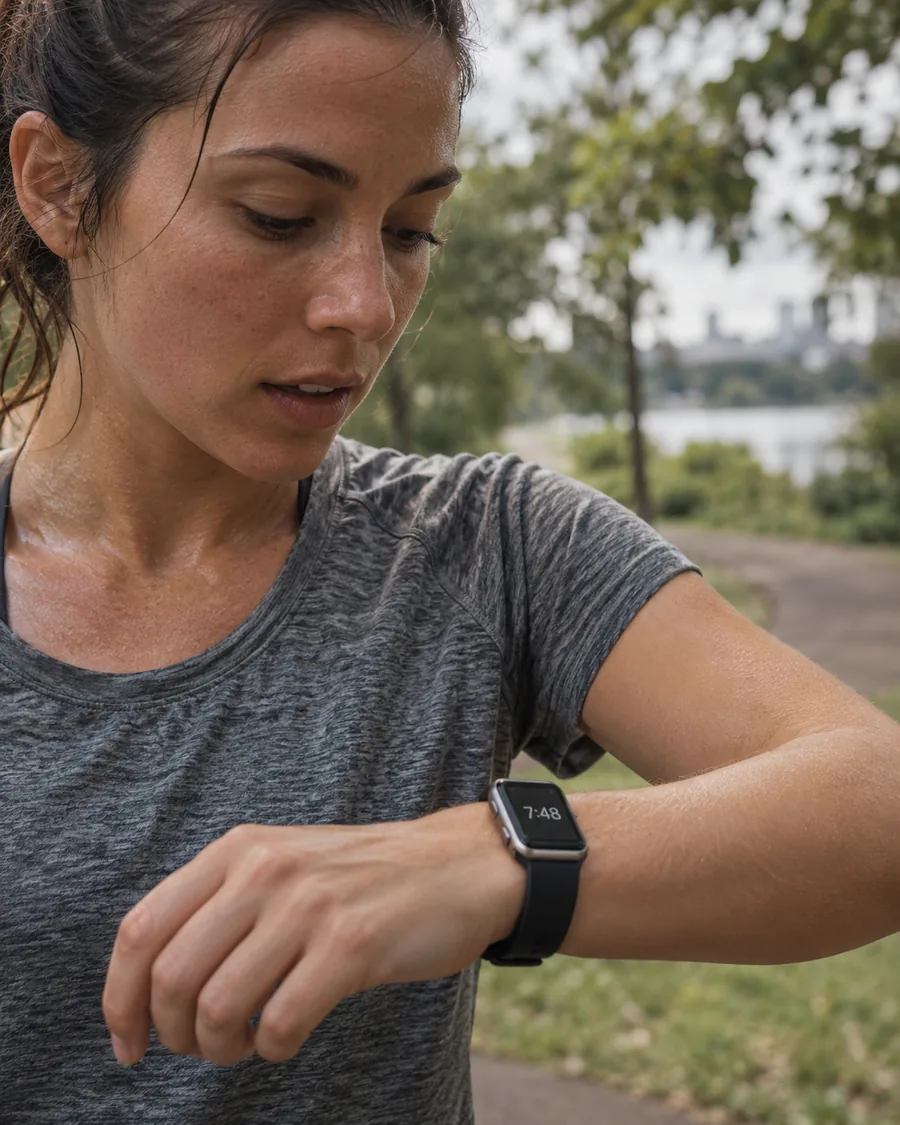
Smartwatches
Apple Watch data reaches the iPhone app through HealthKit, and Wear OS and Samsung Galaxy Watch data reaches the Android app through Health Connect.
How companion apps work →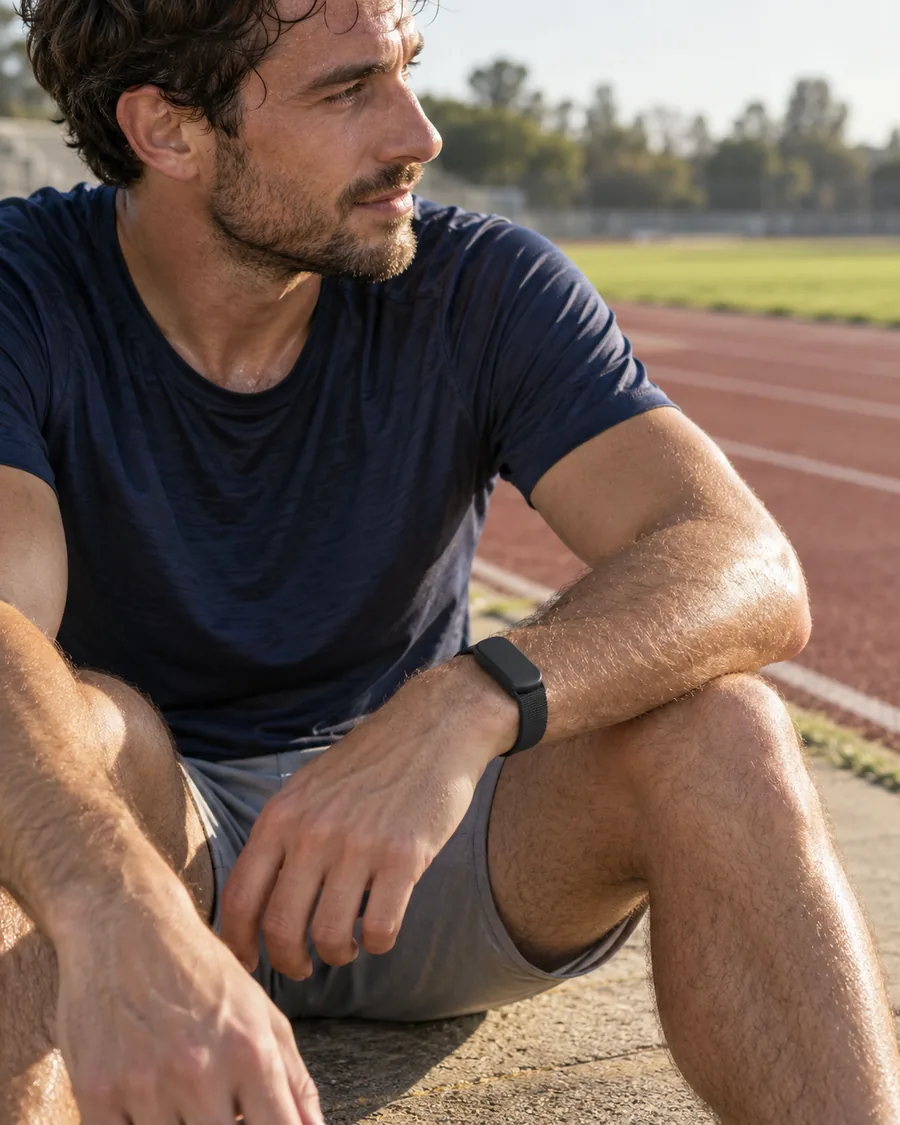
Fitness Trackers and Bands
Activity, heart rate, and sleep from BLE trackers, with Fitbit data reached through the Google Health API after the 2026 Fitbit Web API deprecation.
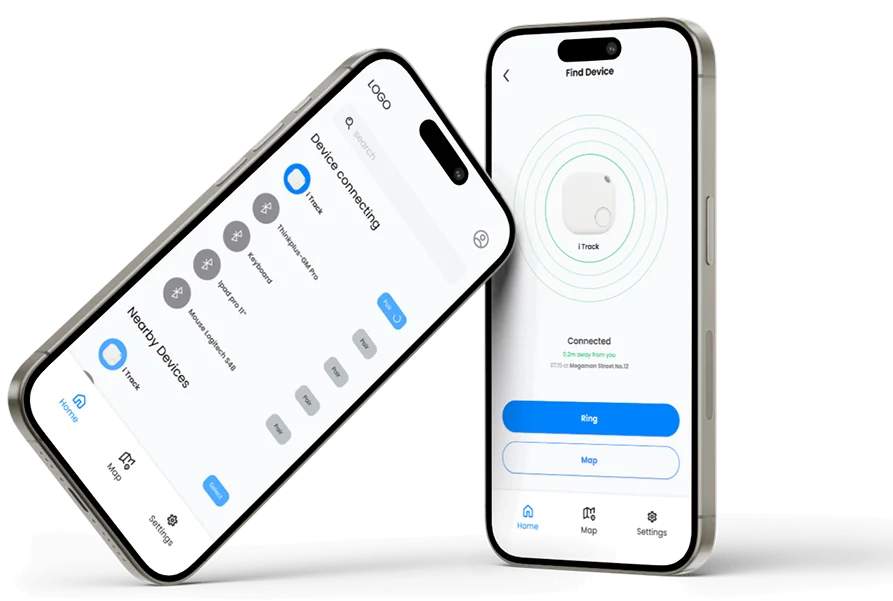
BLE Tag Tracker case study →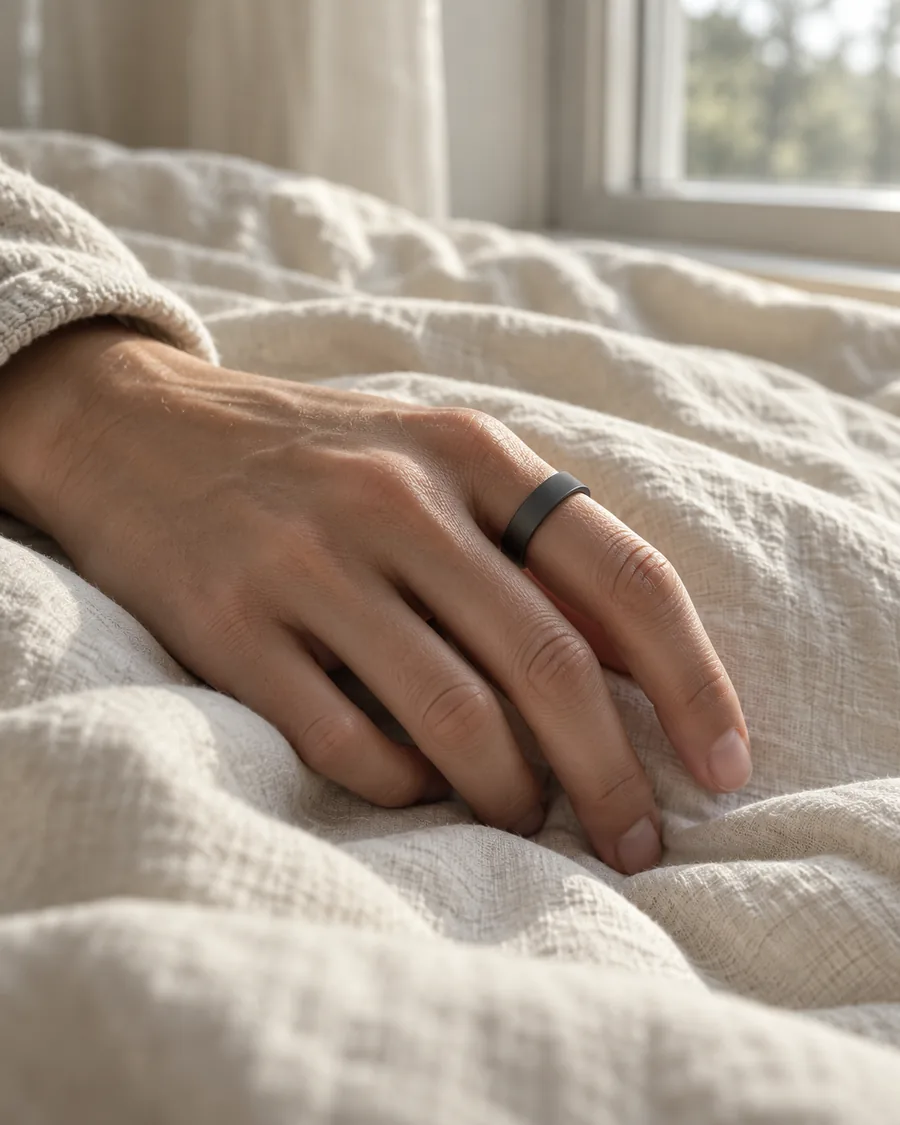
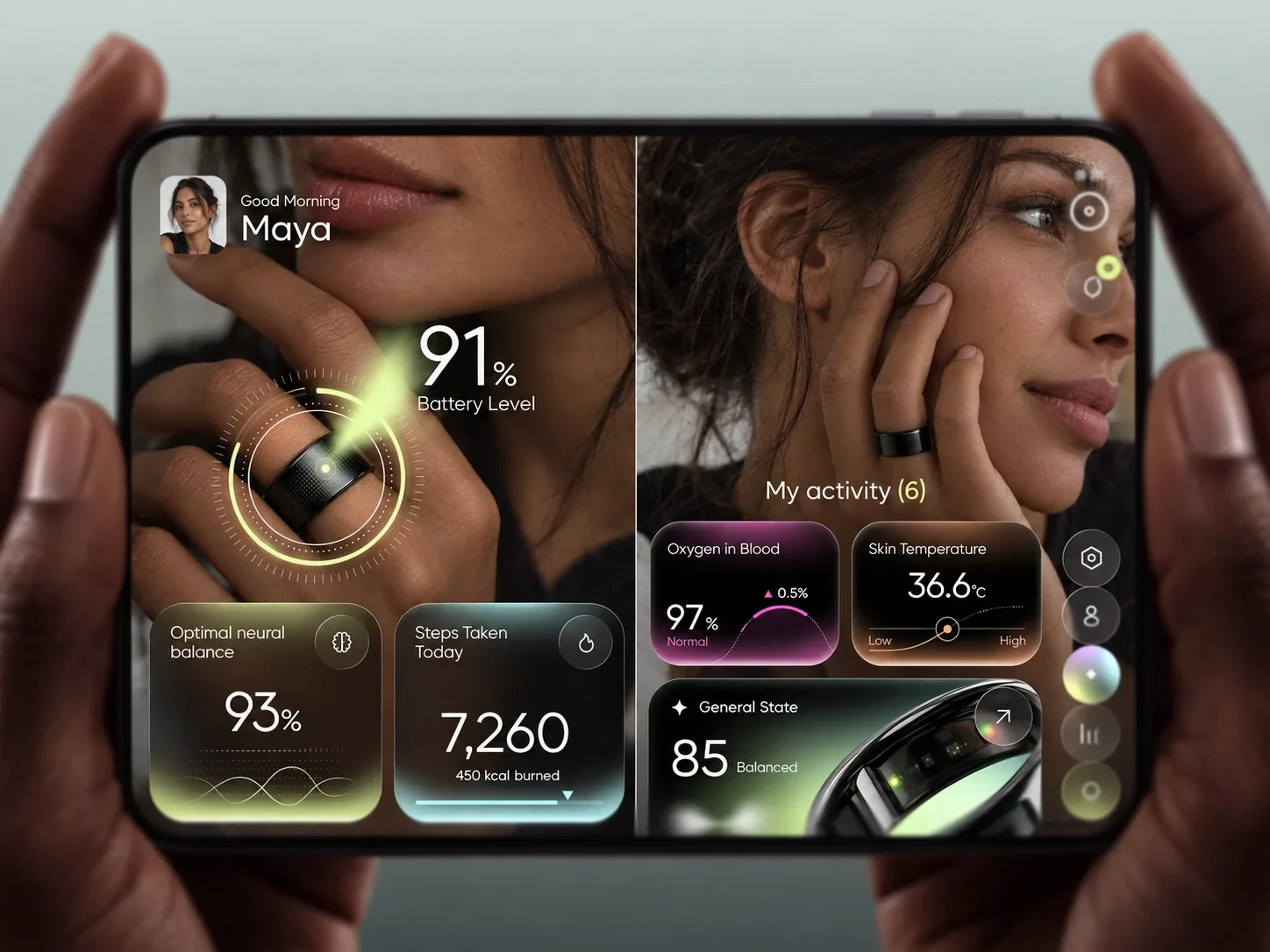
Smart Rings
Small batteries and short sync windows make store-before-send storage and background-safe BLE essential for smart ring companion apps.
What breaks in BLE apps →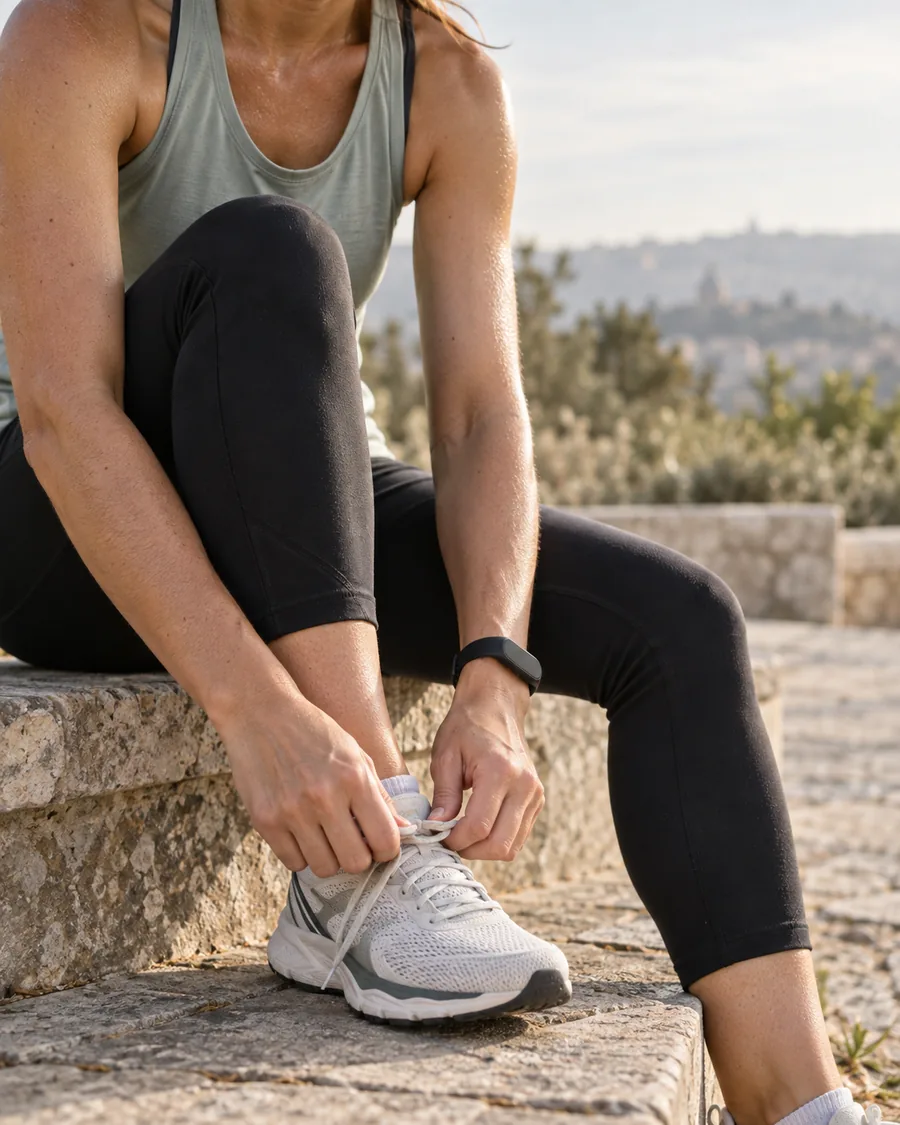
Screenless Trackers
Devices such as the Google Fitbit Air have no display, so the companion app is the whole product experience and pairing or data gaps read as a broken device.
Why the app is the product →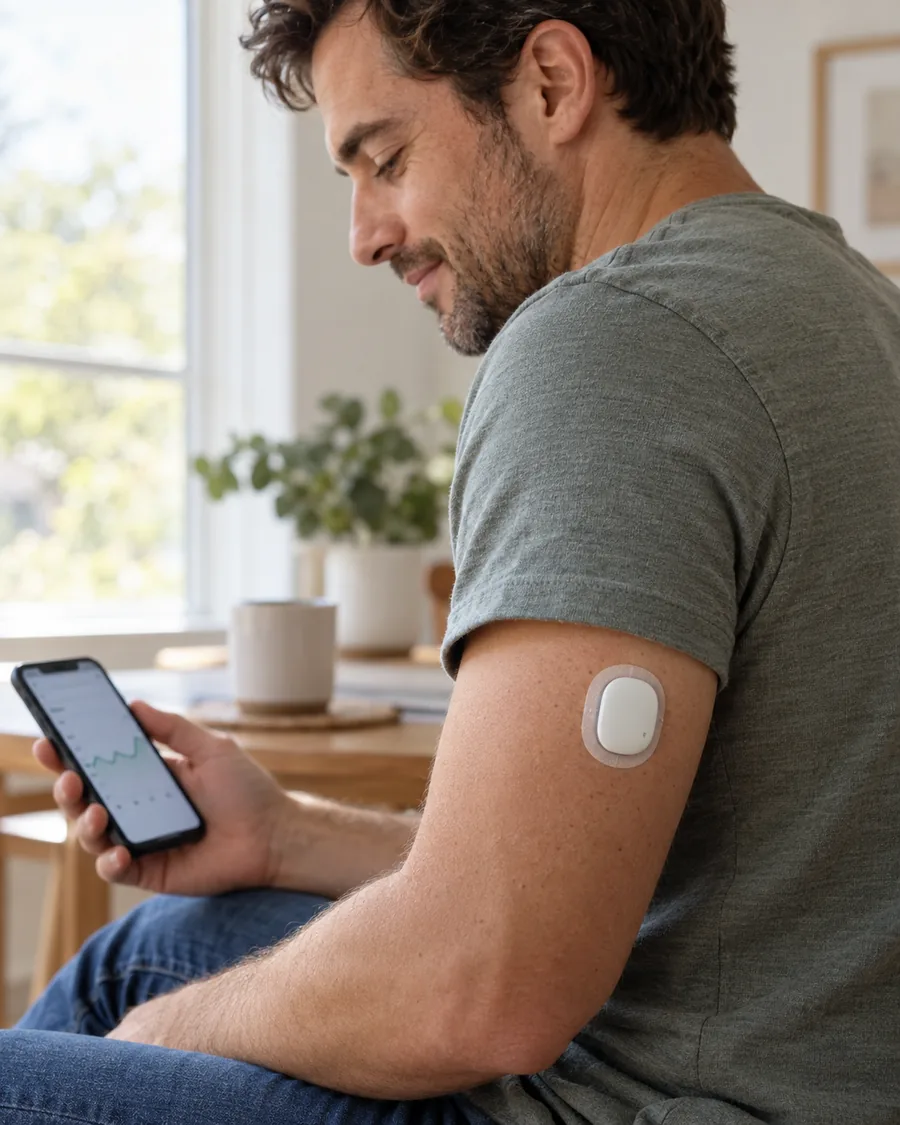
Health and Medical Sensors
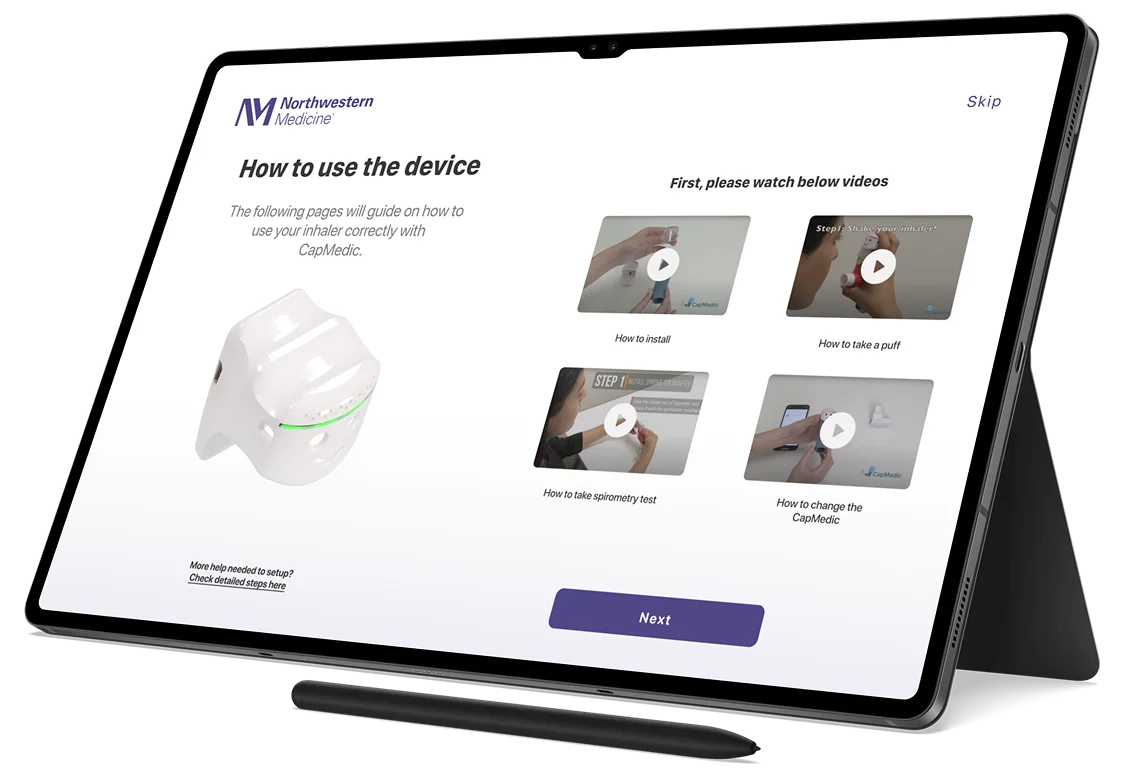
EYVA reads six non-invasive vitals over BLE, and the Capmedic spirometry app runs at Northwestern Medicine.
EYVA case study →
Which Wearables and Health Platforms Can a Companion App Connect To?
A companion app reaches a wearable through a platform health store, a vendor cloud API, a vendor SDK, or direct Bluetooth. AppMatic Tech names devices by the path that reaches their data, so each claim matches how the integration actually works.
| Device or platform | Integration path | Data typically exchanged | What to know |
|---|---|---|---|
| Apple Watch (via iPhone) | Apple HealthKit | Heart rate, workouts, sleep, steps | On-device store on iOS with per-data-type permissions. |
| Google Fitbit Air, Fitbit, and Pixel devices | Google Health API (cloud, OAuth 2.0) | Activity, heart rate, sleep | Replaces the Fitbit Web API deprecated in September 2026; users reconnect accounts. |
| Samsung Galaxy Watch and Wear OS | Health Connect on Android | Aggregated steps, heart rate, sleep | On-device store; replaces the Google Fit APIs supported only until the end of 2026. |
| Garmin | Garmin vendor SDK or cloud API | Activity and health data | Access depends on approval through Garmin's developer programme. |
| Standard BLE sensors such as heart-rate straps | BLE Heart Rate Profile | Live heart rate | Any compatible app can read the profile; no vendor SDK required. |
| Proprietary BLE devices | Custom GATT integration layer | Device-specific readings and commands | Protocol documentation decides schedule; Trackwel and EYVA used custom layers. |
Health Platform API, Vendor SDK, or Direct BLE: Which Integration Path Fits a Wearable App?
| Integration path | Runs | Data freshness | Best for | Watch-outs |
|---|---|---|---|---|
| Platform health store (HealthKit, Health Connect) | On the phone | After the wearable syncs to the phone | Combining several brands and the phone's own data | Granular permissions; avoid counting the app's own writes twice |
| Vendor cloud API (Google Health API, Garmin cloud APIs) | Server to server | After the vendor's cloud sync | Long history, web dashboards, coaching back ends | OAuth reconnection, programme approval, rate limits |
| Vendor SDK on the phone | On the phone | Near real time, per SDK | Brand-specific features and raw sensor access | Per-vendor terms; one SDK per brand to maintain |
| Direct BLE (GATT) | On the phone | Real time | Own hardware, clinical sensors, custom devices | Protocol documentation, background limits, reconnection logic |
Why Does the Companion App Decide Whether a Wearable Works?
Screenless wearables such as the Google Fitbit Air have no display, so the companion app is the only way a user experiences the product. A pairing failure or a gap in the data reads as a broken device, not a broken app.
Google's Fitbit Air accessory guidelines require bands to keep optical sensors unobstructed and maintain at least 35 mmHg of contact pressure during normal wear. The app is where low-quality signal is detected and flagged before it reaches a chart, a score, or a clinician.
Queue every operation
Concurrent reads and writes drop packets and commonly surface as GATT error 133 on Android. Each operation waits for acknowledgement.
Treat disconnection as normal
Users walk away from phones and wearables sleep to save battery, so silent reconnection belongs in the connection logic from day one.
Subscribe, do not poll
Notifications deliver new readings without draining battery on either side.
Design for the background
iOS and Android restrict background Bluetooth differently, so readings captured while the app is closed need platform-specific handling.
Store before sending
Every reading is written to the phone first and synced later, so nothing is lost when the network drops.
Which BLE Device Apps Has AppMatic Tech Shipped?
Six BLE integrations across six hardware classes are the nearest proof for wearable work: medical, consumer, and vehicle devices, each with a real protocol, real hardware, and a shipped app.
BLE device work · six non-invasive vitals
EYVA
Wellness monitor with BLE read and write commands
AppMatic Tech took over EYVA mid-development and delivered a production-ready iOS and Android MVP with BLE read and write for six-vital measurement in eight months.
Read the full case study ↗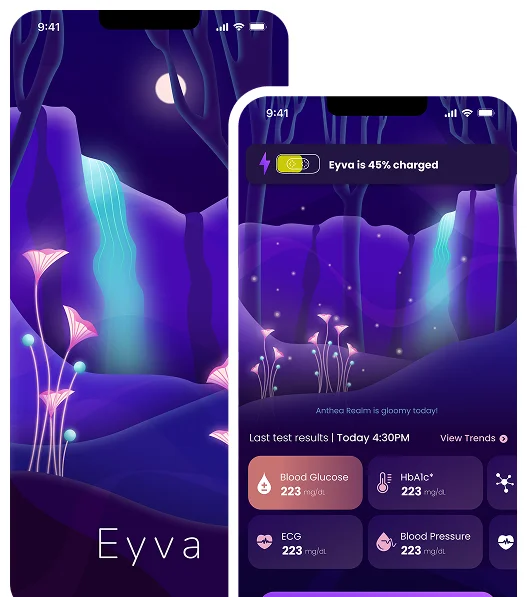

The Wearable App Roadmap: Six Phases From Audit to Support
Each phase ends with something a founder or product owner can inspect.
- Phase 01
Device and Data Audit
AppMatic Tech reviews the device protocol documentation, sensor list, data model, and target platforms, and confirms which health platforms and vendor APIs the product must reach.
- Phase 02
BLE Protocol Spike
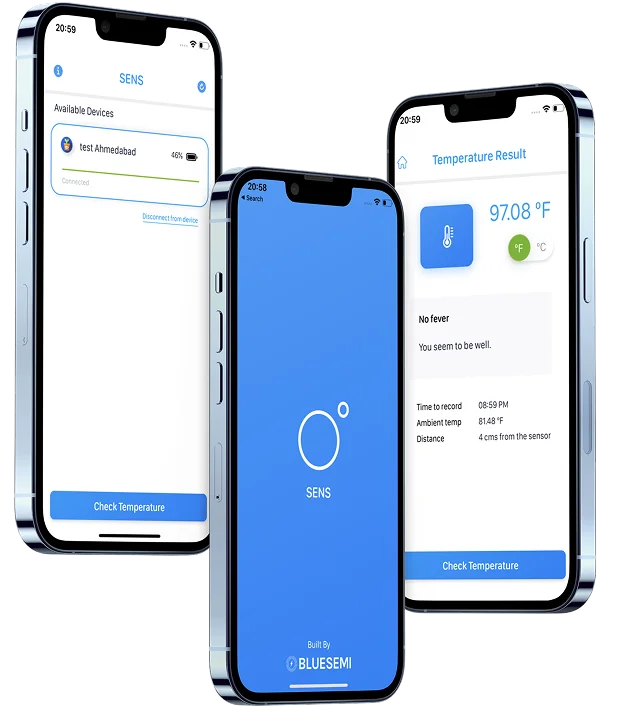
A short spike proves pairing, reads, writes, and notifications against real hardware, or against a simulator and a frozen command set when the device is not yet available, as on the SENS build.
- Phase 03
Architecture and Experience Design
A written Technical Architecture Document arrives within three business days of the scoping call, and Figma prototypes cover onboarding, pairing, live data, and failure states.
- Phase 04
Weekly Builds on Real Devices
A working build lands on a shared staging environment every week from Week 2, tested on physical wearables so founders review a live product.
- Phase 05
Device-Lab Testing and Release
Reconnection, background capture, interference, and permission flows are tested before App Store and Google Play release, including HealthKit and Health Connect permission reviews.
- Phase 06
90-Day Support and Firmware Flow
Bug fixes, monitoring, and minor configuration changes are covered for 90 days after production deployment, with a firmware update path planned into the back end.
What Does Wearable App Development Cost at AppMatic Tech?
Wearable app development at AppMatic Tech starts at $2,500+ for a Focused Sprint covering one defined deliverable. Full companion apps are priced after the Technical Architecture Document, because the device protocol, platform count, health platform sync, and back end set the scope. The cost and timeline guide breaks the six shipped BLE builds down in detail.
| Cost driver | Smaller scope | Larger scope | Why it matters |
|---|---|---|---|
| Device protocol | Documented standard profile, for example the BLE Tag Tracker in one month | Proprietary or changing protocol, for example EYVA over eight months with BLE read and write | Protocol maturity is the largest single cost variable. |
| Platforms and stack | One native platform | iOS, Android, Laravel back end, and React admin, as on Trackwel in ten weeks | Each added platform adds design, build, and test effort. |
| Health platform sync | None, data stays in the app | HealthKit, Health Connect, and Google Health API sync with migration from Fitbit Web API | Permissions, two-way sync, and account reconnection are scoped as additions. |
| Back end and analytics | Local-only storage | Real-time telemetry, admin dashboard, and analytics | History, accounts, and firmware delivery need a back end. |
| Regulated data | Consumer wellness product | Clinical use, as with the Capmedic app at Northwestern Medicine | Clinical logic and data handling add review cycles; see the healthcare hub. |
Wearable and BLE Engineering Insights
- Smart ringsRead more ↗
Smart Ring App Development: How to Build a Companion App for a Smart Ring Like Oura, Galaxy Ring, or Ultrahuman
- Fitbit AirRead more ↗
Fitbit Air App Development: How to Read Fitbit Air Data With the Google Health API
- WHOOPRead more ↗
WHOOP API Integration Guide: How to Build an App With WHOOP Recovery, Strain, and Sleep Data
- Screenless bandsRead more ↗
How to Build a Screenless Fitness Tracker App Like WHOOP or Fitbit Air
- Wearable APIsRead more ↗
Wearable Health Data APIs Compared (2026): Google Health API, WHOOP, Oura, Garmin, HealthKit, and Health Connect
- RegulationRead more ↗
When Does a Wearable App Become a Medical Device? FDA, UK MHRA, and EU MDR Rules for Fitness Tracker Apps in 2026
- IndiaRead more ↗
Wearable App Development in India (2026): Market Data, DPDP Rules, and Building for Android-First Users
- Saudi Arabia and UAERead more ↗
Wearable and Fitness App Development for Saudi Arabia and the UAE: Data Laws, Arabic UX, and Ramadan-Aware Health Features
- WearablesRead more ↗
Wearable Companion App Development: BLE, Health Data, and the 2026 Move to the Google Health API
- BLE costRead more ↗
BLE Mobile App Development: What It Costs and How Long It Takes, From 6 Shipped Device Integrations
- ProtocolsRead more ↗
BLE vs Wi-Fi vs MQTT: Choosing the Right Protocol for IoT Mobile App Integration
- ArchitectureRead more ↗
One App, Many Devices: How to Unify Different Device Protocols in a Single Mobile App
- HealthcareRead more ↗
Remote Patient Monitoring App Architecture: Telehealth Video, BLE Device Pairing, and the Engineering Decisions That Define Clinical Reliability
- ScaleRead more ↗
How to Scale an IoT Platform from 100 to 100,000 Devices: Architecture Decisions That Compound Early
- Health dataRead more ↗
HealthKit vs Health Connect vs Google Health API: Which Health Data Platform a Wearable App Should Use
- Background syncRead more ↗
BLE Background Sync for Wearables on iOS and Android: State Restoration, Foreground Services, and Why Readings Go Missing
Related AppMatic Tech industry pages: healthcare app development for clinical monitoring, sports and fitness technology for training and athlete apps, automotive software development for BLE vehicle control, and wearable and IoT development for connected hardware.

Frequently Asked Questions: Wearable App Development
What does wearable app development involve?


Wearable app development builds the companion app and services around a wearable: Bluetooth Low Energy pairing and sensor reads, local storage and sync, sharing data with Apple HealthKit, Health Connect, or the Google Health API, insights for the user, and a back end for history, accounts, and firmware updates. AppMatic Tech delivers all five layers on Swift, Kotlin, Flutter, and Laravel.
How much does wearable app development cost at AppMatic Tech?
AppMatic Tech engagements start at $2,500+ for a Focused Sprint covering one defined deliverable, such as a BLE pairing module. Full companion apps are scoped after a Technical Architecture Document, because the device protocol, platform count, health platform sync, and back end set the price. The documented stability of the device protocol is the largest single cost variable.
How long does a wearable companion app take to build?
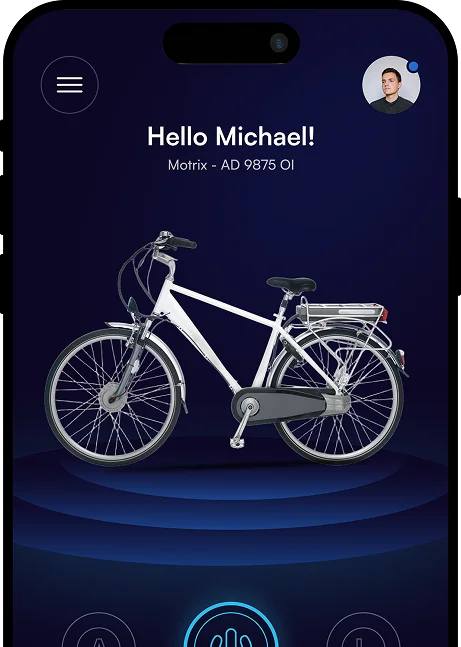
Six shipped BLE builds at AppMatic Tech ranged from one month for the BLE Tag Tracker, two months for the Capmedic asthma controller, three months for SENS, and ten weeks for Trackwel, to eight months for EYVA and the e-bike companion app. Protocol maturity and the condition of any inherited codebase predict timeline better than the hardware class.
Can a wearable app integrate with Apple Health, Fitbit, or Garmin?
Yes. A companion app reads and writes Apple Watch and iPhone data through Apple HealthKit, reads Android and Wear OS data through Health Connect, and reaches Fitbit and Pixel data through the Google Health API, which replaces the Fitbit Web API being deprecated in September 2026. Garmin data is reached through Garmin's vendor SDKs and cloud APIs, where Garmin's developer programme grants access.
What changed for Fitbit and Google Fit apps in 2026?
Google's Fitbit developer site states that the legacy Fitbit Web API is being deprecated in September 2026, and Google's Android documentation states that the Google Fit APIs are supported only until the end of 2026. Apps move cloud integrations to the Google Health API and mobile reading to Health Connect, and plan for users to reconnect Google accounts. Google announced the screenless Fitbit Air in May 2026.
Does AppMatic Tech build apps for screenless trackers and smart rings?
AppMatic Tech builds companion apps for any Bluetooth Low Energy wearable, including screenless trackers such as the Google Fitbit Air, smart rings, fitness bands, smartwatches, and clinical sensors. A screenless wearable has no display, so the companion app is the whole product experience, and pairing failures or data gaps read as a broken device.
How does AppMatic Tech keep wearable BLE connections reliable?
AppMatic Tech applies five rules on every BLE build: queue every operation to avoid GATT error 133, treat disconnection as normal with silent reconnection, subscribe to notifications instead of polling, design for iOS and Android background limits, and store every reading on the phone before syncing. Trackwel shipped with zero app-side BLE errors.
Can a wearable app be built without the physical device?
Yes, when the command set is documented and frozen. AppMatic Tech built the SENS contactless scanner platform in three months with no physical device access, and the app later logged more than one million scans at Hyderabad railways. Final testing on real hardware in the target environment is still scheduled before release.
Can AppMatic Tech add AI to wearable data?
AppMatic Tech adds AI insights, plain-language coaching, and custom MCP servers on top of wearable data, so assistants such as Claude and ChatGPT can query trends with permissioned access and audit logging. Medical-grade products need extra care where readings feed clinical decisions, covered in the remote patient monitoring architecture guide.
Where is AppMatic Tech based and how large is the team?
AppMatic Tech is based at 605 Ishan Square, GIDC Bhat, Ahmedabad, Gujarat, India. The engineering team has 10 to 49 engineers, has shipped 330+ products since 2017, has delivered six BLE device integrations, retains 83% of clients, and holds a 5.0 Clutch rating across 11 verified reviews.
Start a Wearable App Project With AppMatic Tech
All projects begin with a scoping call and a written architecture. Contact the team at contact@appmatictech.com, or see the broader wearable and IoT practice.
Start a Wearable Project ↗