


Automotive Technology Hub
Automotive Software Development Company
AppMatic Tech engineers automotive software in Ahmedabad, India: connected-vehicle telematics apps, Android Automotive OS infotainment, dealer and service platforms, and EV charging apps, using Kotlin, Swift, Flutter, Node.js, PostgreSQL, MQTT, and MCP servers. AppMatic Tech has shipped 330+ products since 2017 with 83% client retention.
- 330+
- Products shipped since 2017
- 83%
- Client retention
- 5.0
- Clutch rating, 11 reviews
The power of automotive software
What Automotive Software Does AppMatic Tech Build?
- 01
Telematics
Connected-Vehicle Telematics Apps
AppMatic Tech builds Flutter, Kotlin, and Swift apps that read vehicle and tracker data over BLE and MQTT, store time-series telemetry in PostgreSQL, and push trip, battery, and fault alerts through Firebase Cloud Messaging.
IoT application development → - 02
Infotainment
Android Automotive OS Apps
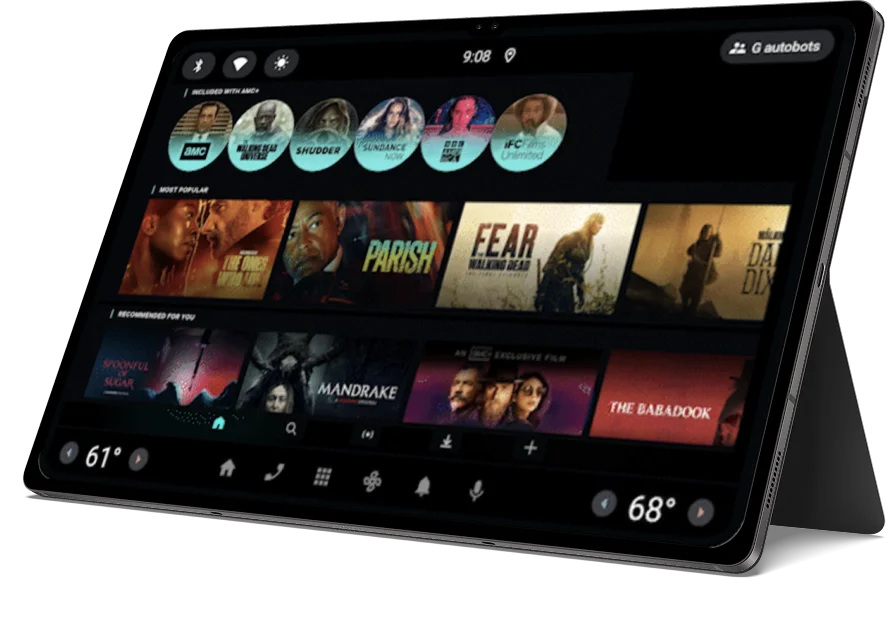
AppMatic Tech engineers in-car media and navigation apps in Kotlin with the Android for Cars App Library, shaped to driver distraction guidelines. An AAOS app for a 100M+ potential-user FM platform shipped in two months.
Read the AAOS case study → - 03
Dealership
Dealer, DMS, and Service-Booking Platforms
AppMatic Tech delivers inventory, lead capture, test-drive scheduling, and service-booking platforms on Laravel and Node.js with PostgreSQL, wired into DMS and CRM systems through an MCP server layer.
Custom SaaS and web apps → - 04
Charging
EV Charging and Fleet Apps
AppMatic Tech builds charger-discovery maps, session tracking, and fleet dashboards on OCPP-connected back ends, with an AI layer that answers uptime, energy, and driver questions from live data.
Add AI to an EV charging app → - 05
AI Agents
MCP Servers for Dealerships, Fleets, and Vehicle Data
AppMatic Tech develops custom MCP servers for car dealerships and fleets that give ChatGPT, Claude, and GPT-4 class assistants permissioned access to live inventory, VIN data, service availability, and parts catalogs, with audit logging on every tool call.
MCP server development →
Which Automotive Services Does AppMatic Tech Offer?
AppMatic Tech combines mobile engineering, IoT firmware integration, and AI-agent infrastructure in one Ahmedabad-based team, so the vehicle app, the device layer, and the data layer ship together.



- 330+
- Products shipped across mobile, IoT, and SaaS
Vehicle apps built end to end
AppMatic Tech covers UI/UX design, native and cross-platform builds, BLE and MQTT device layers, and PostgreSQL back ends for automotive products.
- 83%
- Client retention
- 5.0
- Clutch rating across 11 verified reviews
Mobile App Development
Native iOS in Swift, Android in Kotlin, and cross-platform apps in Flutter and React Native for drivers, owners, and fleets.
IoT Application Development
BLE pairing, MQTT pipelines, OTA firmware flows, and device dashboards for trackers, e-bikes, and in-vehicle hardware.
MCP Server Development
Permissioned AI access to vehicle, dealer, and service data through custom Model Context Protocol servers.
Custom SaaS and Web Apps
Dealer portals, fleet consoles, and workshop management systems on Laravel, Node.js, and PostgreSQL.
Where Does Custom Automotive Software Create the Most Value?

Dealer and Showroom Platforms
AppMatic Tech builds inventory search, financing pre-qualification, test-drive booking, and service-reminder apps that read from DMS and CRM data and keep sales staff and customers on the same record.
- Inventory sync from DMS exports and APIs
- Lead routing into CRM with source tracking
- Service reminders by push, SMS, and email

Performance and Enthusiast Apps
AppMatic Tech develops drive-logging, lap-timing, and vehicle-control companion apps that stream live signals over BLE, map routes with Mapbox, and store session history for later analysis.
- BLE command read and write for vehicle control
- GPS route capture with Mapbox rendering
- Session history and shareable trip summaries
Trusted by product teams
Which Automotive and Vehicle Projects Has AppMatic Tech Shipped?
330+ products shipped since 2017, 83% client retention, and a 5.0 Clutch rating across 11 verified reviews.

Why Do Automotive Teams Choose AppMatic Tech for Software Development?
AppMatic Tech pairs shipped in-car, BLE, and EV experience with AI-native engineering, so connected-vehicle products reach production with telemetry, compliance, and AI access designed in from the first sprint.
- In-car delivery speed
- An Android Automotive OS app reached release in two months against a festive-season deadline.
- Device to cloud, one team
- BLE firmware integration, mobile apps, and PostgreSQL back ends are built by the same engineers.
- AI-native by default
- MCP servers connect Claude and GPT-4 class models to vehicle data under audit logging.
What Automotive Software Challenges Does AppMatic Tech Solve?
Unreliable vehicle data capture
BLE links drop, CAN and OBD-II payloads vary by model, and phones background apps. AppMatic Tech designs reconnect logic, local buffering, and idempotent sync so telemetry survives tunnels and dead zones.
Driver distraction compliance
In-car screens must follow strict interaction limits. AppMatic Tech builds AAOS and Android Auto UIs with templated layouts, large touch targets, and voice-first flows that pass review.
Fragmented DMS and CRM data
Inventory, leads, and service history sit in separate systems. AppMatic Tech unifies the records behind one API and exposes the result to staff and AI assistants through MCP.
Over-the-air update risk
A failed firmware push can strand a device. AppMatic Tech implements BLE DFU with signature checks, resumable transfers, and rollback so updates stay recoverable.
Charging network interoperability
Stations speak different OCPP versions and vendor quirks. AppMatic Tech normalises station events into one data model for apps, billing, and uptime reporting.
Location and driving-data privacy
Trip history is personal data. AppMatic Tech applies GDPR and CCPA-aligned consent, field-level encryption, and retention limits to location and driving records.
How Does AppMatic Tech Build Automotive Software? The Delivery Roadmap
AppMatic Tech follows a five-phase process that moves from a vehicle-data audit to monitored production, with working builds on real devices at every sprint.
- PHASE 01
Discovery and Vehicle-Data Audit
AppMatic Tech maps every data source, from BLE peripherals and OBD-II adapters to DMS exports and OCPP stations, and defines success metrics, target platforms, and compliance scope.
- PHASE 02
Architecture and UX Design
The Engineering Team selects the stack, such as Kotlin for AAOS or Flutter for cross-platform, drafts the API and event model, and prototypes the driver, owner, and dealer flows in Figma.
- PHASE 03
Iterative Sprint Builds
Features ship in short sprints with demos on real devices. Back ends run on Node.js or Laravel with PostgreSQL, and every integration is exercised against live or simulated vehicle data.
- PHASE 04
Testing and Compliance Review
Device-in-the-loop BLE tests, AAOS emulator runs, load tests on telemetry ingestion, and privacy reviews run before release candidates are cut.
- PHASE 05
Launch, Monitoring, and Support
AppMatic Tech handles store submission, staged rollouts, crash and telemetry monitoring, and post-launch iterations with the same engineers who built the product.
How Can AppMatic Tech Scope the First Automotive Sprint?
AppMatic Tech turns vehicle, dealer, and charging data into production apps and AI-ready back ends. Book a technical consultation to scope the first sprint.
Book a Consultation ↗
What Do AppMatic Tech Automotive Builds Look Like?
Reference design
Service Booking App
Car-care booking: service catalog, history, purchase details, and chat
This reference design shows the screens and services AppMatic Tech uses for a car-care booking product: a catalog of services, recent-service history, a booking and purchase detail view, and in-app chat. The client apps run on Flutter or native Swift and Kotlin, backed by Laravel REST APIs, PostgreSQL, Socket.io for chat, and Firebase Cloud Messaging for reminders.
Mobile app development ↗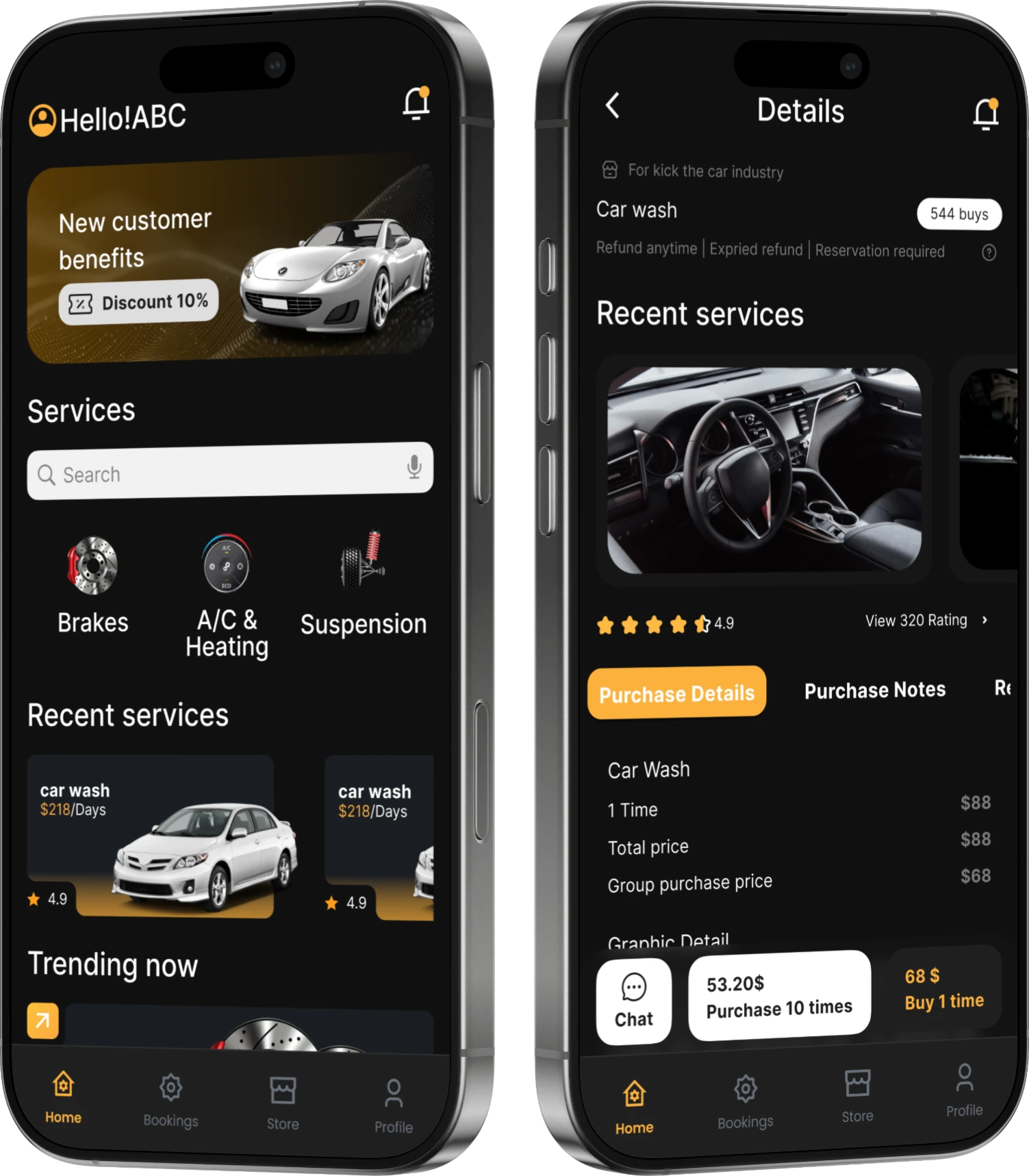
What Does Automotive App Development Cost at AppMatic Tech?
Automotive app development at AppMatic Tech starts at $2,500+ for a Focused Sprint and $5,000+ for a Platform MVP and above. Cost scales with the number of vehicle-data sources, platform targets, third-party integrations, and AI features.
| Engagement | Starting at | Typical automotive scope |
|---|---|---|
| Focused Sprint | $2,500+ | One bounded feature, such as a BLE pairing module, a dealer lead form with CRM sync, a charger-map prototype, or an MCP server tool for one vehicle-data source. |
| Platform MVP | $5,000+ | A launch-ready companion app, dealer portal, or service-booking product on one or two platforms, with a PostgreSQL back end and push notifications. |
| Full Platform | $5,000+ | Multi-service systems combining telematics ingestion, native apps, admin consoles, DMS or OCPP integrations, and an MCP server for AI access. Quoted per scope. |
Automotive and Connected-Vehicle Insights
- EV and FleetRead more ↗
Adding AI to Your EV Charging or Fleet App: An AI Layer for the System You Already Run
- MCP and IoTRead more ↗
MCP Server for IoT Device Management: Architecture and Use Cases
- BLERead more ↗
BLE Mobile App Development: What It Costs and How Long It Takes, From 6 Shipped Device Integrations
- Android Automotive OSRead more ↗
Android Automotive OS App Development: AAOS vs Android Auto vs CarPlay, and How In-Car Apps Get Approved
- MCP and Vehicle DataRead more ↗
MCP Servers for Vehicle, Fleet, and Dealer Data: How AI Assistants Get Safe Access to Automotive Systems
Related AppMatic Tech industry pages: wearable app development for BLE device companion apps, wearable and IoT development for connected hardware, and startups and SaaS development for new vehicle-tech products.
Automotive Solutions AppMatic Tech Delivers
- SolutionRead more ↗
IoT App Development for Connected Vehicle Telematics
- SolutionRead more ↗
IoT App Development for EV Charging Networks
- SolutionRead more ↗
Android Automotive OS App Development for Media and Streaming
- SolutionRead more ↗
MCP Server Development for Automotive Dealer Inventory and Service Data

Frequently Asked Questions: Automotive Software Development
What does an automotive software development company build?


AppMatic Tech builds connected-vehicle telematics apps, Android Automotive OS infotainment apps, dealer and service-booking platforms, EV charging and fleet apps, and custom MCP servers that expose vehicle and service data to AI assistants. The stack spans Kotlin, Swift, Flutter, Node.js, Laravel, PostgreSQL, MQTT, and BLE.
How much does automotive app development cost at AppMatic Tech?
AppMatic Tech projects start at $2,500+ for a Focused Sprint and $5,000+ for a Platform MVP and above. Final pricing depends on vehicle-data sources, integrations such as DMS, CRM, or OCPP charge points, platform count, and AI features.
Does AppMatic Tech have Android Automotive OS experience?
AppMatic Tech rescued and delivered an Android Automotive OS infotainment app for an Indian FM and music streaming platform with 100M+ potential users. The work was completed in two months, resolved inherited codebase issues, and met driver distraction UI guidelines.
Can AppMatic Tech connect a mobile app to a vehicle over Bluetooth Low Energy?
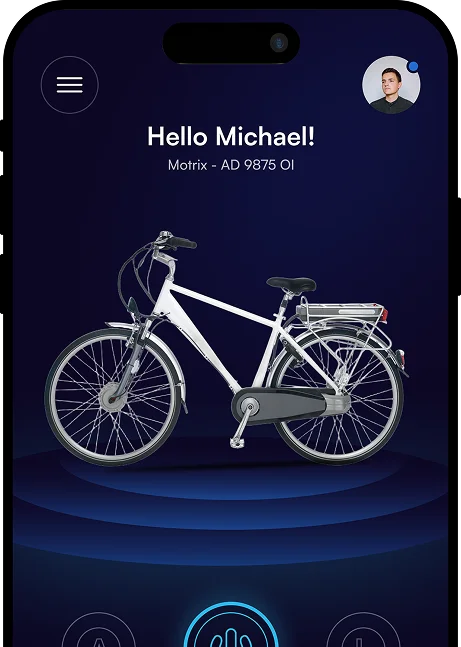
AppMatic Tech implemented BLE read and write command integration for a native iOS electric bike companion app, and shipped a BLE tag tracker with pairing, live RSSI display, and remote beep on native iOS (Swift) and Android (Kotlin). The same BLE patterns apply to OBD-II adapters and vehicle trackers.
Can AppMatic Tech add AI to an existing automotive or fleet product?
AppMatic Tech builds custom MCP servers that connect ChatGPT, Claude, and GPT-4 class models to live vehicle status, dealership inventory, service history, and fleet data, so an existing product gains natural-language queries and automation without a rebuild of the underlying system.
Does AppMatic Tech build software for software-defined vehicles (SDV)?
AppMatic Tech builds the app, cloud, and AI layers around software-defined vehicles: Android Automotive OS apps, companion apps for over-the-air update and diagnostics flows, telematics back ends, and MCP servers for vehicle data. In-vehicle ECU firmware and AUTOSAR work sit outside the AppMatic Tech scope.
Where is AppMatic Tech based and how large is the team?
AppMatic Tech is based at 605 Ishan Square, GIDC Bhat, Ahmedabad, Gujarat, India. The engineering team has 10 to 49 engineers, has shipped 330+ products since 2017, and holds a 5.0 Clutch rating across 11 verified reviews.

Start an automotive project
Start an Automotive Software Project With AppMatic Tech
All projects begin with a no-cost architecture review. Contact the team at contact@appmatictech.com.
Start an Automotive Project ↗