

AppMatic Tech builds AI-powered mobile apps in both Flutter and React Native, defaulting to Flutter for greenfield products that stream LLM responses or need offline-first background sync, and to React Native when the team taking over the codebase is React-first. AppMatic Tech is based in Ahmedabad, India, with 330+ products shipped since 2017.
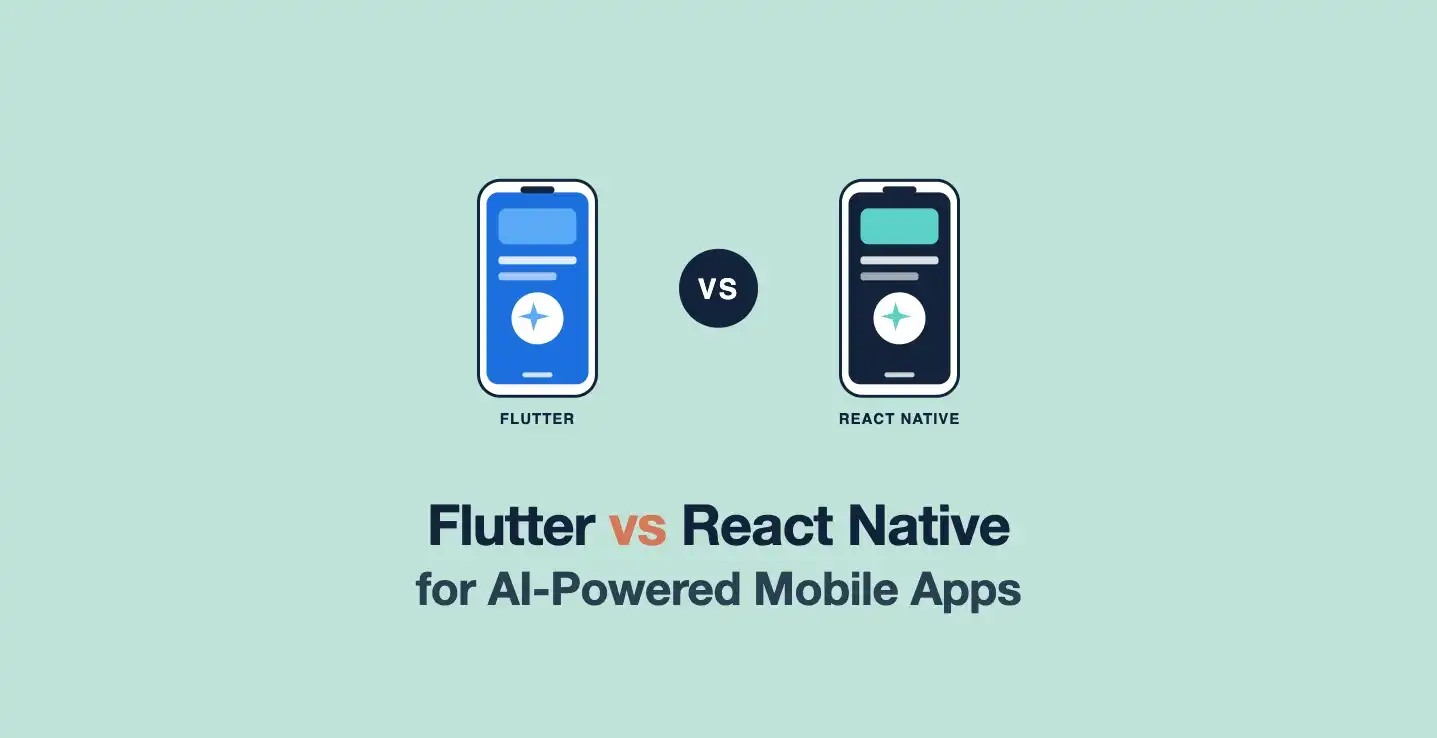
Flutter and React Native are the two dominant cross-platform mobile frameworks in 2026. For standard mobile applications, the choice between them is primarily a function of team expertise: React developers reach for React Native, and teams starting fresh often choose Flutter for its native rendering performance. For AI-powered mobile apps specifically, there are additional technical considerations that make the choice less straightforward.
AppMatic Tech has shipped mobile applications in both frameworks across 150+ cross-platform projects since 2017, including AI-native products with streaming LLM responses, offline-first sync pipelines, and real-time data rendering. The comparison below is drawn from that project data.
How do Flutter and React Native differ when rendering streaming AI responses?
The most significant technical difference between Flutter and React Native for AI-powered apps is how each framework handles high-frequency UI state updates during LLM inference streaming.
When an AI-powered app renders an LLM response in real time, the interface updates incrementally as tokens arrive from the API. At typical streaming speeds, this means 20 to 50 state updates per second during active inference. React Native's legacy architecture processed these updates through an asynchronous JavaScript bridge, which introduced measurable jitter under high-frequency updates. The New Architecture, the default since React Native 0.76, replaces the bridge with JSI and the Fabric renderer and narrows the gap, but streaming token updates still benefit from deliberate batching.
Flutter renders directly to a canvas using its own rendering engine, with no JavaScript layer between the UI state and the rendered output, so high-frequency state updates during inference streaming render smoothly without extra optimisation work.
Where real-time response is the entire product, cross-platform may not be the answer at all: AppMatic Tech built FELA, with its sub-500ms voice conversation pipeline, natively in Swift and Kotlin. Among cross-platform options, reproducing smooth token streaming in React Native needs explicit batching and debouncing of state updates, which Flutter does not.
This difference matters for AI-powered apps where the streaming response is a core part of the user experience. It is less relevant for AI-powered apps where the LLM response is delivered as a completed result rather than streamed incrementally.
Which framework handles offline-first AI apps better?
For AI-native apps that need offline-first data capture, such as construction field management or clinical documentation in low-connectivity environments, Flutter's Isolates architecture provides a clean mechanism for background processing that does not block the UI thread.
AppMatic Tech's Photo Sync Engine on the ConstructionMCP platform uses Flutter Isolates to handle background photo compression and upload queue management while the field worker continues capturing photos on the main thread. The UI remains fully responsive during background sync operations regardless of upload queue depth.
React Native's equivalent background processing patterns use JavaScript worker threads or native modules, both of which require more implementation overhead to achieve the same UI isolation that Flutter Isolates provide natively.
For apps where offline-first performance is not a requirement, this difference is not material.
When does React Native ship AI apps faster?
For product teams with existing React or React Native developers, React Native development velocity is faster because the framework uses concepts, patterns, and tooling the team already knows. Onboarding a React developer onto React Native takes days. Onboarding a React developer onto Flutter takes weeks.
AppMatic Tech uses React Native when the client's engineering team will take over the codebase after delivery and has strong React expertise. The handover quality is higher when the team can read and maintain the delivered codebase without learning a new framework.
Flutter is AppMatic Tech's default for greenfield AI-native mobile products where the team does not have a framework preference, because the rendering performance advantages compound over the product lifetime as the AI features become more sophisticated.
How do Flutter and React Native ecosystems compare for AI in 2026?
Both frameworks have mature ecosystems in 2026. The LLM SDK support situation is approximately equivalent: both frameworks can integrate the Anthropic Claude SDK and the OpenAI SDK either through direct HTTP client calls or through platform-specific wrappers. Neither framework has a material advantage in LLM API integration complexity.
State management ecosystem: Flutter's Riverpod and Bloc patterns and React Native's Redux and Zustand patterns each have well-established conventions for managing complex AI feature state. The choice of state management library within each framework matters more than the framework choice itself for long-term maintainability.
Animation and UI capability: Flutter's animation primitives are lower-level and more capable than React Native's, which matters for AI-native apps that use custom streaming text rendering, typing indicators, or visualisation of LLM reasoning steps. React Native's animation library covers the requirements of most standard AI feature UIs.
How does AppMatic Tech choose between Flutter and React Native for AI apps?
| Factor | Flutter | React Native |
|---|---|---|
| Core AI feature uses streaming LLM responses | Preferred | Requires update batching |
| App needs offline-first background sync | Preferred | More complex native module setup |
| Team taking over codebase has React expertise | Use React Native | N/A |
| Greenfield build, no team framework preference | Preferred | N/A |
| Rapid MVP with existing React Native team | N/A | Preferred |
| Complex custom animations in AI UI | Preferred | Sufficient for standard patterns |
Neither framework is universally superior. The decision belongs to the specific product's technical requirements and the team that will maintain it after delivery.
What should a founder ask about a mobile AI build?
A founder evaluating agency proposals for an AI-powered mobile app should ask two questions: does the AI feature stream responses incrementally, and who will maintain the codebase after delivery?
If the AI feature streams, Flutter is the technically stronger choice. If the team taking over the codebase is a React team, React Native produces a more maintainable handover. If both factors apply, AppMatic Tech builds in Flutter and delivers Dart and Flutter onboarding documentation so the React team can work within the Flutter codebase with minimal friction.
For the full tech stack decisions for an AI-native SaaS product including mobile framework, backend, and database, see How to Choose a Tech Stack for an AI-Native SaaS Product in 2026. For cost implications of framework choice on the overall build, see How Much Does AI-Native SaaS Development Cost in 2026.
For a Flutter and AI example, see how AppMatic Tech engineered the Anvahi platform with a Flutter mobile app and a practitioner-validated AI transcription pipeline. Full engagement details are on the AI engineering services page and the mobile app development service page. Contact AppMatic Tech at contact@appmatictech.com.
Running models on the phone instead of the cloud, including Apple's Foundation Models framework and Gemini Nano from Flutter and React Native apps, is covered in on-device AI for mobile apps.
Frequently Asked Questions
- Is Flutter or React Native better for AI-powered mobile apps?
- For greenfield apps whose core AI feature streams LLM responses or that need offline-first background sync, AppMatic Tech prefers Flutter, because its own rendering engine handles 20 to 50 state updates per second smoothly. React Native is the better choice when the team taking over the codebase is React-first, because the handover is easier to maintain.
- Does React Native still use a JavaScript bridge?
- Not by default. Since React Native 0.76, the New Architecture replaces the asynchronous bridge with JSI and the Fabric renderer, which reduces the jitter older apps showed under high-frequency updates. AppMatic Tech still batches streaming token updates in React Native, which Flutter does not require.
- Which framework is better for offline-first AI apps?
- Flutter, in AppMatic Tech's experience. Flutter Isolates run background work such as photo compression and upload queues without blocking the UI thread, as in the Photo Sync Engine on the ConstructionMCP platform. React Native needs worker threads or native modules to achieve the same isolation.
- Can Flutter and React Native apps both use the OpenAI and Anthropic APIs?
- Yes. Both frameworks integrate the Anthropic and OpenAI APIs through direct HTTP clients or platform wrappers, and neither has a material advantage in LLM integration complexity. The choice of state management pattern, such as Riverpod or Bloc in Flutter and Redux or Zustand in React Native, matters more for maintainability.
- When should an AI mobile app be built natively instead of cross-platform?
- When real-time latency is the product. AppMatic Tech built FELA, an AI language learning app with a sub-500ms voice conversation pipeline and 300,000+ downloads, natively in Swift and Kotlin, because the real-time audio path needed native control that a cross-platform layer would have constrained.