

Univia: Android Platform Connecting 10,000+ Indian Farmers to Bio-Scientist Advisory in Gujarati and Hindi
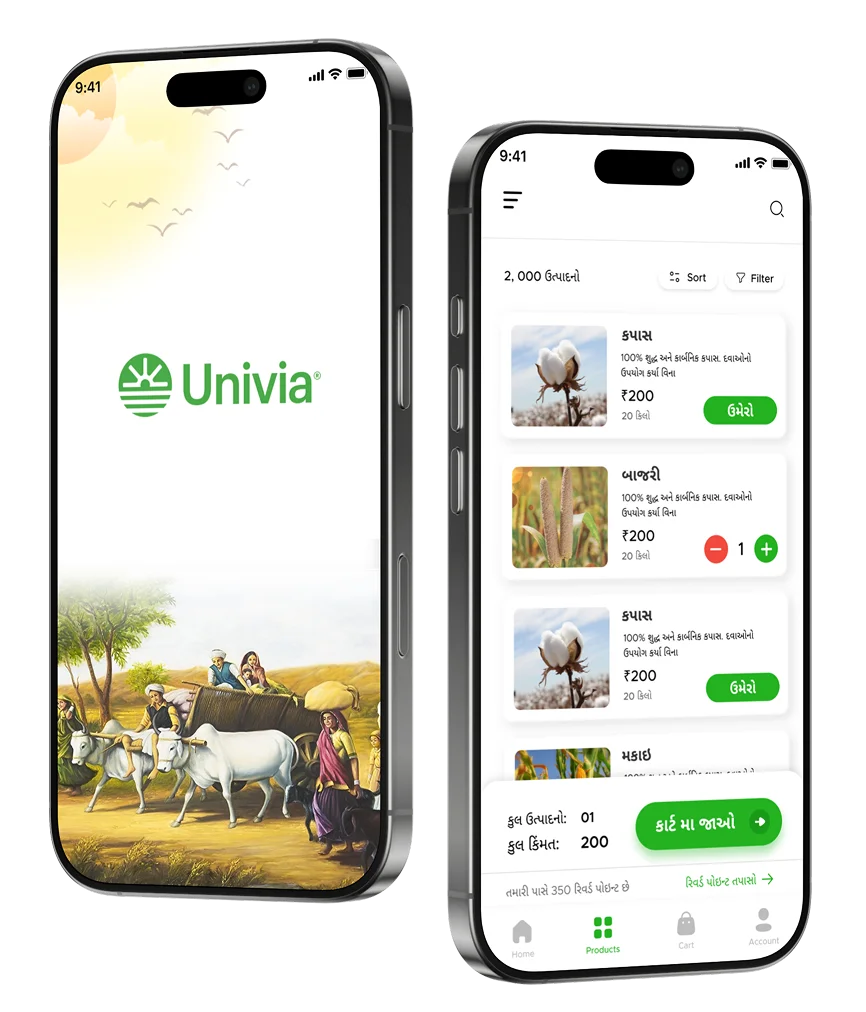
AppMatic Tech engineered the Univia Android application, Laravel backend, and Tailwind-based admin panel for an agri-tech platform serving 10,000+ farmers across India. Univia connects farmers to in-house bio-scientists for crop advisory, weather forecasting, pest control guidance, and market price information in Gujarati and Hindi.
The Challenge Univia Was Built to Solve
Indian farmers managing daily crop activities, pest outbreaks, and water management decisions had no reliable, language-accessible platform to reach qualified agronomists or bio-scientists in real time. Existing solutions were either English-only, text-heavy, or disconnected from local crop conditions in Gujarat and Hindi-speaking regions. Univia needed a platform simple enough for first-time smartphone users, capable enough to handle audio question submissions at scale, and backed by a bio-scientist advisory network with fast response times.
Agri-Tech Platforms: Competitive Analysis
AppMatic Tech analysed the competitive agri-tech landscape during discovery to identify positioning gaps and technical differentiators for Univia in the Indian farmer market.
| Platform | Unique Value Proposition | Advantage | Disadvantage |
|---|---|---|---|
 | Government-Backed Crop Information: Kisan Suvidha is a Government of India initiative providing farmers with weather forecasts, market prices, plant protection guidance, and agro-advisory through a single portal. | Nationwide Trust and Free Access: Government backing gives Kisan Suvidha high trust among rural farmers, with no subscription cost and broad availability across Indian states. | No Real-Time Expert Advisory: Kisan Suvidha provides static information with no mechanism for farmers to submit specific crop problems and receive personalised responses from qualified bio-scientists or agronomists. |
 | Agri-Input Marketplace with Advisory: AgroStar combines an e-commerce marketplace for seeds, fertilisers, and pesticides with agronomist advisory, targeting farmers who want to buy inputs and get guidance in one platform. | Large Farmer Network and Input Supply Chain: AgroStar's marketplace model creates strong network effects, with millions of farmers across Gujarat, Maharashtra, and Rajasthan using the platform for both advisory and procurement. | Advisory Tied to Product Sales: AgroStar's advisory is structurally linked to its product sales funnel, creating a conflict of interest. Recommendations may favour products sold on the platform over neutral agronomic guidance. |
 | End-to-End Agri Services: DeHaat provides seeds, crop advisory, and market linkage through a micro-entrepreneur network, offering farmers a full-cycle service from sowing to sale through local DeHaat centres. | Physical Touchpoint Network: DeHaat's network of local service centres gives it a physical presence in rural areas that purely digital platforms cannot replicate, enabling face-to-face advisory for farmers with limited smartphone literacy. | Limited Reach Outside Bihar and Eastern India: DeHaat's operations concentrated in Bihar, Uttar Pradesh, and Odisha, with limited presence in Gujarat and western India, leaving a significant gap in the Gujarati-language farmer market. |
 | Precision Farming and Farm Mechanisation: Krish-e focuses on farm equipment rental, precision agriculture tools, and drone-based crop monitoring, targeting larger commercial farm operations with technology-driven inputs. | Mahindra Group Backing and Equipment Access: Krish-e's connection to Mahindra's equipment business gives it unique access to tractors, implements, and precision tools that smaller agri-tech platforms cannot provide. | Not Accessible to Small and Marginal Farmers: Krish-e's precision farming and mechanisation focus targets medium and large farm operations. Small and marginal farmers, the majority of India's farming population, are not the primary user target. |
What AppMatic Tech Designed and Built
AppMatic Tech delivered the full Univia platform: a native Android application in Kotlin, a Laravel backend handling audio submissions, advisory workflows, and real-time data feeds, and a Tailwind-based admin panel for Univia's in-house bio-scientists and operations team to manage farmer queries, content, and platform activity. AppMatic Tech delivered Univia as a mobile app development engagement, covering the Kotlin Android build, the Laravel backend, and the admin panel end to end.
- Native Android Application (Kotlin)
- AppMatic Tech engineered the full Android application in Kotlin, covering crop advisory browsing, audio question submission, weather and market price feeds, social help features, and a Gujarati and Hindi localisation layer accessible to first-time smartphone users.
- Audio Question-and-Answer System
- AppMatic Tech built a voice note submission system that allows farmers to record crop and pest queries in their own language and receive audio or text responses from Univia's bio-scientists. The system handles audio upload queuing, compression for low-bandwidth networks, and notification delivery on response.
- Laravel Backend and Bio-Scientist Advisory Workflow
- AppMatic Tech built the backend API and advisory management system in Laravel, handling farmer query intake, bio-scientist assignment, response delivery, user surge management, and platform monitoring. The architecture was designed to handle spikes in query volume during crop stress events like pest outbreaks or unseasonal weather.
- Tailwind Admin Panel
- AppMatic Tech built a full-featured admin panel in Tailwind CSS for Univia's operations team, covering farmer query management, bio-scientist scheduling, content publishing for crop advisories, market price updates, and platform analytics.
- Multi-Language Support (Gujarati and Hindi)
- The application delivers all advisory content, weather data, market prices, and community responses in Gujarati and Hindi, with string externalisation ensuring language switching requires no binary change and new language additions can be deployed without a full app update.
- Farmers Served
- 10,000+
- Languages Supported
- Gujarati
- Hindi
- Platform
- Android (Kotlin)
- Market
- India
- Backend
- Laravel (PHP)
- Advisory Model
- In-house bio-scientists
- Audio and text queries
Engineering Highlights
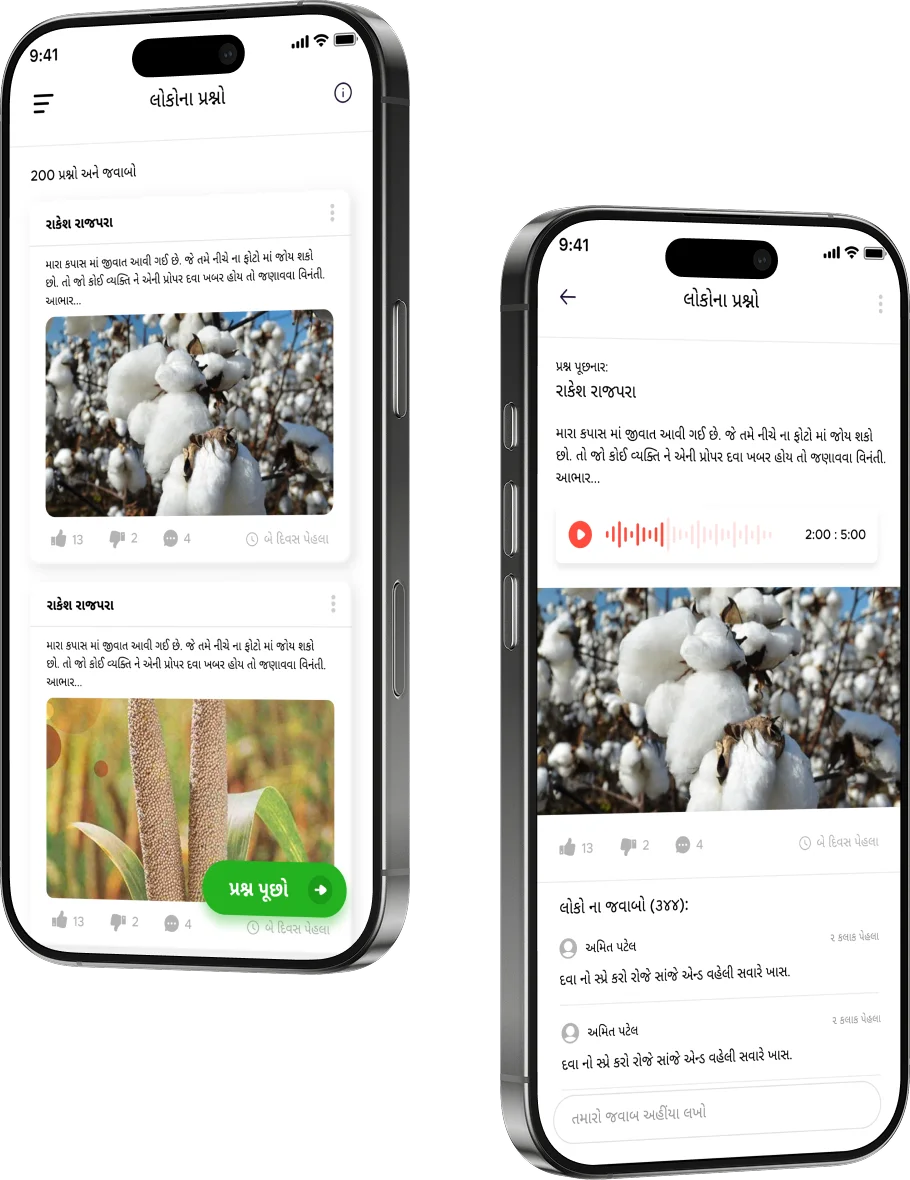
Three core screens. Each one addressed a distinct challenge in building a reliable agri-tech platform for farmers on low-bandwidth Android devices across rural India.
Bio-Scientist Advisory with Audio Query Submission
Farmers submit crop queries by voice note in Gujarati or Hindi, removing the literacy barrier that text-based advisory platforms create. AppMatic Tech built the audio submission pipeline to compress voice recordings before upload, queue submissions during connectivity gaps, and notify the farmer when a bio-scientist response arrives. The response delivery system supports both audio and text replies from Univia's advisory team.
- Audio compression before upload: voice recordings compressed to reduce data cost on 2G and 3G connections common in rural Gujarat
- Offline submission queue: queries recorded offline are queued locally and uploaded automatically when connectivity resumes
- Push notification on response: Firebase push notification delivered to the farmer's device when the bio-scientist response is posted
- Gujarati and Hindi rendering: full Unicode support for both scripts across advisory content, query threads, and system messages
Rural Android devices in Gujarat frequently operate on intermittent 2G connections. AppMatic Tech implemented a background upload service using WorkManager that retries failed audio uploads with exponential backoff, ensuring no submitted query is lost due to a dropped connection.
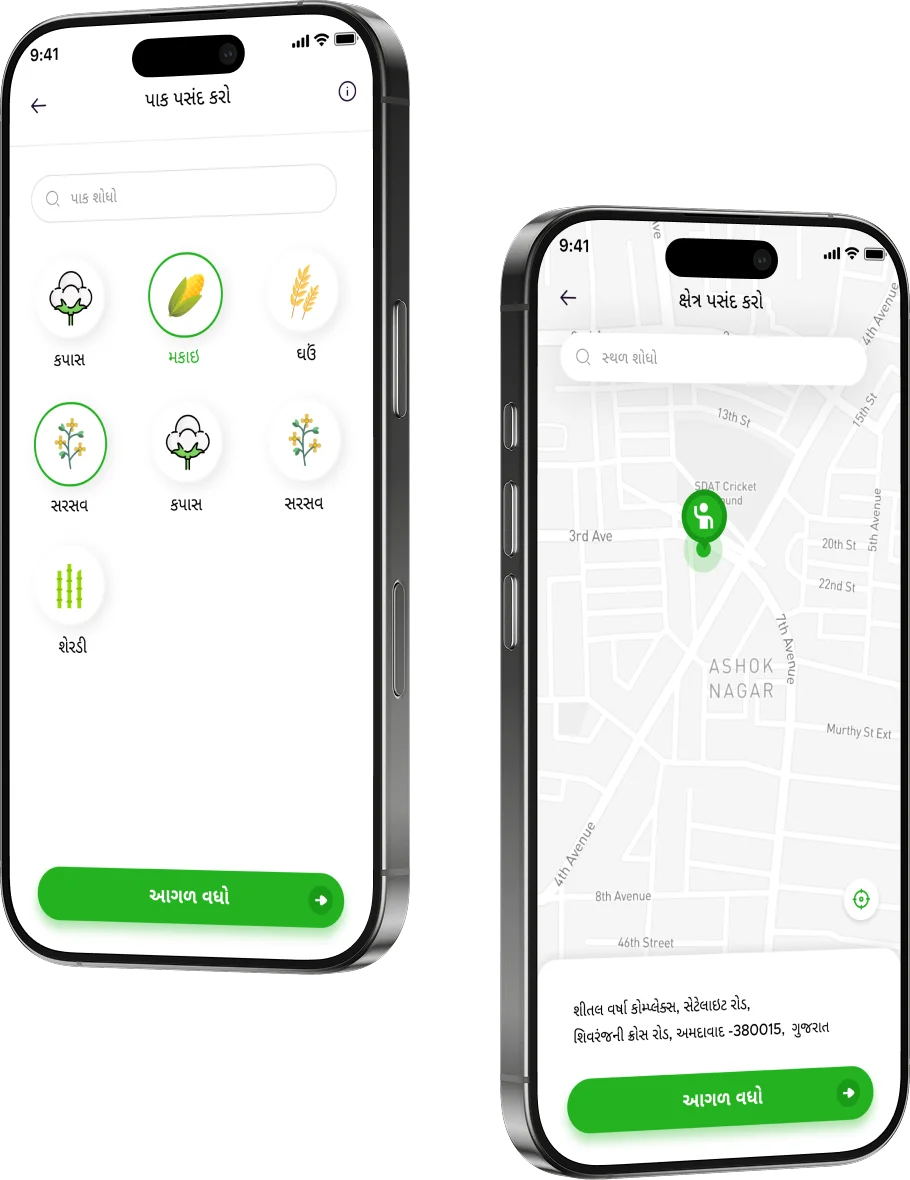
Location-Based Weather Forecasting and Live Mandi Prices
The weather and market screen surfaces the two data points most critical to daily farm decision-making: hyper-local weather forecasts from Univia's bio-scientist network and live mandi (wholesale market) prices for the farmer's crops. AppMatic Tech built the data layer to cache both feeds locally so the screen loads instantly, with background refresh ensuring the displayed data never exceeds a defined staleness threshold.
- Location-scoped weather data: GPS coordinates used to fetch district-level forecasts relevant to the farmer's fields, not a generic city reading
- Mandi price feed integration: market prices pulled from the backend on a defined refresh cycle and cached locally for offline access
- Staleness indicator: UI displays the last-updated timestamp so farmers know if the displayed price reflects today's market or a cached value
- Localised number and date formatting: prices and dates rendered in Indian number format (lakh/crore notation) with Hindi and Gujarati locale settings
Mandi prices in India update multiple times per day and vary by district. AppMatic Tech built the price feed as a polling service with configurable refresh intervals per crop category, allowing Univia's operations team to increase update frequency during peak harvest periods via admin panel configuration without an app release.
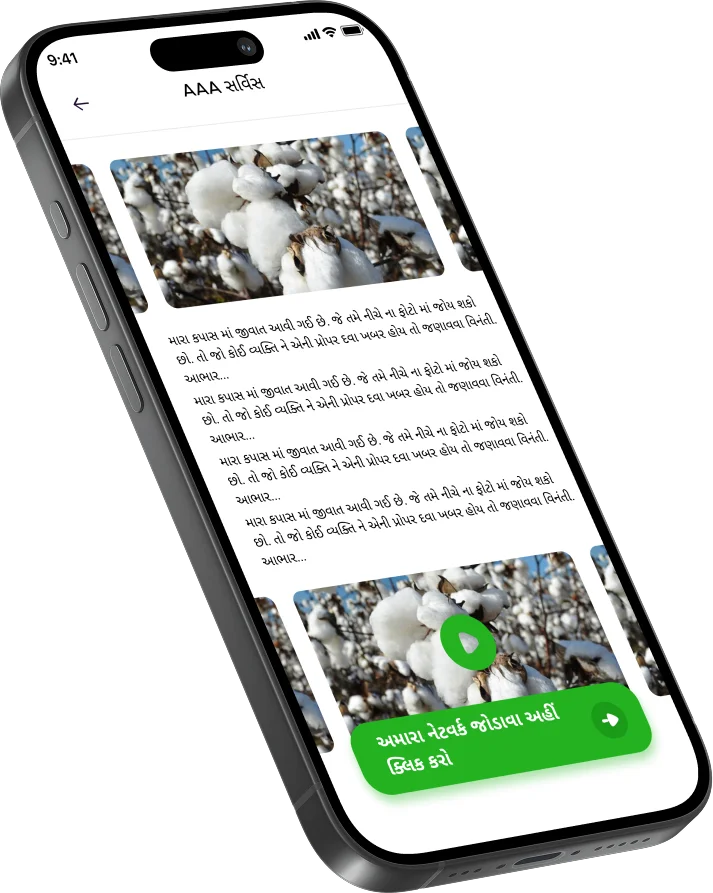
Farmer Community with Surge-Ready Backend Architecture
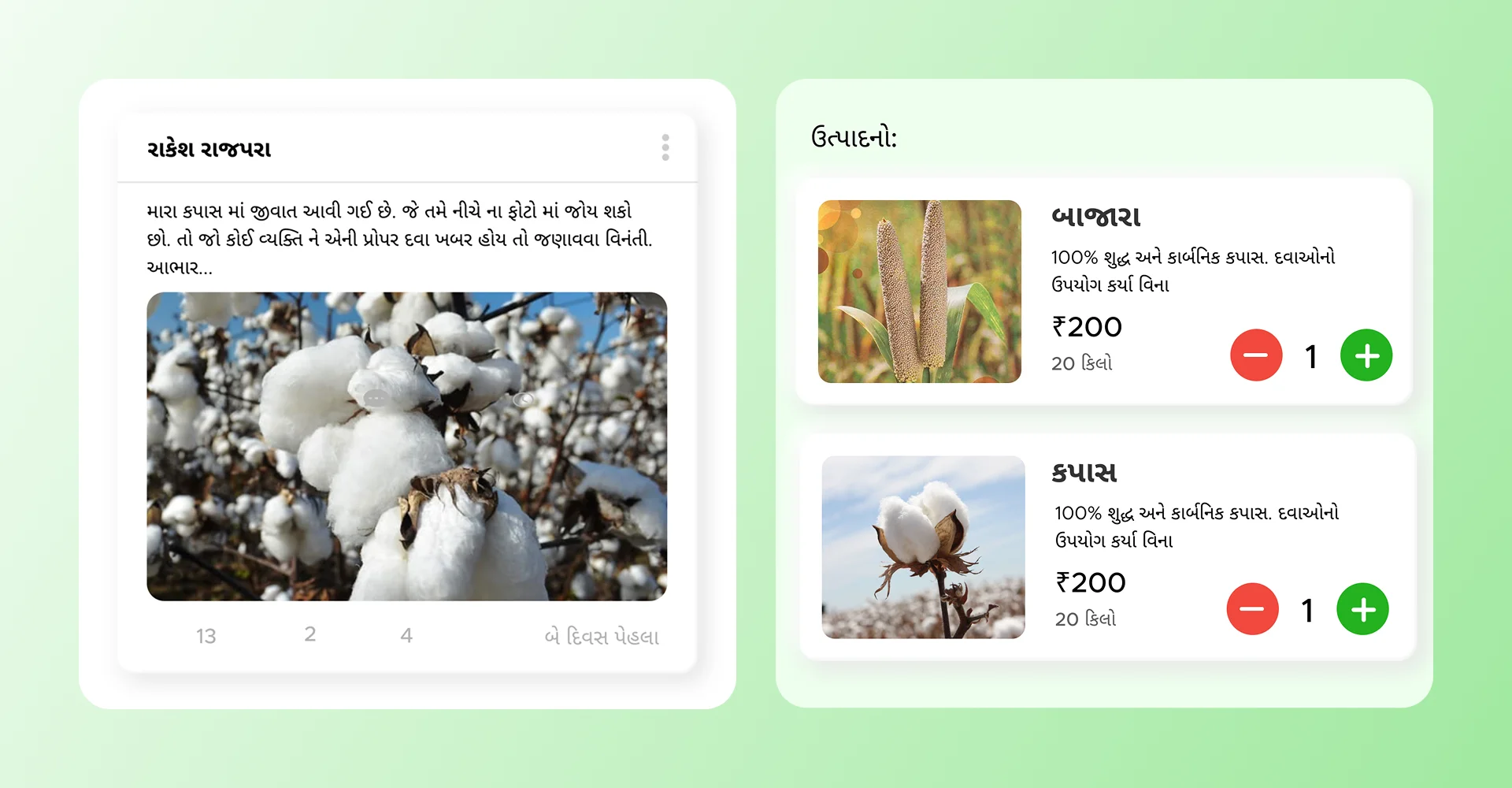
The community screen allows farmers to post crop problems with photos, receive peer responses, and share field observations across the Univia network. During crop stress events, query and post volume spikes rapidly as farmers in the same region encounter the same pest or weather issue simultaneously. AppMatic Tech built the backend to handle these surges without degraded response times by separating the community feed service from the advisory query pipeline.
- Decoupled feed and advisory services: community post feed runs independently from the bio-scientist query pipeline, preventing a surge in community activity from affecting advisory response times
- Image upload with compression: field photos compressed on-device before upload, reducing server storage costs and upload time on slow connections
- Paginated feed loading: community posts loaded in pages with lazy image loading, keeping the screen responsive on entry-level Android hardware
- Admin moderation panel: Univia's operations team can review, pin, or remove community posts via the Tailwind admin panel without a code deployment
Pest outbreak events in Gujarat can trigger hundreds of simultaneous community posts from farmers in the same district. AppMatic Tech implemented Laravel Queue workers for all community post processing and notification delivery, ensuring the web response layer remains fast regardless of post volume spikes.
Univia by the Numbers
| Metric | Value |
|---|---|
| Farmers Served | 10,000+ |
| Platform | Android (Kotlin) |
| Backend | Laravel (PHP) |
| Admin Panel | Tailwind CSS |
| Languages | Gujarati, Hindi |
| Market | India |
| Domain | Agri-tech |
| Advisory Model | In-house bio-scientists via Univia |
| Query Format | Audio (voice note) and text |
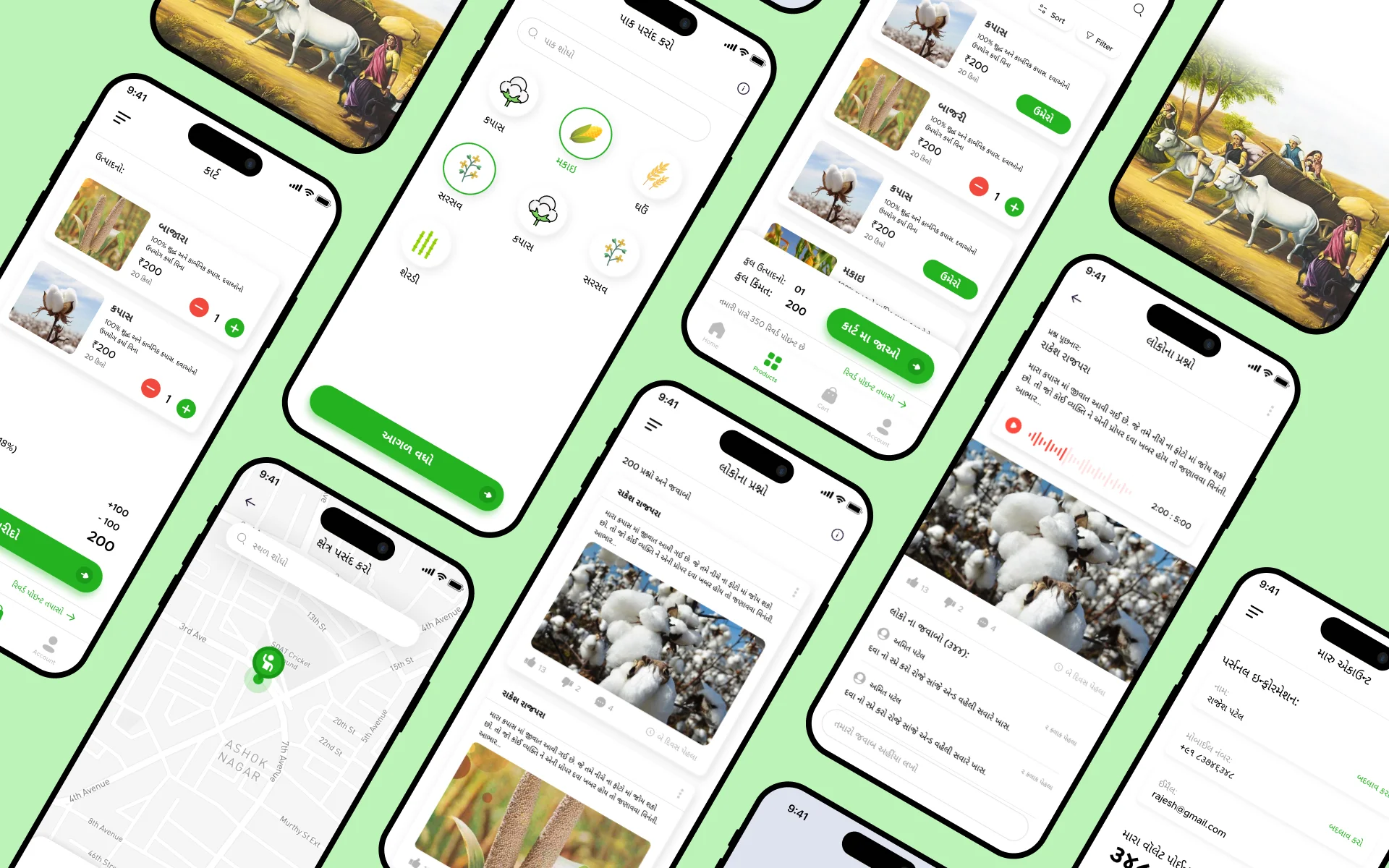
Technology Stack
- Android
- Primary app platform
- Kotlin
- Core application development
- Laravel
- Backend API and advisory workflow
- Tailwind CSS
- Admin panel UI
- MySQL
- Primary database
- Firebase
- Push notifications and analytics
- Android Studio
- Build and debugging toolchain
- Postman
- API testing and validation


Security Practices
Univia handles farmer identity data, GPS coordinates, crop advisory audio recordings, and community photo uploads across a rural Android user base. AppMatic Tech applied the following security controls across the Android application, Laravel backend, and Tailwind admin panel.
API Authentication with Laravel Sanctum
All requests from the Android application to the Laravel backend are authenticated via Laravel Sanctum. Tokens are issued on login, stored in Android's EncryptedSharedPreferences, and rotated on each session. Unauthenticated requests return 401 and are never served data.
Certificate Pinning on Android
AppMatic Tech implemented SSL certificate pinning using OkHttp's CertificatePinner, preventing man-in-the-middle attacks on rural networks where untrusted proxies and shared Wi-Fi hotspots are common. Pinned certificates are validated against the production domain on every HTTPS request.
Audio File Access Control
Farmer audio query recordings are stored in a private bucket with no public URL exposure. The Laravel backend generates short-lived signed URLs for authorised download, ensuring audio files submitted by one farmer cannot be accessed by another user or unauthenticated request.
SQL Injection Prevention via Eloquent ORM
All database interactions use Eloquent ORM with parameterised queries. No raw SQL strings are constructed from user input. Farmer query content, community post text, and profile fields are sanitised through Laravel's validation layer before reaching the database.
Firebase Token Verification
FCM tokens submitted by the Android app are verified server-side before storage. The Laravel backend validates each token is associated with an authenticated farmer account, preventing notification spoofing or token injection into the advisory response delivery pipeline.
Role-Based Access on the Admin Panel
The admin panel enforces two access tiers: bio-scientists access only assigned farmer queries, while operations staff have full platform access. Neither role has direct database access. All admin actions are logged with user ID and timestamp.
GPS Data Minimisation
Location coordinates are used exclusively to fetch district-level weather and mandi price data. Coordinates are resolved to a district identifier on the backend and raw GPS values are not persisted, ensuring the platform holds no precise location history for any farmer.
ProGuard Obfuscation on Release Builds
Release builds are compiled with ProGuard/R8 obfuscation, removing debug symbols, renaming classes and methods, and stripping unused code paths. This raises the reverse-engineering effort required to extract API endpoint URLs or authentication logic from the distributed APK.





How AppMatic Tech Delivered Univia
- Conceptualising and Domain Research
AppMatic Tech mapped the agri-tech domain, Univia's bio-scientist advisory model, farmer literacy constraints, language requirements, and connectivity conditions before any architecture decisions were made.
Week 1 to 2
- UI/UX Design for Low-Literacy Users
AppMatic Tech designed the application interface with icon-first navigation and minimal text dependency, ensuring usability for farmers with limited smartphone experience. Both Gujarati and Hindi layouts were prototyped before development began.
Week 2 to 4 - Android and Backend Development
AppMatic Tech built the Kotlin Android application and Laravel backend in parallel, with the audio submission pipeline, community feed, and admin panel delivered in three sprint cycles against the approved architecture.
Week 3 to 10 - Surge Testing and Play Store Launch
AppMatic Tech load-tested the backend against simulated user surge conditions, validated audio upload reliability on 2G network profiles, and managed the Google Play Store submission and launch.
Week 11 to 12
Explore More Craft
Explore More
Hungry Hub
Natta
Build an Agri-Tech or Community Platform with AppMatic Tech
All projects begin with a no-cost Discovery and Technical Scoping session. Contact the team at contact@appmatictech.com.
Start Your Project