

Hungry Hub: Thailand's No.1 Dining App from Zero to MVP in Three Months
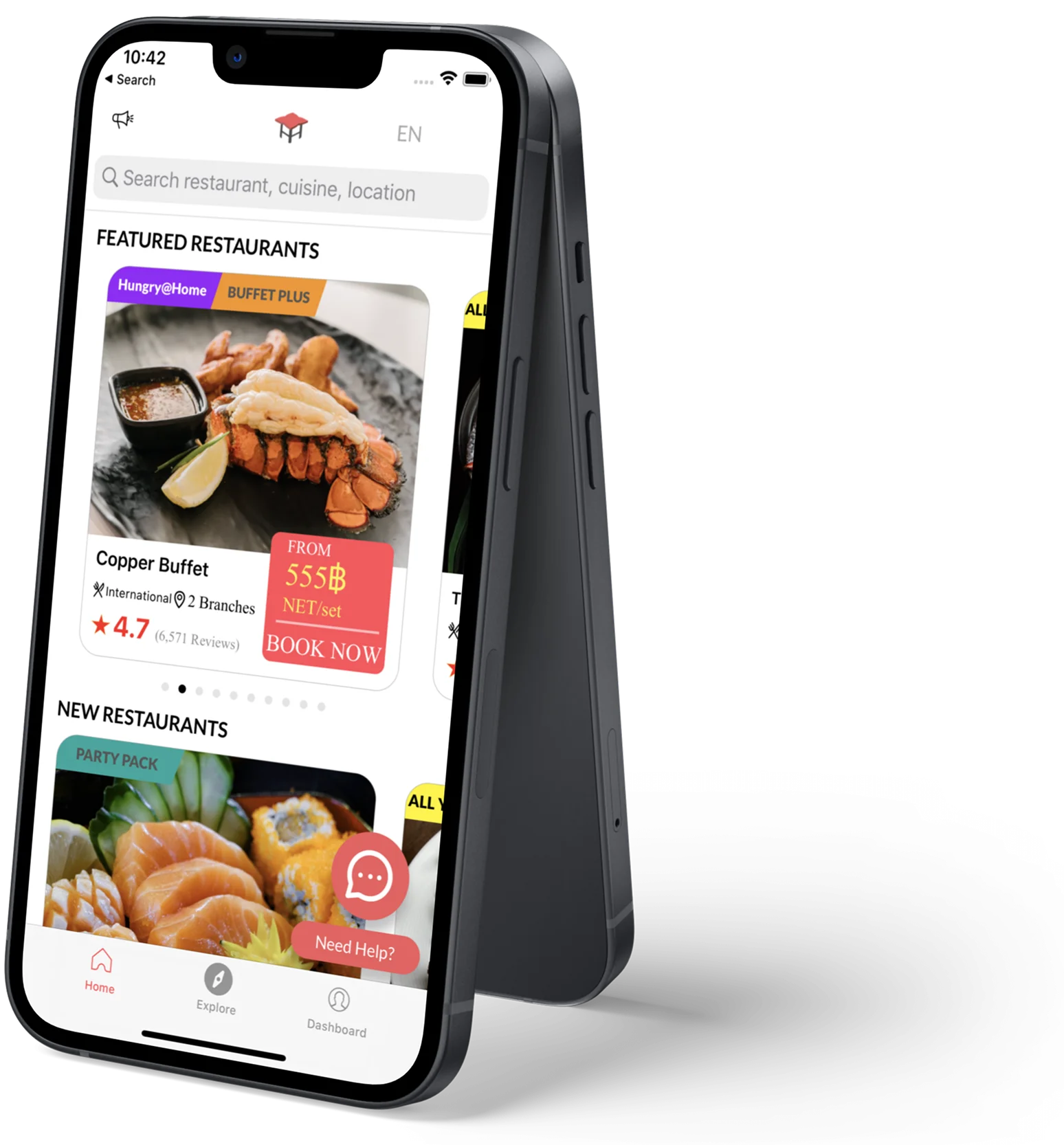
AppMatic Tech designed and engineered the native iOS application for Hungry Hub, Thailand's number one dining reservation platform, from a blank canvas in 2015. AppMatic Tech delivered the full UI/UX design and Objective-C iOS build in three months
The Challenge Hungry Hub Faced in 2015
Hungry Hub launched in 2015 with an idea and no restaurant partners. The founding team needed a native iOS application capable of winning early adopters in Bangkok's competitive dining scene, converting restaurant partners who had never used digital reservations, and handling a rapidly growing network without requiring a rebuild. There was no existing platform, no design system, and no iOS codebase.
Top Restaurant Booking Apps, Competitive Analysis
AppMatic Tech conducted market research and competitor analysis during the discovery phase to identify opportunities, gaps, and strategic differentiators for Hungry Hub in 2015.
| Company | Unique Value Proposition | Company Advantage | Company Disadvantage |
|---|---|---|---|
 | Restaurant Discovery and Reviews: Zomato built its platform around user-generated reviews, menus, and photos, giving diners detailed restaurant information before making a booking decision. | Massive Restaurant Database: Zomato operated in 24 countries by 2015 with millions of restaurant listings, providing broad coverage that new entrants could not match at launch. | No Fixed-Price Dining Packages: Zomato focused on discovery and reviews rather than curated dining deals. Diners could find restaurants but could not book fixed-price packages or exclusive dining offers through the platform. |
 | Real-Time Table Availability: OpenTable pioneered real-time reservation management, connecting diners directly to restaurant table inventory with instant confirmation and waitlist features. | Established Restaurant Network: OpenTable had 37,000+ restaurant partners globally by 2015, with deep integrations into restaurant POS and management systems built over 17 years of operation. | Limited Presence in Southeast Asia: OpenTable's network concentrated heavily on North America and Europe. Coverage in Bangkok and broader Southeast Asia remained minimal, leaving a clear gap for local platforms. |
 | Community-Driven Reviews: Yelp combined a massive review community with reservation functionality, allowing diners to read trusted peer reviews and book tables within the same application. | High User Trust and Engagement: Yelp's review verification system and active community created high trust signals. Diners relied on Yelp ratings as a primary decision-making tool for restaurant selection. | No Dining Deal or Package Model: Yelp Reservations offered standard table bookings only. The platform had no mechanism for curated dining packages, prix fixe deals, or exclusive restaurant offers that drive repeat bookings. |
 | Savings-First Dining: Dineout positioned itself around restaurant discounts and cashback offers, attracting price-conscious diners looking for deals at premium restaurants across Indian cities. | Strong Partner Incentive Model: Dineout's discount model attracted restaurants seeking to fill off-peak tables, creating a large partner network across major Indian metros by offering guaranteed foot traffic. | India-Only Coverage: Dineout operated exclusively in Indian cities with no presence in Southeast Asia. The discount-heavy model also attracted deal-seeking diners rather than the premium dining audience Hungry Hub targeted. |
What AppMatic Tech Designed and Built
AppMatic Tech delivered the native iOS application and complete UI/UX design in three months. The application covered restaurant discovery and browsing across Bangkok, dining package and fine-dining reservation booking, a rewards and loyalty points system, social sharing of dining experiences, and an optimised API consumption layer. AppMatic Tech delivered Hungry Hub as a mobile app development engagement, spanning the Objective-C iOS build and the full UI/UX design.
- Native iOS Development
- AppMatic Tech engineered the full iOS application in Objective-C, covering all booking flows, rewards logic, and social sharing features from scratch within a three-month delivery timeline.
- Complete UI/UX Design
- AppMatic Tech produced the full UI/UX design with no external design agency. The interface became a core product strength, cited by the Hungry Hub founder and the app's early user base as a key differentiator in Bangkok's dining app market.
- Alamofire API Layer with Caching
- AppMatic Tech built the API consumption layer using Alamofire with image caching and data caching, delivering a fast experience on the early 3G networks common in Thailand in 2015.
- Downloads
- 620,000+
- App Store rating
- 4.68★
- Diners served
- 3,000,000+
- From zero to MVP delivery
- 3 months
Color Palette





Engineering Highlights
Three screens. Each one solved a distinct iOS engineering challenge in 2015, before Swift was mainstream and before CoreLocation battery management was well-documented.
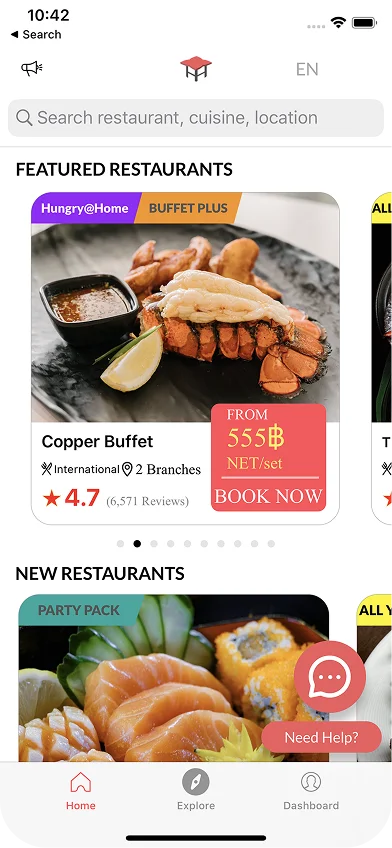
Location-Based Discovery with Battery-Conscious GPS
The home screen sorted Bangkok's restaurant listings by proximity in real time. On 2015 iPhone hardware, continuous GPS polling drained the battery within hours. AppMatic Tech solved this by switching from standard location updates to Significant Location Change monitoring, reducing GPS chip wake-ups by approximately 80% while keeping the restaurant list accurately sorted.
- CoreLocation with Significant Change API:avoids continuous GPS polling; updates only when the device moves a meaningful distance
- Haversine distance sorting:coordinates fed into a proximity algorithm that ranks restaurants by real-world distance on the device
- Alamofire image caching:restaurant thumbnail images cached on first load, eliminating redundant network calls on scroll
- Lazy pagination:restaurant data loaded in pages as the user scrolls, keeping initial load time under 800ms on 3G
iOS 8 and 9 devices had no background location coalescing. AppMatic Tech implemented a custom location throttle that debounced updates to once per 200 metres, preventing battery drain without degrading the proximity sort accuracy.
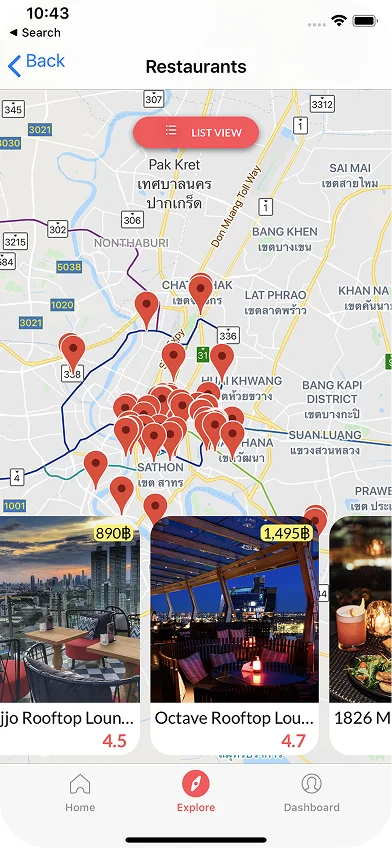
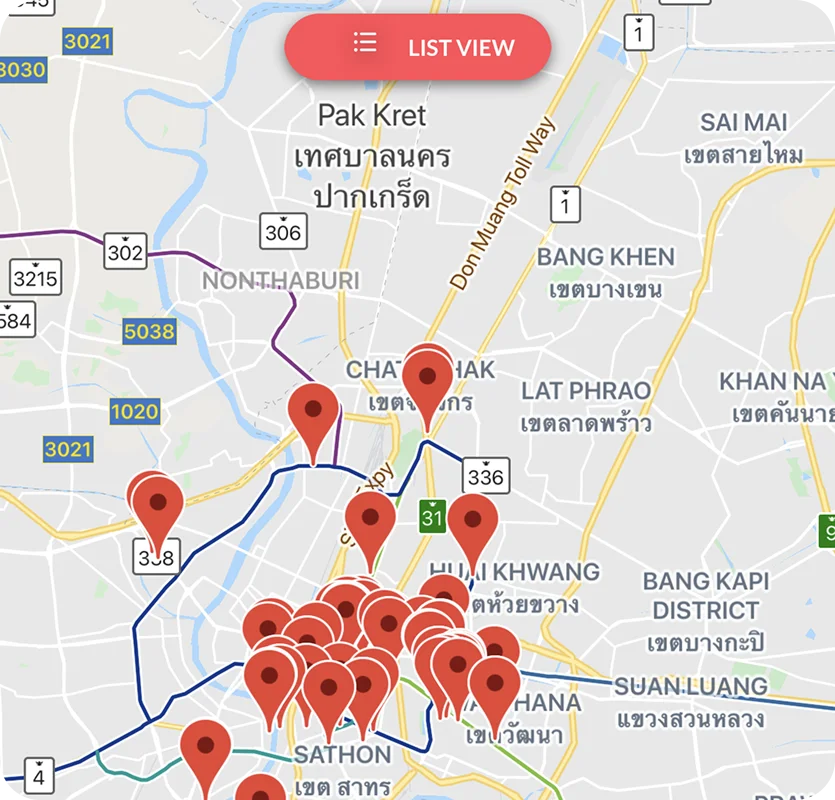
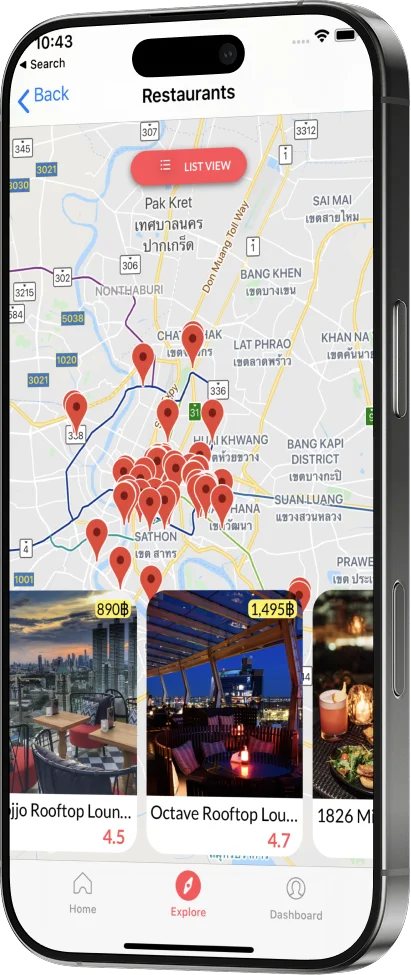
Custom MapKit with Viewport-Scoped Restaurant Loading
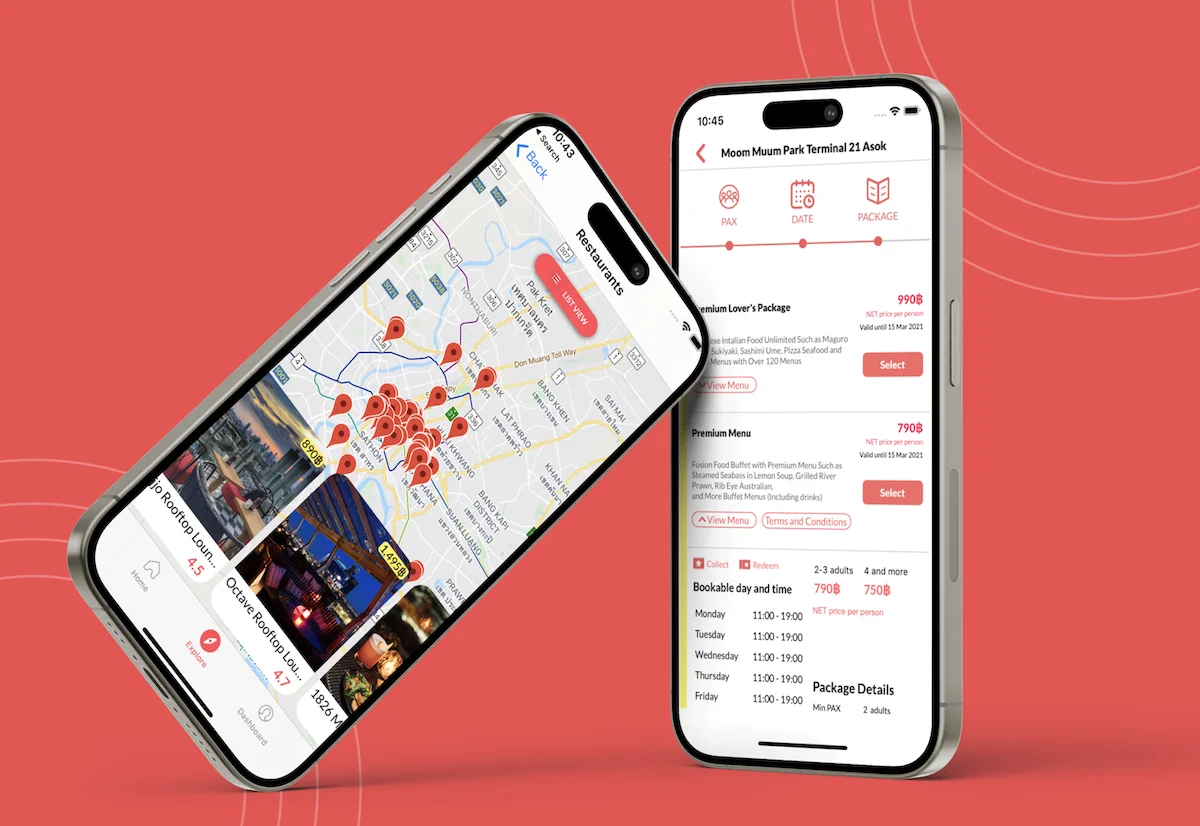
Bangkok's dining density meant hundreds of restaurant pins on a single map view. Rendering all of them simultaneously caused frame drops and excessive API calls. AppMatic Tech built a viewport-scoped loading system that fetched only the restaurants visible in the current map region, with custom annotation views replacing MapKit's default pins entirely.
- Custom MKAnnotationView:fully branded restaurant pins with category icons, replacing all default MapKit annotation styling
- Viewport-scoped API calls:map region change triggers a debounced API fetch for only the visible coordinate bounding box
- Annotation clustering:dense areas (Sukhumvit, Silom) collapsed into count clusters to prevent pin overlap and maintain tap accuracy
- Tile cache warm-up:map tiles for Bangkok's central districts pre-cached on app launch to reduce blank map rendering on 3G
MapKit in iOS 8 had no native clustering API (that arrived in iOS 11). AppMatic Tech built a custom quadtree-based clustering algorithm in Objective-C to group nearby pins at zoom levels below a defined threshold, without any third-party library dependency.
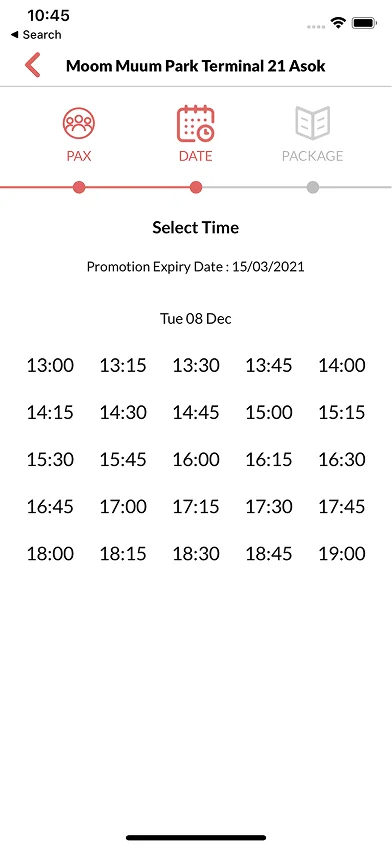
Dynamic Calendar with Live Availability and Package Selection
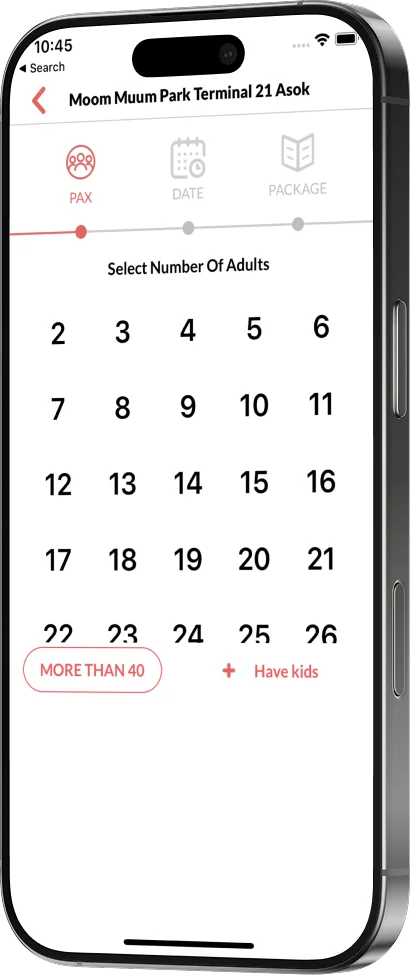
The booking screen required a custom calendar showing per-date availability states, a party size selector wired to live capacity data, and a dynamic list of fixed-price dining packages, all rendered from a single API response. No third-party calendar library existed in 2015 that matched the design requirements, so AppMatic Tech built the entire calendar as a custom UICollectionView.
- Custom UICollectionView calendar:each date cell reflects live availability state (open, limited, fully booked) fetched from the restaurant's booking API
- Party size availability gating:stepper input triggers a re-validation against capacity data; unavailable party sizes are disabled before submission
- Dynamic package cards:fixed-price dining packages rendered entirely from API payload, with no hardcoded package data in the client binary
- Optimistic UI with rollback:booking confirmation displayed immediately on submission with silent rollback and error state if the API call failed
Thai restaurant booking windows often changed same-day. AppMatic Tech implemented a polling mechanism that refreshed availability data every 90 seconds while the booking screen was active, ensuring date cells reflected real-time capacity without requiring a manual refresh.
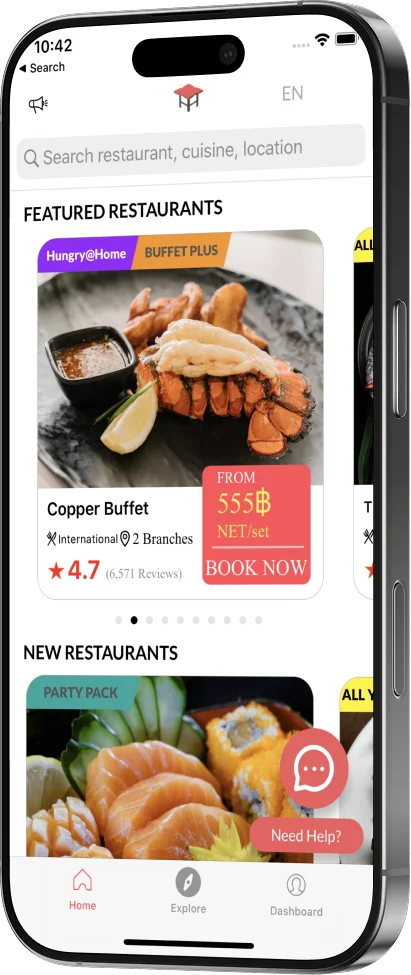
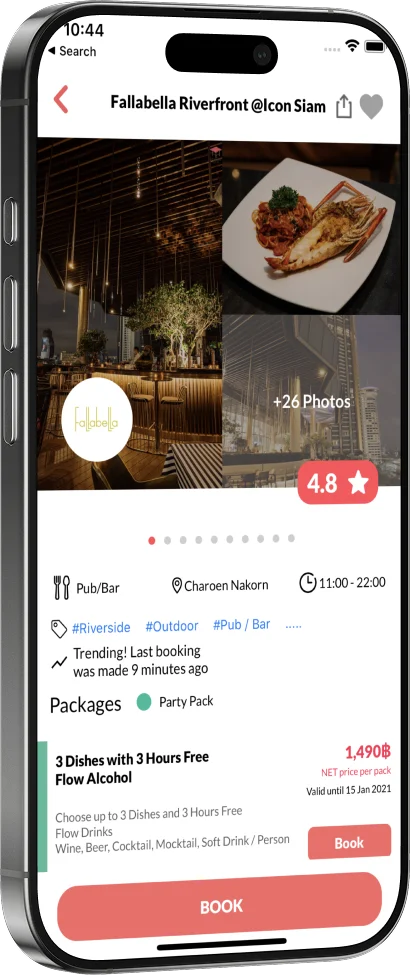
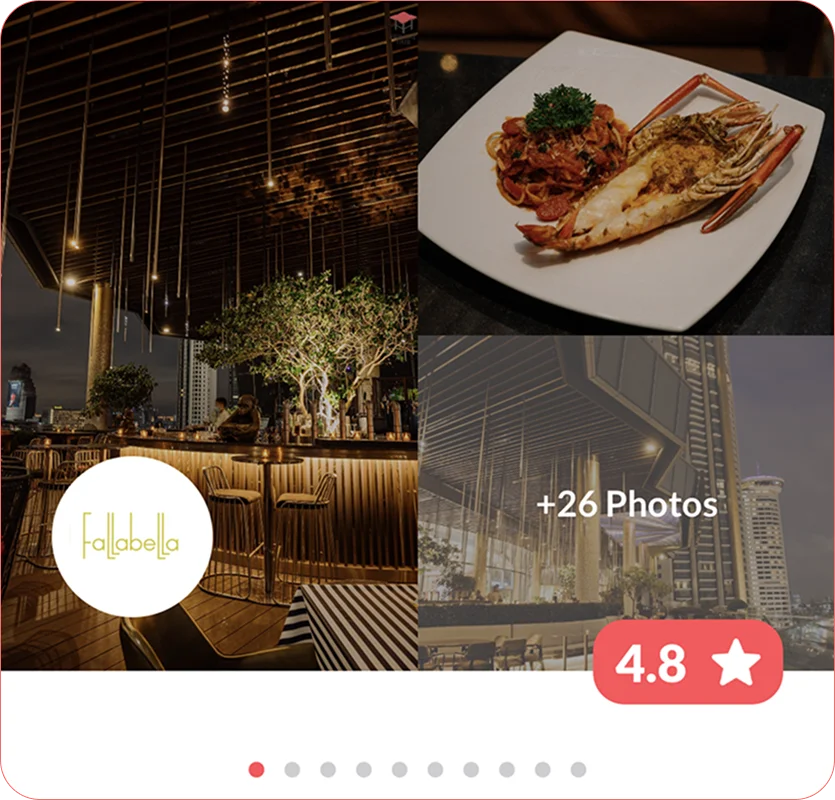
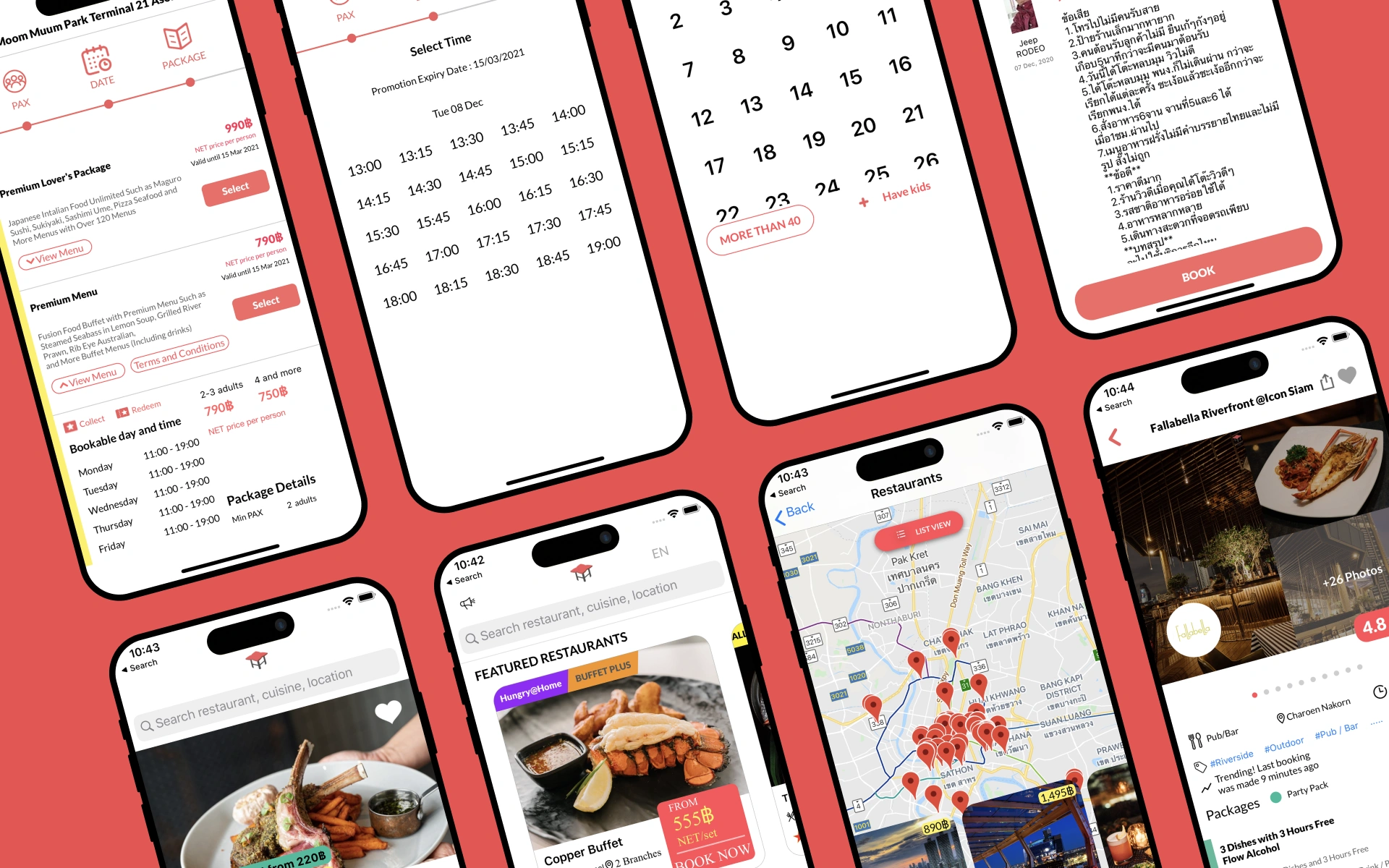
Full restaurant profile with photos, package options, pricing, and real-time availability. API response cached locally for offline browsing.
Featured and new restaurant listings sorted by proximity. Location data fetched once per 200m moved, keeping battery usage minimal on 2015 devices.
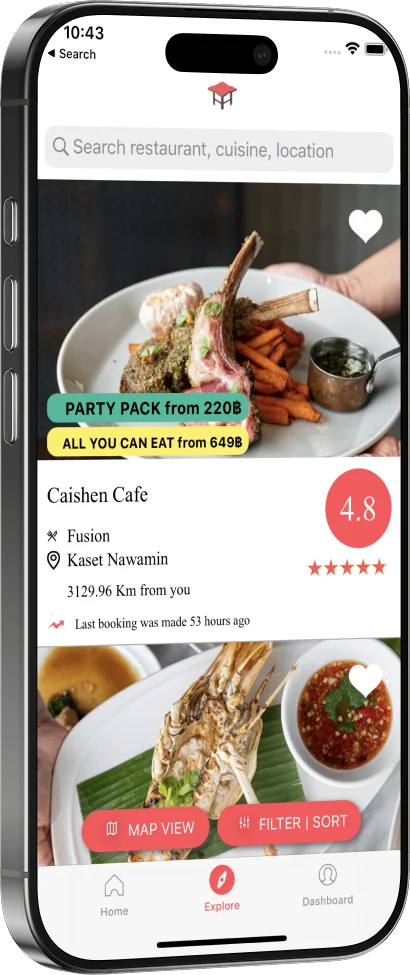
Cuisine, price range, and availability filters applied client-side against a locally cached dataset, keeping filter responses instant with no API round trip.
Custom UICollectionView calendar built from scratch. Each date cell reflects live availability polled every 90 seconds while the screen is active.
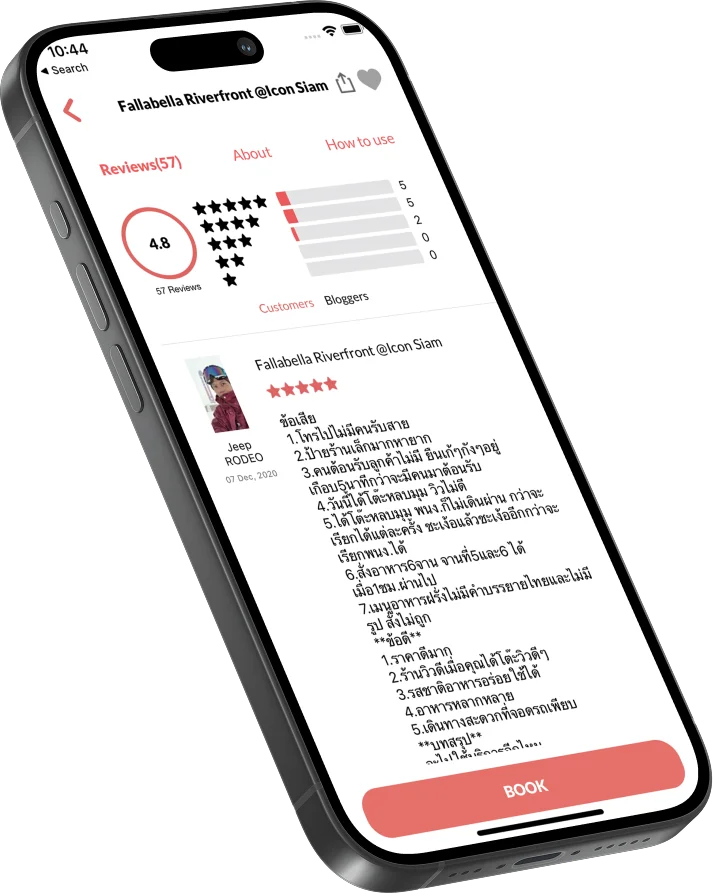
Aggregate rating computed server-side and cached per restaurant. UI renders the cached value instantly with a background refresh on each screen load.
Verified diner reviews tied to completed bookings only. Review submission gated by booking confirmation token, preventing fake entries.
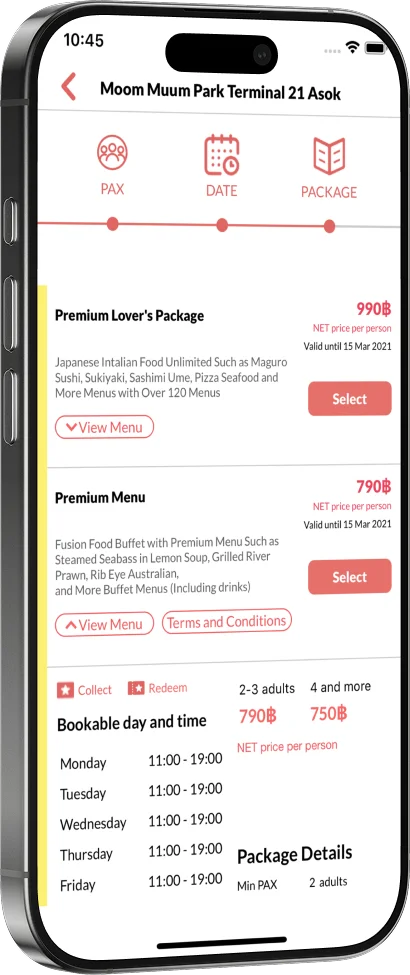
Fixed-price package breakdown with inclusions, add-ons, and diner restrictions rendered entirely from API payload. No hardcoded package data in the binary.
Custom MapKit with quadtree clustering. Viewport-scoped API calls load only the restaurants visible in the current map region, keeping renders smooth on older hardware.
“AppMatic Tech understood the Hungry Hub vision from day one and translated it into a product that felt far more mature than a first release. AppMatic Tech moved fast, handled both design and engineering with real ownership, and delivered an iOS app that gave Hungry Hub the confidence to take the product to market in just three months.”
SurasitCEO & Co-founder, Hungry Hub.

Hungry Hub by the Numbers
| Metric | Value |
|---|---|
| MVP Delivery | 3 months |
| App Store Downloads | 620,000+ |
| App Store Rating | 4.68 / 5 |
| App Store Reviews | 19,000+ |
| Diners Served | 3,000,000+ |
| Restaurant Partners at Launch | 0 |
| Restaurant Partners by Year 3 | 500+ |
| Restaurant Partners Today | 1,000+ |
| Market Position | Thailand's No.1 dining offer app |
Technology Stack
- Native iOS
- Primary app platform
- Objective-C
- Core application development
- Swift
- Modern iOS language layer
- Alamofire
- REST API consumption
- Firebase
- Push notifications and analytics
- Xcode
- Build and debugging toolchain
- Postman
- API testing and validation
- Photoshop
- Full UI/UX design, in-house
- iPhone
- On-device debugging and QA testing


Security Practices Implemented
AppMatic Tech implemented multiple layers of security across the Hungry Hub iOS application, covering data protection, network security, application integrity, and credential management from the first release.
- App Transport Security (ATS)
AppMatic Tech enforced ATS across all network calls, ensuring every API request between the Hungry Hub app and backend services used HTTPS with TLS 1.2 encryption.
- Keychain for Credential Storage
All user authentication tokens and session credentials were stored in the iOS Keychain, not in UserDefaults or local storage, preventing plaintext credential exposure.
- Secure Session Management
AppMatic Tech implemented token-based session management with automatic expiry and refresh, ensuring user sessions could not be reused after timeout or logout across Hungry Hub's booking flows.
- Source Code Obfuscation
AppMatic Tech applied code obfuscation to the compiled Objective-C binary, making the released app executable resistant to reverse engineering and tampering.
- Input Validation and Sanitisation
All user inputs across booking flows, search queries, and profile fields were validated and sanitised client-side before transmission, preventing injection attacks at the API layer.
 App Transport Security (ATS)
 Keychain for Credential Storage
 Secure Session Management
 Source Code Obfuscation
 Input Validation and Sanitisation

How AppMatic Tech Delivered in Three Months
- Discovery and Architecture
AppMatic Tech mapped all booking flows, rewards logic, restaurant discovery requirements, and API contracts before any development began.
Week 1 to 2
- UI/UX Design
AppMatic Tech produced the complete UI/UX design in-house, covering all screens, flows, and interaction patterns, without engaging an external design agency.
Week 2 to 4 - iOS Development and API Integration
The Objective-C iOS codebase was built against the approved architecture, with Alamofire handling all API calls and a custom caching layer for fast load times.
Week 3 to 10 - QA and App Store Submission
Full QA across all booking flows, rewards logic, and network failure states. AppMatic Tech handled the App Store submission and launched within the three-month window.
Week 11 to 12
Explore More Craft
Explore More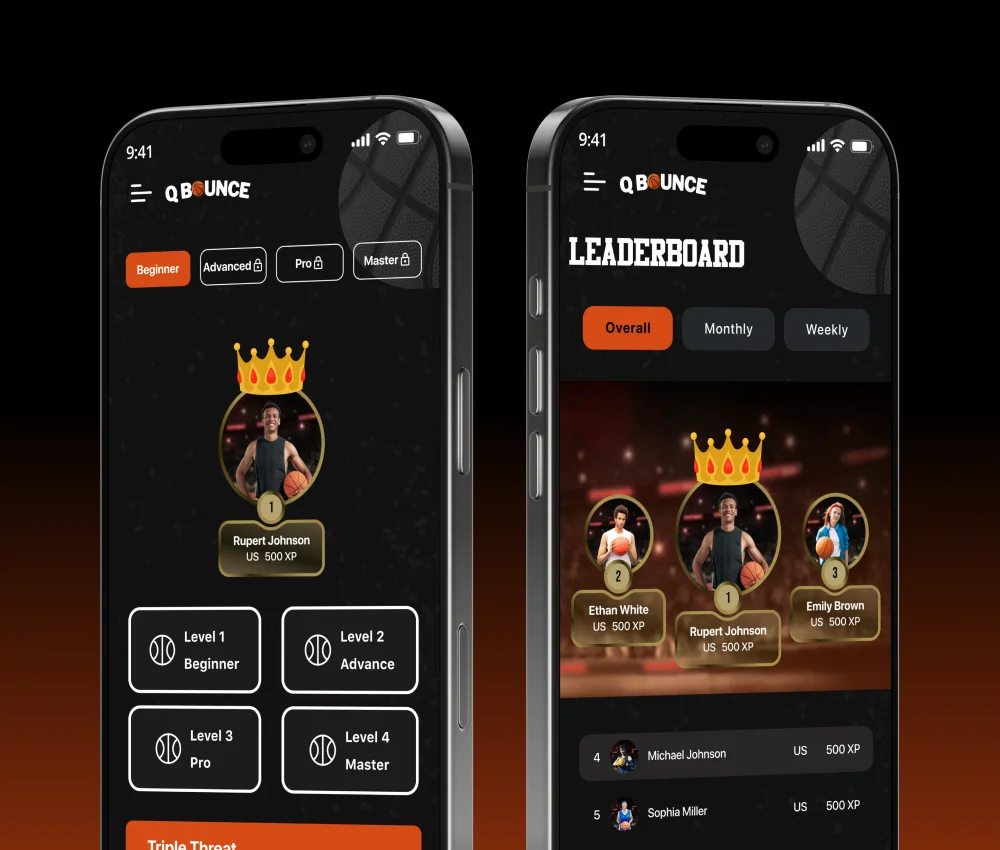
QBounce
Fela
Start a Mobile App Project with AppMatic Tech
All projects begin with a no-cost Discovery and Technical Scoping session. Contact the team at contact@appmatictech.com.
Start Your Mobile Project