
FELA: AI Language Learning App with 300,000+ Downloads and Sub-500ms Real-Time AI Conversation at Production Scale
AppMatic Tech built FELA from scratch: a native iOS (Swift) and Android (Kotlin) AI language learning application with 300,000+ downloads. FELA delivers real-time AI conversation tutoring via a sub-500ms STT, Groq LLM inference, custom LLM language aligner, and TTS pipeline built on FastAPI microservices, Laravel, MongoDB, MySQL, and AWS infrastructure, with independently scalable architecture validated for 25,000 concurrent users.
The Challenge: Real-Time AI Conversation That Feels Like Talking to a Person, at 300,000-User Scale
Language learning apps that teach through exercises improve vocabulary and grammar recognition. Apps that teach through real conversation develop the ability to actually speak. The FELA brief required AppMatic Tech to build the latter: a real-time AI conversation tutor that responds to the user's speech in under 500 milliseconds, maintains context across a full conversation session, adapts vocabulary and grammar complexity to the learner's proficiency level, and covers real-life scenarios from restaurant ordering to job interviews, at the quality level that earns 300,000+ downloads and retains users through paid subscription tiers. The central engineering challenge was latency. For AI conversation to feel natural rather than robotic, the complete round-trip from the user's spoken input through Speech-to-Text transcription, through LLM inference, through the custom LLM language aligner, through Text-to-Speech audio generation, and back to the user's ear must complete in under 500 milliseconds. AppMatic Tech achieved this by selecting Groq's LPU-based inference architecture, building a FastAPI AI microservices layer for minimum-latency pipeline handoff, using MongoDB for sub-millisecond conversation context retrieval, and designing every component for independent horizontal scaling. The result: a sub-500ms AI conversation pipeline validated for 25,000 concurrent users simultaneously, each receiving a real-time, context-aware, proficiency-aligned AI tutor response, indistinguishable in pace from a human tutor.
AI Language Learning App Landscape, Competitive Analysis
AppMatic Tech mapped the AI language learning market when building FELA, identifying the architectural and product gaps between existing language apps and the real-time AI conversation experience FELA's sub-500ms pipeline delivers.
| Company | Unique Value Proposition | Company Advantage | Company Disadvantage |
|---|---|---|---|
 | Gamified Language Learning: Gamified language learning with structured lessons, streaks, and exercises across 40+ languages, 500+ million downloads. | Market-Leading Gamification Mechanics: Market-leading gamification mechanics, largest language learning user base globally, strong free tier with Duolingo Plus subscription. | Exercise-Based, Limited Real-Time AI Conversation: Primarily exercise-based. AI conversation tutor (Duolingo Max, GPT-4) only available in premium in limited markets and does not deliver sub-500ms real-time spoken conversation. |
 | AI Speaking Tutor App: AI speaking tutor app for Korean, English, and Japanese focused on real-time conversation practice. | Pioneer in AI-Powered Speaking Practice: Pioneer in AI-powered speaking practice with strong product-market fit in Asian markets and significant venture funding. | Limited Language Coverage, Higher Latency: Limited language coverage. AI conversation response latency higher than FELA's Groq-powered sub-500ms pipeline. No structured expert-curated curriculum layer alongside the AI tutor. |
 | Structured Linguist-Developed Courses: Structured conversation-focused language courses developed by linguists across 14 languages. | High-Quality Human-Developed Curriculum: High-quality human-developed curriculum with conversation-focused lessons and strong European market adoption. | No Real-Time AI Conversation Tutor: No real-time AI conversation tutor. Course content is static and pre-recorded, with no dynamic AI that adapts to the learner's specific speech patterns, proficiency gaps, or real-time conversational context. |
 | Immersive Image-Based Language Learning: Immersive language learning via speech recognition and image-based context association across 25 languages. | Established 30-Year Brand with TruAccent: Established 30-year brand with proprietary TruAccent speech recognition for pronunciation coaching. | No LLM-Powered Open-Ended Dialogue: High price point relative to app competitors. Speech recognition is for pronunciation scoring, not open-ended LLM-powered dialogue. No real-time AI tutor capable of context-aware multi-turn conversation at any latency level. |
What AppMatic Tech Built for FELA
AppMatic Tech built every layer of FELA from scratch: iOS and Android mobile apps, speech recognition and NLP, AI voice synthesis, gamification with streaks and levels, the Laravel backend, the FastAPI AI microservices layer, the complete AI conversation pipeline, multi-layer caching, the admin panel, and the scalable AWS infrastructure, delivering a product that reached 300,000+ downloads.
- Sub-500ms AI Conversation Pipeline (STT, Groq, Language Aligner, TTS)
- AppMatic Tech designed and built the FELA real-time AI conversation pipeline: the core technical architecture that enables FELA's AI tutor to respond to a user's spoken input in under 500 milliseconds end-to-end. The pipeline stages are: (1) Speech-to-Text transcription of the user's spoken input, (2) Groq LPU-based LLM inference for AI response generation, (3) FELA LLM Language Aligner for proficiency and register alignment, (4) Text-to-Speech audio generation, (5) audio delivery to the user. Groq's Language Processing Unit architecture was selected specifically because GPU-based LLM inference at standard providers cannot reliably deliver sub-500ms token generation at the throughput required for concurrent real-time conversation sessions. The entire pipeline runs on FastAPI microservices for minimum-latency inter-service handoff, with MongoDB providing sub-millisecond conversation context retrieval between turns.
- FELA LLM Language Aligner (Custom Component)
- AppMatic Tech built the FELA LLM Language Aligner: a custom component in the AI conversation pipeline that takes the raw LLM response and aligns it to three parameters before Text-to-Speech delivery: (1) the learner's current proficiency level (vocabulary range and grammar complexity), (2) the target language's grammatical register and natural conversational patterns for the scenario in progress, and (3) the vocabulary and phrasing appropriate for the current real-life scenario (airport, restaurant, interview, etc.). Without the Language Aligner, the LLM tutor speaks at an uncontrolled proficiency level, either too advanced for beginners or unnaturally simplified. The Language Aligner is what makes FELA's AI tutor feel like a qualified language teacher rather than a generic chatbot responding in the target language.
- Context-Aware Conversation Session Model
- AppMatic Tech built the FELA context-aware conversation session architecture using MongoDB for conversation state storage and retrieval. Each conversation session maintains a full history of the current turn-by-turn exchange, the active real-life scenario, the vocabulary items introduced, and the grammar patterns modelled by the AI tutor, enabling the AI to reference earlier conversation turns, correct recurring errors across the session, and maintain scenario coherence through a complete multi-turn dialogue. Context retrieval from MongoDB was optimised for sub-millisecond latency to avoid adding to the 500ms pipeline budget.
- Real-Life Scenario Conversation Tutor
- AppMatic Tech built the FELA Conversation Tutor module: an AI-powered speaking tutor that conducts real-time audio conversations with the user within structured real-life scenarios including airport check-in, restaurant ordering, job interviews, medical appointments, and social conversations. The AI tutor maintains the persona, vocabulary, and register appropriate for each scenario throughout the session, guided by the prompt engineering layer and enforced by the LLM Language Aligner.
- Speech Recognition, NLP, and AI Voice Synthesis
- AppMatic Tech built the FELA speech recognition and natural language processing (NLP) layer: the Speech-to-Text engine performs speech recognition on the learner's spoken input, the NLP layer interprets meaning, intent, and proficiency signals from the transcript, and AI voice synthesis (Text-to-Speech) returns the tutor's spoken response in a natural voice. This speech recognition and NLP stack is what lets FELA hold an open-ended spoken conversation with the learner rather than scoring isolated pronunciation, and it feeds the sub-500ms conversation pipeline end to end.
- Gamification: Streaks, Levels, and Learner Profiles
- AppMatic Tech built the FELA gamification layer to drive daily retention: daily practice streaks, proficiency levels that advance as learners complete courses and AI conversation sessions, achievement milestones, and personal learner profiles that track progress and streak history. The gamification mechanics are tied to the per-student progress data stored in MySQL, giving each learner a visible sense of advancement across both the structured course path and the AI conversation practice loop.
- Multi-Layer Caching for Sub-500ms Response
- AppMatic Tech implemented a multi-layer caching strategy across the FELA pipeline: conversation context, reused prompt templates, and repeated Text-to-Speech audio segments are cached to remove redundant computation from the 500-millisecond latency budget. Caching at the FastAPI microservice and MongoDB layers cut repeated inference and retrieval cost, contributing to the sub-500ms end-to-end response time sustained at 25,000 concurrent user scale.
- Structured Expert Courses
- AppMatic Tech built the FELA course delivery system: a structured language learning curriculum managed from the admin panel by the client's language experts, following a progressive course architecture similar to Duolingo's lesson structure. Courses are delivered via the Laravel API to the mobile app, with per-student progress tracking against the course completion state stored in MySQL.
- 25,000 Concurrent User Scalability Architecture
- AppMatic Tech designed the FELA infrastructure for independent horizontal scalability of every AI pipeline component. Groq inference capacity, RunPod GPU workloads, FastAPI AI microservice instances, STT and TTS pipeline workers, and MongoDB conversation storage each scale independently based on real-time load, meaning a surge in active conversation sessions does not create a bottleneck at any single component. The architecture was load-tested and validated for 25,000 simultaneous users before launch, each running an active AI conversation session at sub-500ms response time.
- In-App Subscriptions (iOS and Android)
- AppMatic Tech implemented FELA's subscription monetisation via App Store (StoreKit) on iOS and Google Play Billing on Android, covering subscription tier management, receipt validation server-side via the Laravel API, and subscription state sync with the course and feature access layer.
- Admin Panel (7 Modules)
- AppMatic Tech built the FELA admin panel with seven modules: Courses (lesson and curriculum management), Tutor Dashboard (AI tutor activity and conversation metrics), AI Content Creator (AI-assisted generation of course content, scenarios, and prompts), Conversations (conversation log management and quality review), Topics (conversation scenario and topic library management), Student Assignments (assignment creation and delivery), and Activity and Assignment Tracking (per-student progress and completion analytics).
- Multilingual Delivery Capability: Up to 50+ Languages
- Across FELA and other multilingual products engineered by AppMatic Tech, including large-scale audio and content applications serving global audiences, AppMatic Tech delivers language and localisation architecture supporting up to 50+ languages. AppMatic Tech builds the language selection, content localisation, speech recognition, and multilingual data pipelines required to scale a single application across dozens of learner and interface languages, so a language learning platform is not limited by the number of languages it can support.
FELA: Platform Metrics
- Downloads
- 300,000+
- AI Response Time
- Sub-500ms end-to-end
- Concurrent User Scale
- 25,000 users validated
- LLM Inference
- Groq (LPU architecture)
- AI Services Layer
- FastAPI (Python microservices)
- Databases
- MySQL + MongoDB
- Infrastructure
- AWS + RunPod (GPU compute)
- Admin Modules
- 7
FELA Interface Design
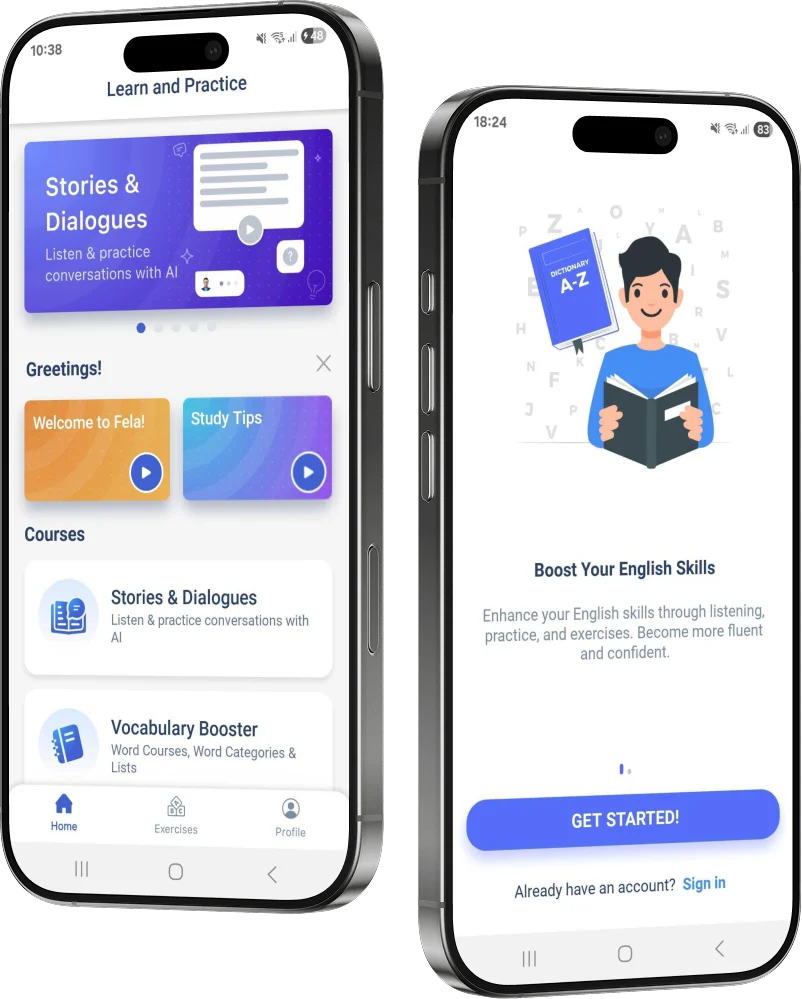
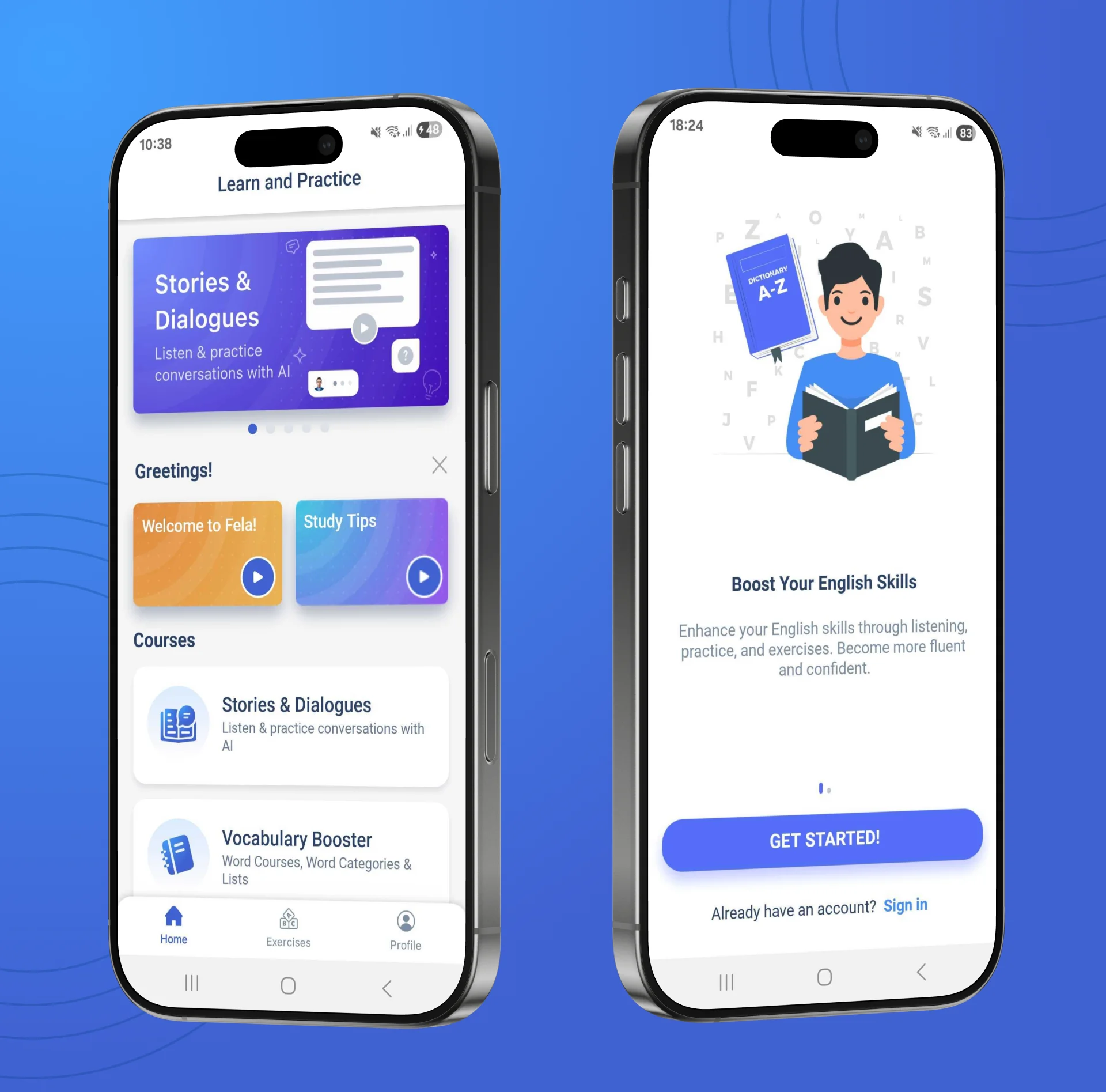
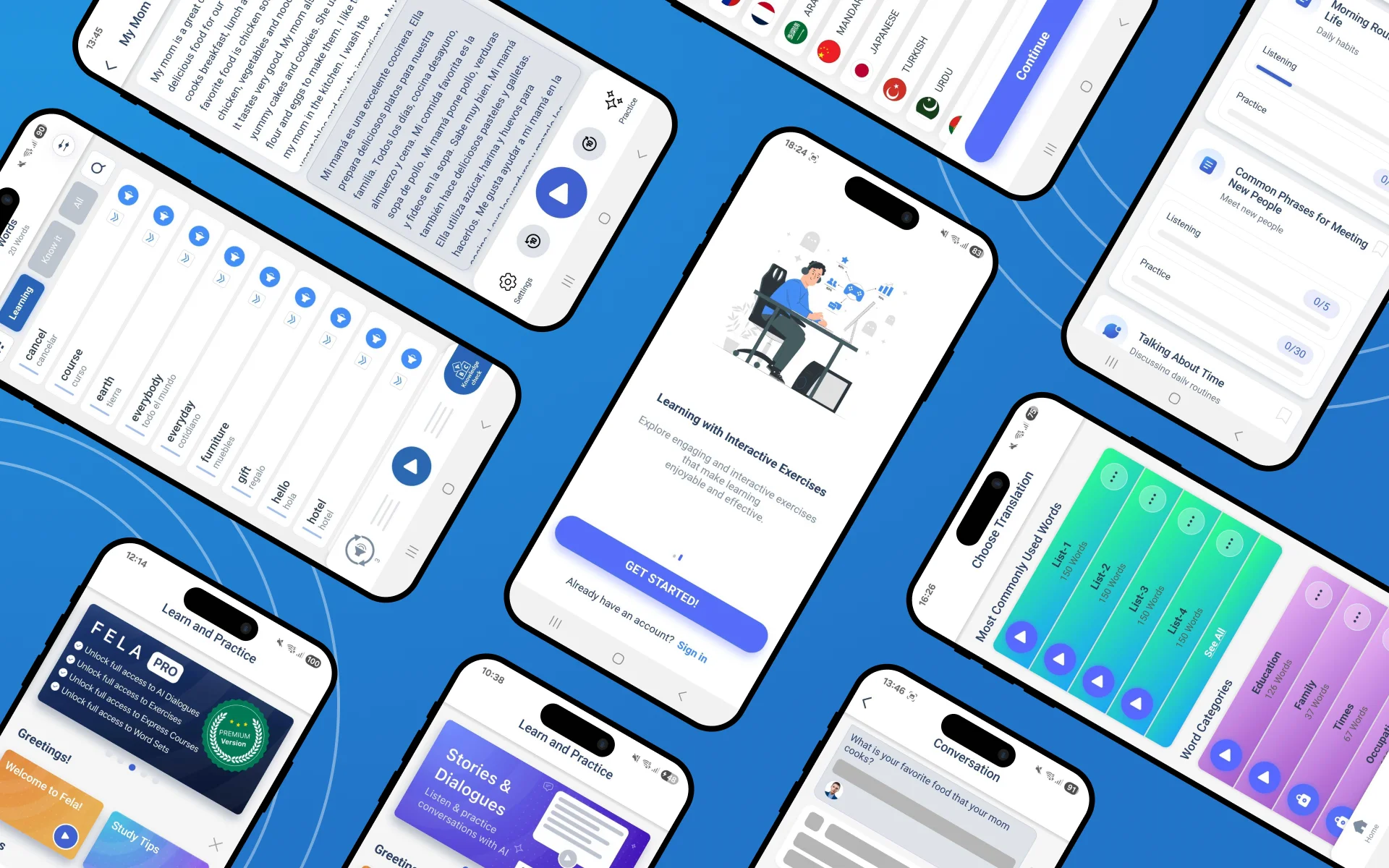
AppMatic Tech designed the FELA interface to reduce friction in the language learning loop: the path from lesson start to active AI conversation had to be short enough that users reached the core product value quickly, and the conversation screen itself had to be visually calm enough to avoid adding cognitive load to the task of speaking in a foreign language. The structured course view follows the progressive lesson card format familiar to users of Duolingo-style apps, providing a recognisable framework for language learners. The AI conversation screen is conversation-first: the interface recedes to focus attention on the exchange rather than on controls and navigation. Subscription tier differentiation in the UI was designed to surface the premium AI conversation feature as the primary conversion driver.


"300,000 downloads is a number I am proud of but what matters more is that users stay because the AI conversation actually works. The sub-500ms response is something most teams said could not be done at our price point. AppMatic Tech built the pipeline, scaled it to 25,000 concurrent users, and shipped a product that competes with the best language apps in the market."
FELA Founder

Target Audience
FELA is designed for a global audience of language learners, primarily:

Students
Preparing for exams, interviews, or studies abroad. Need better spoken English skills.

Working Professionals
Want to communicate effectively in meetings. Need confidence in workplace conversations.

Non-Native English Speakers
Understand English but struggle to speak. Need real-world conversational practice.
Typography
Color Palette

FELA: Technical Performance Metrics
| Metric | Value |
|---|---|
| Total Downloads | 300,000+ |
| AI Response Time | Sub-500ms (end-to-end STT, Groq, Language Aligner, TTS) |
| Concurrent User Scale | 25,000 simultaneous users, validated pre-launch |
| LLM Inference Engine | Groq (LPU architecture) |
| AI Services Layer | FastAPI (Python microservices) |
| GPU Compute | RunPod |
| Databases | MySQL (structured) + MongoDB (conversation context) |
| Infrastructure | AWS |
| Monetisation | In-app subscriptions: App Store (StoreKit) + Google Play Billing |
| Admin Modules | 7: Courses, Tutor Dashboard, AI Content Creator, Conversations, Topics, Student Assignments, Activity Tracking |
FELA Tech Stack
- Swift
- iOS native application
- Kotlin
- Android native application
- Laravel
- Primary backend API
- FastAPI
- AI microservices layer
- MySQL
- Structured data storage
- MongoDB
- Conversation context storage
- AWS
- Cloud infrastructure
- Groq
- LPU-based LLM inference
- RunPod
- GPU compute for AI workloads
- Next.js
- Marketing and web delivery
- React.js
- Admin panel frontend
- PHP
- Server-side runtime for Laravel
- Firebase
- Push notifications and auth
- AWS S3
- Media and asset storage
- Tailwind CSS
- Admin panel interface styling
- Postman
- API validation and testing
- Figma
- UI/UX design and handoff
- Google Analytics
- Usage and engagement tracking
- Latency Testing
- AI pipeline response time benchmarking
- Real-Device Testing
- On-device QA across iOS and Android


FELA AI Architecture and Technical Standards
Groq LPU Inference for Sub-500ms Latency
AppMatic Tech selected Groq's Language Processing Unit (LPU) architecture as the LLM inference engine for FELA because GPU-based inference at standard cloud providers cannot reliably generate language model tokens at the throughput required for sub-500ms end-to-end AI conversation at scale. Groq's LPU architecture delivers deterministic, high-throughput token generation that enables FELA's AI tutor to complete the full STT-to-LLM-to-TTS pipeline within the 500-millisecond budget required for real-time conversational pacing.
FELA LLM Language Aligner: Proficiency Control Layer
AppMatic Tech built the FELA LLM Language Aligner as a dedicated FastAPI microservice that processes every LLM response before Text-to-Speech delivery. The aligner applies three constraints: vocabulary and grammar complexity matching the learner's current proficiency level, target language register appropriate for the active real-life scenario, and conversational naturalness calibration to prevent overly formal or stilted AI tutor speech. The aligner prevents the AI tutor from defaulting to mid-level English-proximate language patterns in the target language, a common failure mode of unconstrained LLM language output.
Independent Component Scalability Architecture
AppMatic Tech architected the FELA AI pipeline so every functional component scales independently: Groq inference capacity, RunPod GPU workloads, FastAPI STT microservice instances, FastAPI TTS microservice instances, FastAPI LLM orchestration instances, and MongoDB conversation storage. During load testing at 25,000 concurrent users, no single component created a system-wide bottleneck. Scaling one component does not require scaling others, enabling cost-efficient capacity management under variable load.
MongoDB Context Architecture for Multi-Turn Conversation
AppMatic Tech implemented the FELA conversation context model in MongoDB, with per-session documents storing the full turn-by-turn exchange history, active scenario metadata, vocabulary introduced, and grammar patterns modelled. Document retrieval latency was optimised to remain under 10 milliseconds per context fetch to preserve the 500ms pipeline budget. The MongoDB schema was designed to support conversation sessions from 2 turns to 60+ turns without degradation in context retrieval performance.
Subscription Receipt Validation and Entitlement Security
FELA in-app subscription purchases are validated server-side against App Store and Google Play receipt records via the Laravel API before course and AI tutor feature access is unlocked. Receipt validation prevents entitlement spoofing and ensures subscription state is consistently enforced across iOS and Android without client-side bypass paths.
How AppMatic Tech Built the FELA AI Architecture and Shipped 300,000+ Downloads
- Phase 1: AI Architecture Design and Pipeline Specification
AppMatic Tech designed the FELA AI architecture before writing a line of code: specifying the STT provider, LLM inference engine (Groq selected for sub-500ms latency requirement), TTS provider, Language Aligner component specification, FastAPI microservice boundaries, MongoDB conversation schema, and AWS infrastructure topology. The 500ms latency budget was defined as a hard constraint that all architectural decisions had to satisfy.
Days 1–10
- Phase 2: FastAPI AI Microservices and Groq Integration
AppMatic Tech built the FELA AI microservices in FastAPI: the STT transcription service, the Groq LLM orchestration service, the LLM Language Aligner service, and the TTS audio generation service. Pipeline end-to-end latency was measured and optimised at each stage, with Groq integration delivering the LLM inference latency required to hit the sub-500ms total budget alongside STT and TTS processing time.
Days 8–30 - Phase 3: LLM Language Aligner Development
AppMatic Tech built and iterated the FELA LLM Language Aligner: defining the proficiency level vocabulary and grammar constraints for each learning stage, the scenario register specifications for each real-life conversation context, and the alignment scoring logic used to select or regenerate LLM responses that fail the proficiency or register constraints. Aligner performance was validated against a defined test set of conversation scenarios across proficiency levels before integration into the live pipeline.
Days 15–40 - Phase 4: Mobile App Development
AppMatic Tech built the FELA iOS and Android mobile apps: the AI Conversation Tutor interface, real-life scenario selection, Chatbot practice mode, structured course delivery screens, and in-app subscription integration via StoreKit and Google Play Billing, running parallel to AI microservices development with daily pipeline integration testing throughout.
Days 20–50 - Phase 5: Laravel Backend, Admin Panel, and Database Layer
AppMatic Tech built the Laravel backend for user management, course delivery, subscription handling, and non-AI API endpoints, alongside the MySQL schema for structured data and MongoDB schema and index strategy for conversation context. The admin panel's seven modules were built in parallel with client content team onboarding.
Days 15–50 - Phase 6: Scale Testing, Optimisation, and Launch
AppMatic Tech conducted load testing at 25,000 concurrent user sessions to validate independent component scalability and confirm sub-500ms pipeline performance under peak load. Groq capacity, RunPod GPU allocation, FastAPI instance counts, and MongoDB read throughput were each tuned independently to their load-test results before the production launch.
Days 50–60+
Services Behind This Build
FELA combined native iOS and Android mobile engineering with a FastAPI AI microservices layer, Groq LLM inference, and a scalable Laravel backend. Explore the AppMatic Tech services that map directly to this product build. See the startup software development hub for similar builds.


Explore More Craft
Explore More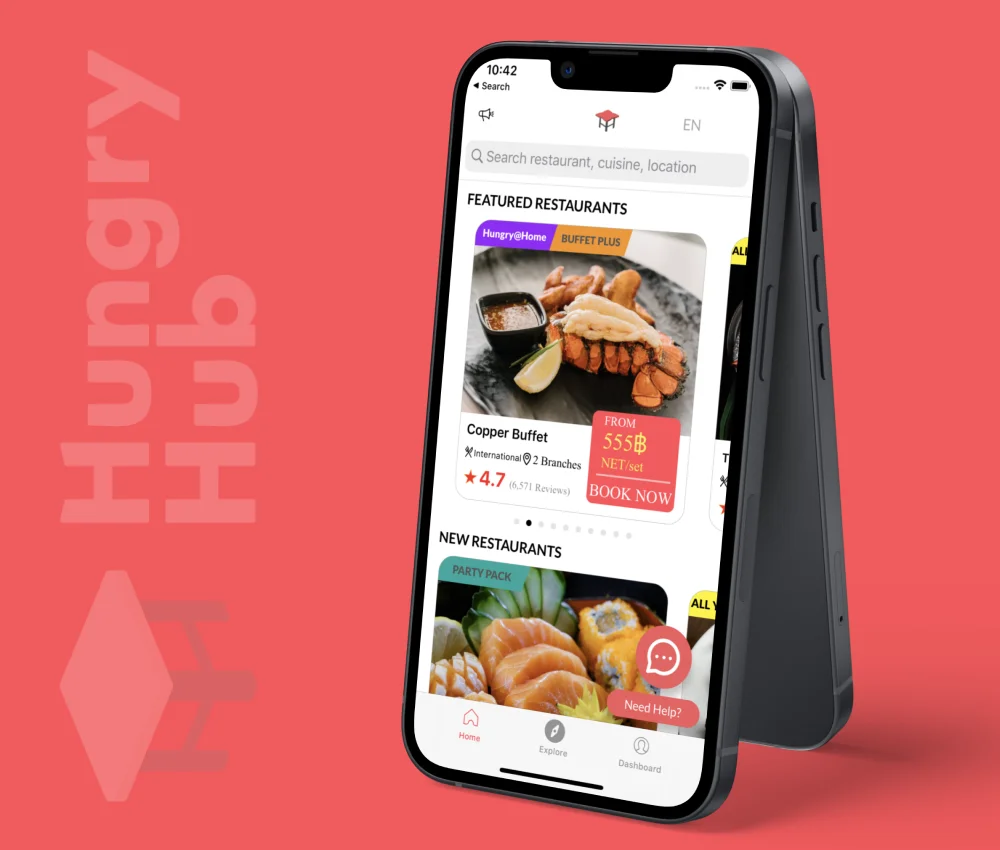
Hungryhub
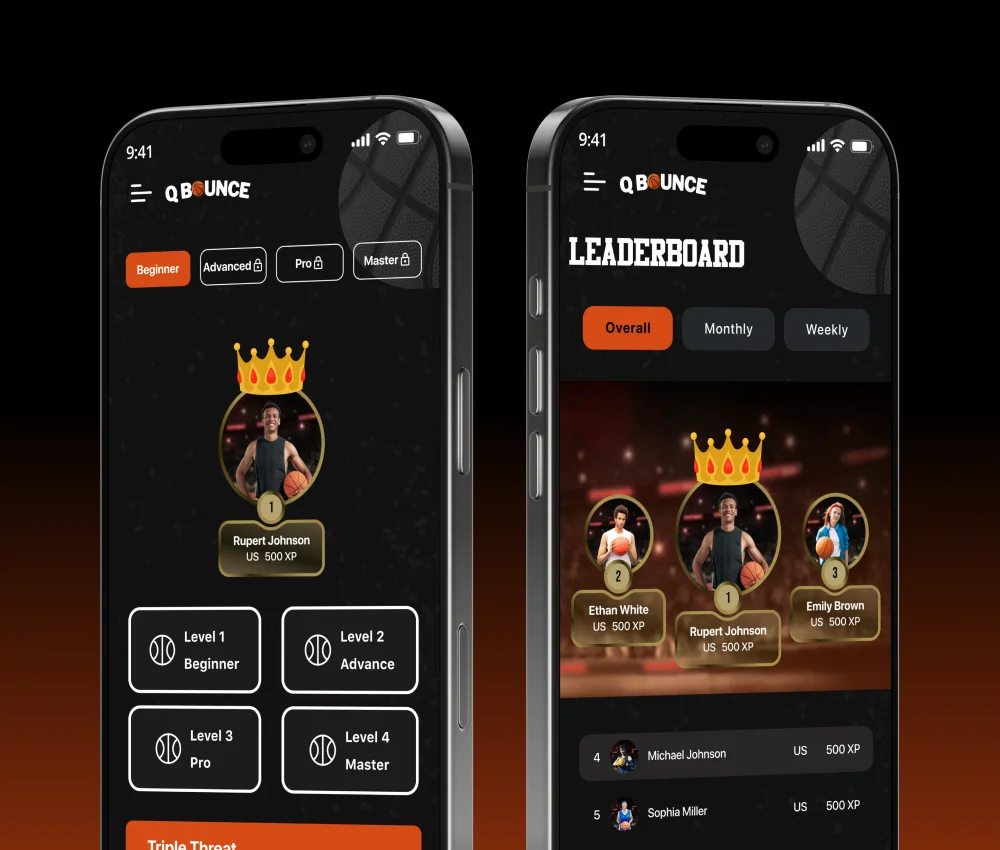
Qbounce
AppMatic Tech Builds AI Conversation Apps with Real-Time LLM Pipelines at Scale
All projects begin with a no-cost Discovery and Technical Scoping session. Contact the team at contact@appmatictech.com.
Start the Conversation