

AI Finance Planner · Conversational Allocation Across Equity, Insurance, Real Estate, Gold, and Retirement
AppMatic Tech built an AI personal finance planner from scratch for a Singapore-based fintech company: a conversational chat interface that generates AI-powered allocation across six asset classes spanning equity, emergency fund, insurance, real estate, gold, and retirement, built in Flutter on a Supabase backend.
Project Overview
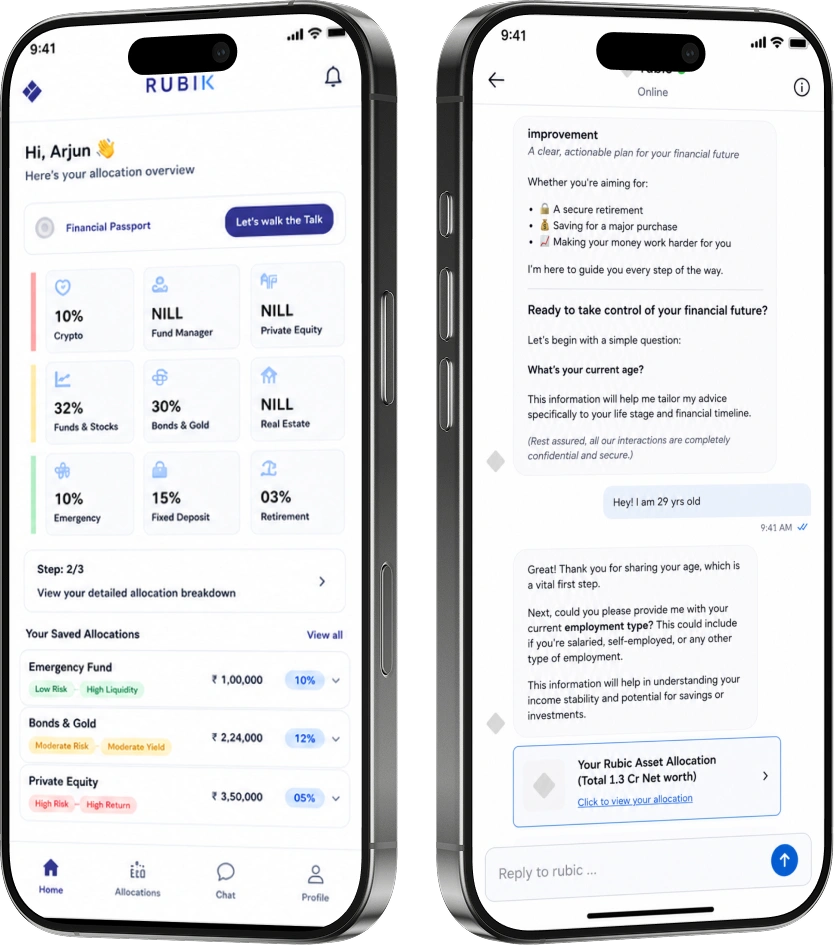
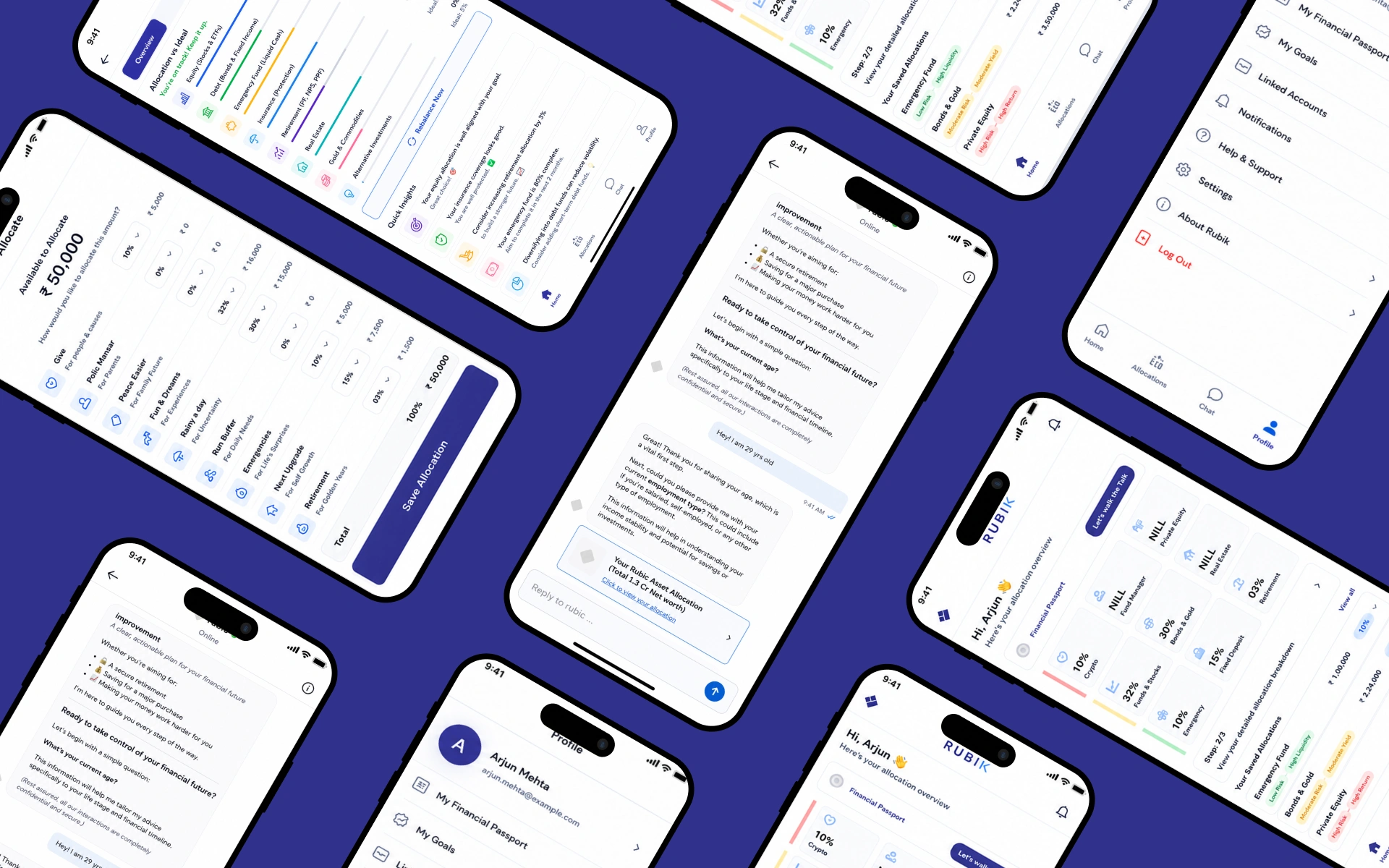
AppMatic Tech built an AI-powered personal finance planner from scratch for a Singapore-based fintech company. The app uses a conversational chat interface where an AI guides users through financial discovery and generates personalized allocation recommendations across six asset classes: equity, emergency fund, insurance, real estate, gold, and retirement. Instead of a traditional form-based calculator, the AI asks contextual questions in natural language, adapts follow-up questions based on previous answers, and produces a recommendation through dialogue rather than form submission. AppMatic Tech delivered a Flutter mobile application for iOS and Android with a Supabase backend covering PostgreSQL database, authentication, and edge functions for the AI service integration.
- Client
- Singapore-based fintech company (name withheld)
- Category
- Mobile App, FinTech, AI
- Platform
- iOS + Android (Flutter)
- Backend
- Supabase (PostgreSQL + Auth + Edge Functions)
- AI
- Backend allocation engine with LLM explainability
- Engagement
- Built from scratch
Why Conversational Finance Planning Works Better Than Forms
Traditional finance calculators present a form with fields the user does not understand. What is risk tolerance on a scale of 1 to 5? Should a down payment goal be classified as short-term or long-term? At what point should the user stop filling fields and submit? Users abandon finance calculator forms because the questions assume financial literacy the user may not have. The form collects data. It does not educate or guide.
AppMatic Tech built the AI finance planner with a chat interface because financial planning is a conversation, not a form. The AI asks questions in plain language. When the user is unsure about a concept, the AI explains it in context rather than linking to a glossary. The AI adapts its follow-up questions based on what the user has already shared. A 25-year-old with no dependents receives different follow-up questions than a 45-year-old with a family and a mortgage. The result is that users who would abandon a form complete the financial discovery conversation and receive a personalized allocation recommendation.
What AppMatic Tech Built
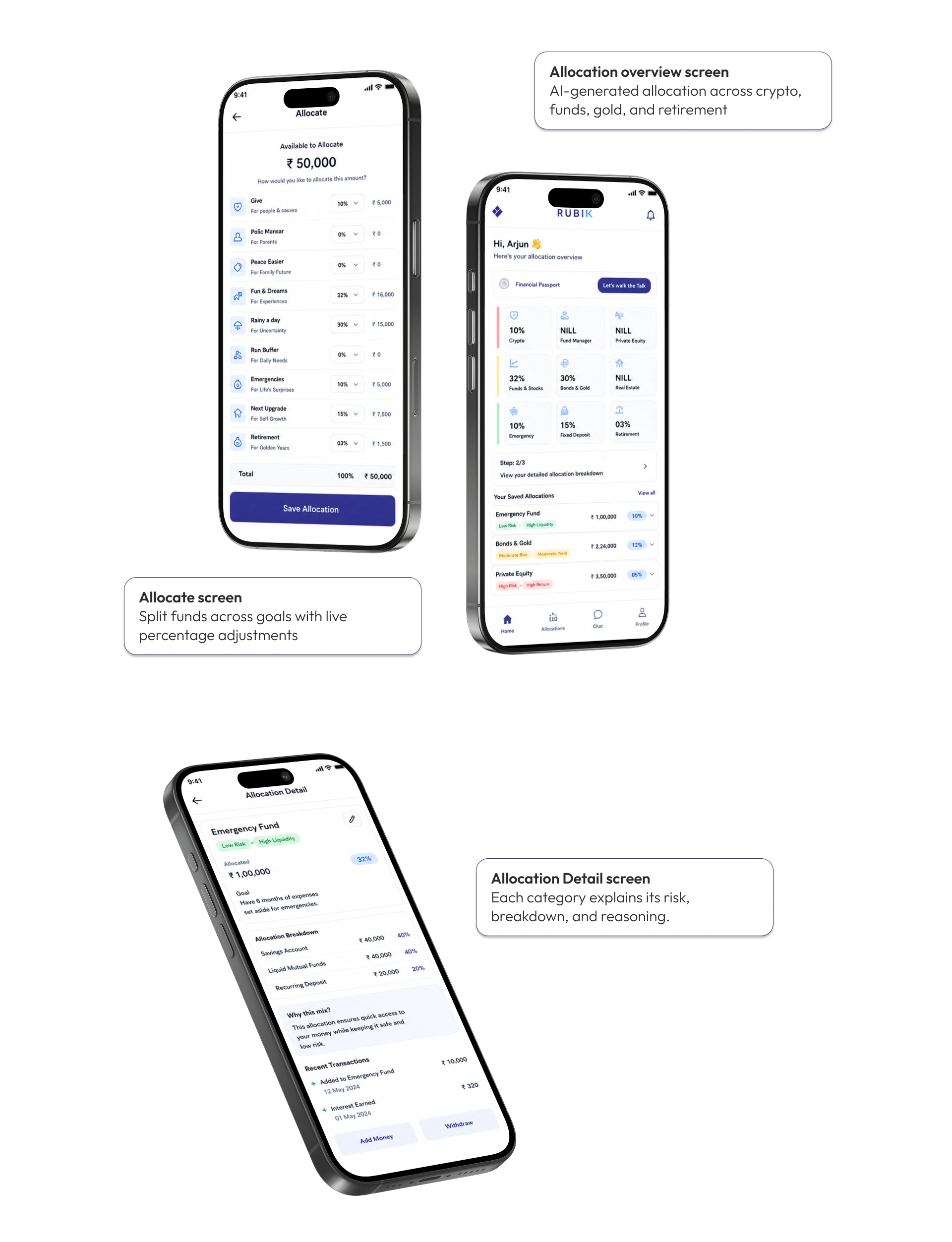
AppMatic Tech delivered the full AI finance planner from scratch: a conversational chat interface, the AI allocation engine integration, an explainability layer, a visual allocation dashboard, and a progressive financial profile. Every component below was engineered to turn financial discovery into a guided dialogue rather than a form.
- Conversational AI Chat Interface
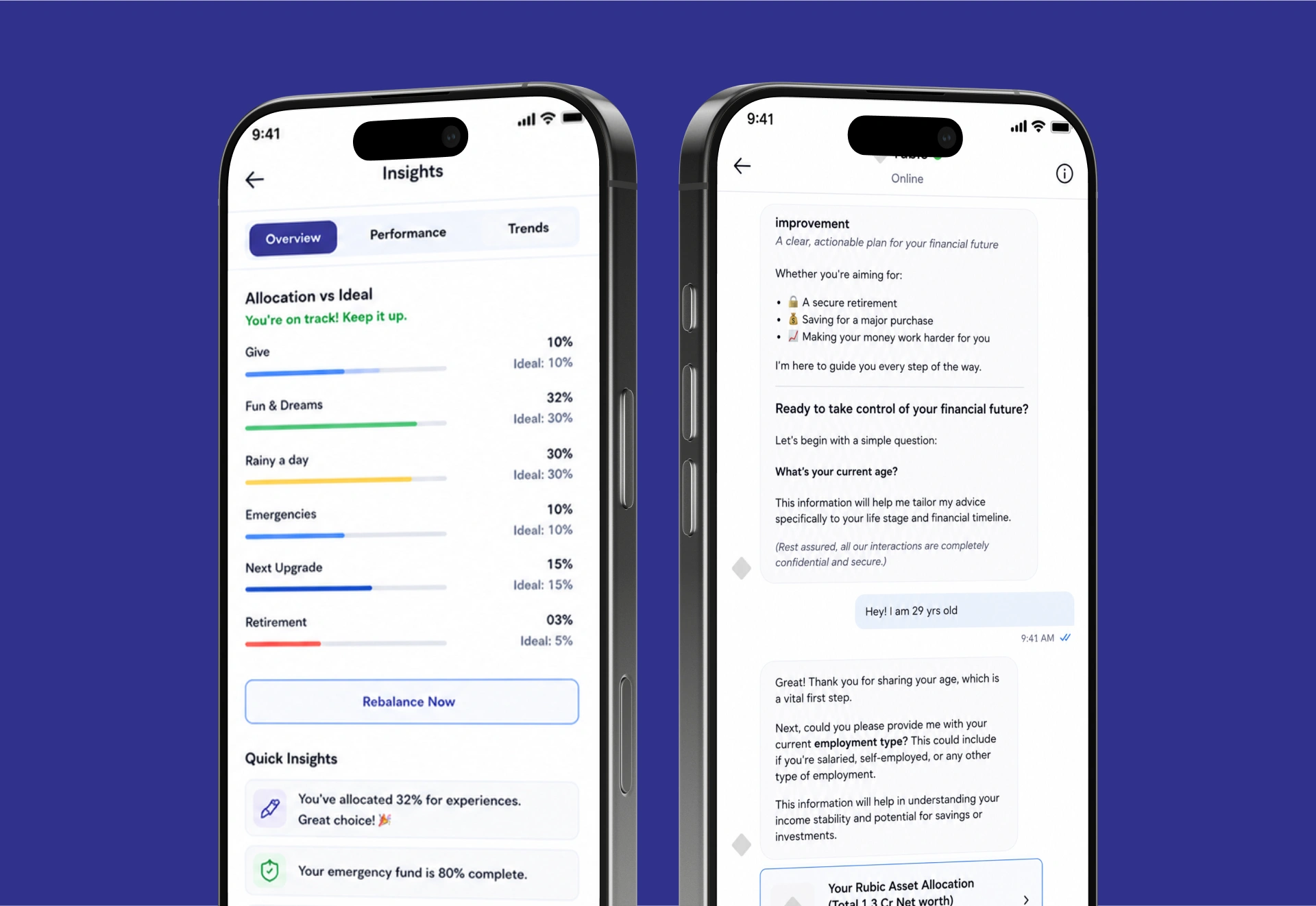
- AppMatic Tech built the chat interface where the AI guides users through financial discovery. The conversation state manager tracks which financial data points have been collected (income, age, existing assets, goals, risk comfort), which are still needed, and which follow-up questions to ask based on previous answers. The AI does not ask all questions upfront. It collects the minimum set needed for an initial allocation and refines the recommendation as the user provides more information in subsequent sessions. Conversation history is preserved across sessions so returning users continue from where they left off.
- AI-Powered Allocation Engine Integration
- AppMatic Tech integrated the client's backend AI allocation service that processes the structured financial profile and generates personalized percentage allocations across six asset classes: equity, emergency fund, insurance, real estate, gold, and retirement. The integration layer sends the structured profile to the AI service via Supabase edge functions and receives the allocation response. Supabase real-time subscriptions push the completed allocation to the user's dashboard so the recommendation appears without manual refresh.
- Explainability Layer
- For each allocation percentage, the app displays a plain-language explanation of why that percentage was recommended for that user's specific financial situation. The explanations are generated by the LLM from the allocation output and the user's profile, not from pre-written templates. A user who sees 35% in equity also sees why: their age, income stability, and long time horizon make equity appropriate at that weight. The explainability layer turns a number into a decision the user can understand and trust.
- Visual Allocation Dashboard
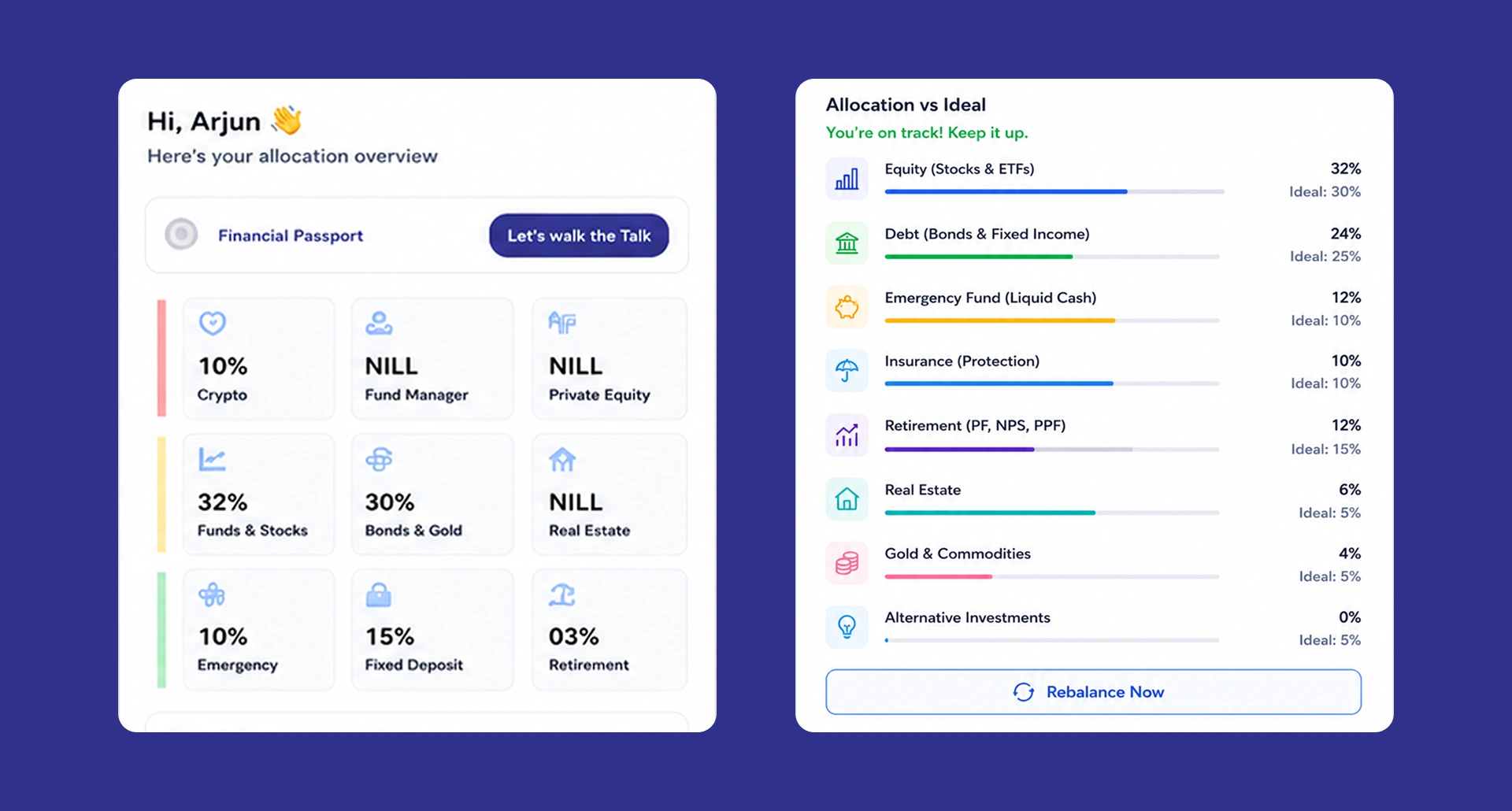
- AppMatic Tech built an interactive allocation chart showing the percentage distribution across all six categories. Each category is tappable: the user sees the AI's reasoning, recommended next steps, and relevant financial product categories. Scenario comparison allows the user to adjust inputs, such as a salary increase, a new savings goal, or a life event, and see how the recommended allocation shifts in real time. Historical view shows how the user's recommended allocation has evolved across sessions.
- Progressive Financial Profile
- The user's financial profile builds incrementally through conversations rather than a one-time form. When a user returns for a new session and mentions a life change, such as a new job, a marriage, or a home purchase, the profile updates and the allocation recalculates. The app tracks the gap between the user's recommended allocation and their actual current allocation, highlighting categories where the user is over-allocated or under-allocated relative to the AI's recommendation.
Why Supabase for This Product
AppMatic Tech selected Supabase as the backend for the AI finance planner based on three requirements: built-in authentication with social login support for a consumer mobile app, row-level security in PostgreSQL for user financial data isolation, and edge functions for lightweight AI service integration without a full custom API server. Supabase provided all three out of the box, which reduced the backend build timeline compared to a custom Laravel or Node.js implementation for a product of this scope.
This is AppMatic Tech's first production case study using Supabase rather than Laravel or Node.js. The selection does not indicate a platform shift. AppMatic Tech selects the backend technology based on the product's requirements. For products with complex relational data models and business logic such as construction platforms, healthcare systems, and CRM integrations, Laravel remains AppMatic Tech's default. For consumer mobile apps with authentication, real-time data needs, and lightweight backend logic, Supabase is an appropriate choice that reduces time to market.
Results
- Asset Classes
- 6
- Interface
- Conversational AI
- Backend
- Supabase
- Built
- From Scratch
AppMatic Tech delivered the AI finance planner as a complete product: Flutter mobile app for iOS and Android, Supabase backend with PostgreSQL and edge functions, integration with the client's AI allocation service, a conversational chat interface with session persistence, an explainability layer that translates allocation percentages into plain-language reasoning, and a visual allocation dashboard with scenario comparison. The conversational approach replaced the traditional form-based calculator model, enabling users without financial planning expertise to receive personalized allocation recommendations across all six asset classes through a guided dialogue.
The AI finance planner provides allocation recommendations for informational and educational purposes. It does not constitute licensed financial advice. Users are encouraged to consult a licensed financial advisor before making investment decisions.
"We tested a form-based calculator before this. Users dropped off at the third field. They did not understand the questions and they did not want to guess. AppMatic Tech built us a chat interface where the AI asks one question at a time, explains when the user is confused, and remembers everything across sessions. Completion rates are not comparable. The conversational approach is a different product, not just a different interface."
Product LeadSingapore-based FinTech Company

AI Finance Planner by the Numbers
| Metric | Value |
|---|---|
| Mobile Platform | Flutter (iOS + Android) |
| Backend | Supabase (PostgreSQL, Auth, Edge Functions) |
| Interface | Conversational AI chat |
| Asset Classes | Equity, emergency fund, insurance, real estate, gold, retirement |
| Explainability | LLM-generated plain-language reasoning per allocation |
| Profile Model | Progressive, builds across sessions |
| Data Isolation | PostgreSQL row-level security |
| Client Geography | Singapore |
| Engagement Type | Built from scratch |
Technology Stack
- Flutter
- iOS and Android application
- Dart
- Flutter application language
- Supabase
- Auth, database, edge functions
- PostgreSQL
- Database with row-level security
- Conversational AI
- LLM chat and explainability
- Allocation Engine
- Six-class AI allocation
- Edge Functions
- AI service integration
- Figma
- UI design and handoff


Related AppMatic Tech Services
This finance planner combined a conversational AI interface, an external allocation engine, and a Supabase backend. Explore the AppMatic Tech services that map directly to this fintech product build.




Explore More Craft
Explore More
Future Education

Travel CRM
Build a FinTech Product with AppMatic Tech
All projects begin with a no-cost Discovery and Technical Scoping session. Contact the team at contact@appmatictech.com.
Scope Your Project