


AppMatic Tech builds hotel booking engines and channel integrations that sync availability, rates, and inventory between property management systems, direct booking engines, and online travel agencies, using Laravel, Node.js, MySQL, and Redis queues. AppMatic Tech is based in Ahmedabad, India, with 330+ products shipped and a travel CRM serving 10 million+ users.
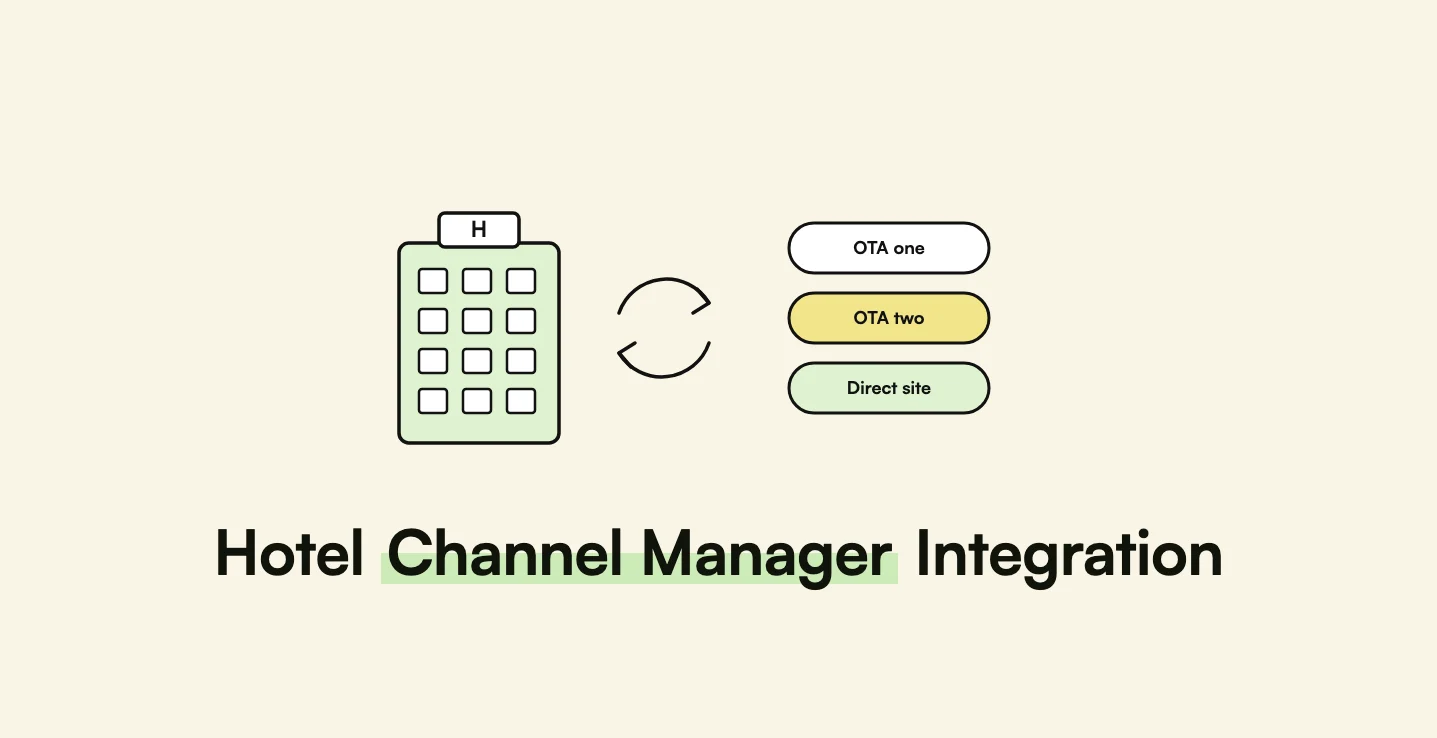
A hotel sells the same rooms through many doors: its own website, Booking.com, Expedia, wholesalers, and sometimes corporate and travel agent channels. Every door must show the right price and the right number of rooms, and every booking from any door must reduce availability everywhere else within seconds. When that sync fails, the hotel overbooks, and a guest arrives to no room. Channel managers exist to prevent that. This guide explains how channel manager integration works, what changed in 2024 to 2026 for OTA connectivity and pricing rules, and how AppMatic Tech designs integrations that do not overbook.
Key takeaways
One inventory, many channels, and no race conditions.
| Point | Detail |
|---|---|
| ARI is the payload | Availability, rates, and inventory flow out; reservations flow back. |
| One source of inventory | The channel manager or PMS owns availability, never the channels. |
| Booking.com is closed to new providers | New connectivity providers are paused until further notice. |
| Expedia connects through EQC | Expedia QuickConnect exchanges rates, availability, and bookings. |
| EU parity clauses are gone | Booking.com cannot stop hotels from pricing differently elsewhere in the EU. |
| Overbooking is a sync failure | Ordered processing, locks, and reconciliation prevent it. |
What does a hotel channel manager do?
A channel manager keeps availability, rates, and inventory (ARI) consistent across every sales channel and returns reservations to the hotel's systems.
| Function | What it does |
|---|---|
| Availability sync | Updates rooms available per room type and date on every channel |
| Rate distribution | Pushes rate plans, prices, and derived rates to each channel |
| Restrictions | Applies minimum stay, closed to arrival, closed to departure, and stop-sell rules |
| Reservation delivery | Receives bookings, modifications, and cancellations from channels |
| Mapping | Links the hotel's room types and rate plans to each channel's codes |
| Monitoring | Flags failed updates and unconfirmed reservations |
How do the PMS, booking engine, and channel manager fit together?
- Property management system (PMS)
- Runs the hotel's operations: reservations, check-in, rooms, housekeeping, and billing. The PMS holds the final record of every stay.
- Channel manager
- Distributes ARI to external channels and collects their reservations, usually acting as the inventory source the channels read from.
- Booking engine
- The hotel's direct booking system on its own website and app, which must read the same inventory as every other channel. The architecture is covered in travel booking engine development.
- Revenue management system
- Recommends or sets prices by date and room type, feeding rates into the channel manager.
Problems start when two systems both believe they own inventory. AppMatic Tech's first design decision on any hotel integration is naming the single system that owns availability.
How do Booking.com and Expedia connections work in 2026?
The two largest online travel agency groups connect to hotel systems through approved connectivity providers.
- Booking.com. Booking.com's connectivity programme provides APIs including the Rates and Availability API, the Content and Images API, and the Promotions API to certified connectivity partners. Booking.com's connectivity portal states that it is pausing integrations with new connectivity providers until further notice. A new hotel software product therefore reaches Booking.com through an existing certified channel manager rather than a new direct connection.
- Expedia Group. Expedia QuickConnect (EQC) lets channel managers and hotel systems exchange rates, availability, and booking information with Expedia. Hotels choose the connectivity provider in Expedia Partner Central, and connected inventory can reach other Expedia Group brands such as Hotels.com.
For most new products, the practical architecture is a booking engine and PMS that integrate with one established channel manager, which in turn connects to the OTAs.
What data does a channel integration exchange?
- Outbound ARI: availability per room type and date, rates per rate plan, and restrictions.
- Inbound reservations: new bookings, modifications, and cancellations, each with the channel's reference.
- Acknowledgements: confirmation that each reservation was received and stored, without which channels may retry or flag the property.
- Content: descriptions, images, and amenities, updated far less often than ARI.
Message formats vary by provider, and many follow the OpenTravel Alliance XML standards. AppMatic Tech maps each provider's format into one internal model, the same adapter approach used for supplier connectivity in GDS API integration for travel tech.
How does a channel integration prevent overbooking?
Overbooking from software is almost always a race condition or a missed message. AppMatic Tech applies six controls:
- Single inventory owner. Only one system decrements availability.
- Ordered processing. Reservations for the same property are processed one at a time per room type and date, using a queue partitioned by property.
- Inventory locks. Availability is reserved atomically before a booking is confirmed, so two channels cannot sell the last room at once.
- Immediate push. Each booking triggers an availability update to every channel, rather than waiting for a scheduled batch.
- Acknowledged delivery. Every inbound reservation is acknowledged only after it is stored, and unacknowledged messages are retried.
- Reconciliation. A scheduled job compares channel reservations with the PMS and alerts staff to any mismatch before the guest arrives.
Pro tip: Keep a small buffer of rooms closed to OTAs on peak dates and sell them only through the direct booking engine. The buffer absorbs the rare sync failure and nudges guests toward the hotel's own channel, where the margin is higher.
Peak periods test these controls hardest, such as Hajj and Umrah seasons for hotels in Makkah and Madinah, covered in travel app development for Saudi Arabia.
How did EU rules change hotel rate parity?
Rate parity clauses once required hotels to offer an OTA prices at least as good as those on other channels. Two developments in 2024 changed that in Europe:
- Digital Markets Act. The European Commission designated Booking Holdings a gatekeeper under the Digital Markets Act in May 2024, with obligations applying from November 2024. Under the Act, Booking.com cannot prevent hotels and other business users from offering different prices or conditions through their own websites or other channels.
- EU Court of Justice. On 19 September 2024, the Court of Justice ruled that it had not been established that Booking.com's wide or narrow price parity clauses were objectively necessary for the economic viability of the hotel reservation platform.
For hotel software in Europe, the result is more pricing freedom by channel. Booking engines and channel integrations should support channel-specific rates and member prices without manual workarounds. AppMatic Tech does not give legal advice; hotels should confirm contract terms with counsel.
Should a business build or buy channel management?
| Situation | Better choice |
|---|---|
| Independent hotel or small group | Subscribe to an established channel manager |
| Hotel group building its own direct booking engine and app | Build the booking engine; integrate with an established channel manager |
| Travel company selling hotel inventory it does not own | Build supplier adapters to bed banks and channel managers |
| Software company building a PMS | Build the PMS; partner with channel managers for OTA connectivity |
Building a new direct OTA connection is rarely the right first step while Booking.com pauses new connectivity providers. The value for most businesses is in the direct booking engine, the guest app, and clean integration with an established channel manager.
How AppMatic Tech builds hotel and travel platforms
AppMatic Tech has shipped 330+ products since 2017, holds a 5.0 Clutch rating, and keeps an 83% client retention rate. AppMatic Tech built a role-based travel CRM on Laravel, React, MySQL, and Redis that has served over 10 million users and processed over 50 million customer enquiries and packages.
Related guides: AI trip planner app development and how to build a multi-language, multi-currency travel app. The service is described on the travel technology page. Scoping starts at contact@appmatictech.com or the contact page.
Sources
| Claim used in this article | Source |
|---|---|
| Booking.com connectivity APIs and pause on new connectivity providers | Booking.com Connectivity, Connect portal |
| Expedia QuickConnect exchange of rates, availability, and bookings | Expedia, streamlined access for hotel supply partners |
| Booking Holdings gatekeeper designation and DMA obligations on parity | Irish Legal News, Booking.com required to comply with the DMA and PhocusWire, Booking.com DMA compliance |
| EU Court of Justice ruling of 19 September 2024 on parity clauses | Legal Dive, Booking.com parity clause decision |
| Travel CRM scale | AppMatic Tech, travel CRM case study |
Frequently Asked Questions
- What is a hotel channel manager?
- A hotel channel manager is software that keeps availability, rates, and inventory, known as ARI, in sync across every channel a hotel sells through, such as Booking.com, Expedia, a direct booking engine, and wholesalers. When a room sells on one channel, the channel manager reduces availability everywhere else and passes the reservation to the property management system.
- Can a new software company connect directly to Booking.com?
- Not at present. Booking.com's connectivity portal states that Booking.com is pausing integrations with new connectivity providers until further notice. Existing connectivity partners continue to use APIs such as the Rates and Availability API, the Content and Images API, and the Promotions API. New products usually reach Booking.com through an existing certified channel manager.
- How does Expedia connect to hotel systems?
- Expedia's lodging connectivity, known as Expedia QuickConnect (EQC), lets channel managers and hotel systems exchange rates, availability, and booking information with Expedia directly. Hotels select the connectivity provider in Expedia Partner Central, and connected rates can reach other Expedia Group brands such as Hotels.com.
- Can hotels in the EU offer lower prices than on Booking.com?
- Yes. The EU Court of Justice ruled in September 2024 on Booking.com's price parity clauses, and the European Commission designated Booking Holdings a gatekeeper under the Digital Markets Act in May 2024. Under the Act, Booking.com cannot stop hotels and other business users from offering different prices or conditions through hotel websites or other channels.
- How do hotels prevent overbooking across channels?
- Hotels prevent overbooking by treating the channel manager or property management system as the single source of inventory, pushing availability changes to every channel immediately after each booking, processing reservations in strict order with inventory locks, and reconciling channel reservations against the property management system so missed bookings are caught before guests arrive.