

Kadō: Native iOS and Android Audio/Video Pod Platform from Zero to MVP in Three Months
AppMatic Tech designed and engineered the complete Kadō social platform: native iOS using Swift, native Android using Kotlin, Twilio audio/video calling, full UI/UX, a Laravel REST API backend, and a super admin panel, from a blank canvas in three months. AppMatic Tech solved multi-user concurrent Pod call quality to a WhatsApp-level benchmark before launch.
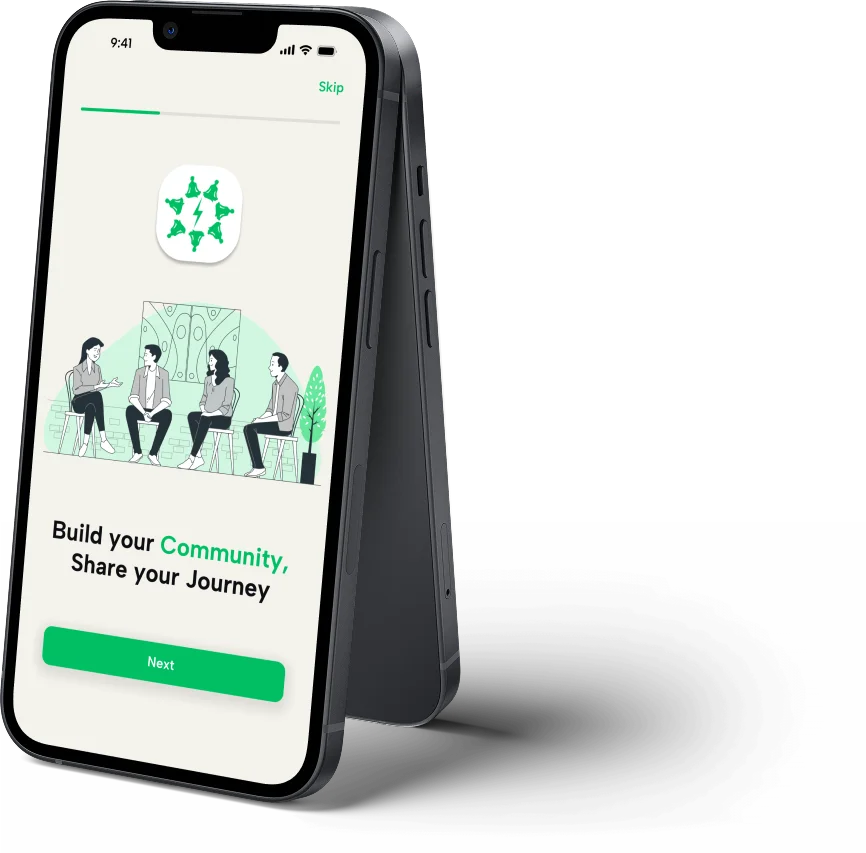
The Challenge Kadō Faced Building a Real-Time Audio/Video Community Platform
Kadō's founding team needed a community audio/video platform built around topic-specific Pods: structured audio and video spaces where users join, speak, and interact around shared interests, similar to X Spaces. Two engineering challenges defined the project. First: testing seamless real-time calling at scale with multiple concurrent users inside a single Pod, a problem that breaks most mobile calling implementations before launch. Second: designing a UX that taught new users the Pod concept quickly enough to retain them in the first session. AppMatic Tech engineered both challenges from zero to launch in three months.
Top Audio/Video Social Platforms, Competitive Analysis
AppMatic Tech mapped the competitive landscape during discovery to identify architectural gaps and strategic differentiators for Kadō against the leading audio/video social platforms.
| Company | Unique Value Proposition | Company Advantage | Company Disadvantage |
|---|---|---|---|
 | Audio-First Drop-In Social Rooms: Clubhouse built audio-first social networking around drop-in rooms where users could listen to or join live conversations organised by topic or host, with a creator-focused monetisation layer. | First Mover in Audio Social: Clubhouse was the first mover in audio social networking, building a massive early adopter base during the 2020-2021 period with strong creator and celebrity engagement. | Audio Only, No Persistence: Clubhouse was audio-only with no video, no community content persistence, and nothing for users to return to after a room ended. Content disappeared when the session closed. |
 | Persistent Community Servers: Discord combined persistent community servers with voice channels, text chat, and media sharing, giving communities a permanent home across gaming, developer, and creator audiences. | Deep Community Tooling: Discord's server and channel structure gave communities deep management tooling. Strong developer and gaming adoption, with robust moderation features and a large established user base. | Complex Onboarding: New users faced a steep learning curve navigating servers, channels, and roles. Discord was not built for spontaneous topic-based audio/video pods accessible to non-technical first-time users. |
 | Live Audio Inside the X Social Graph: X Spaces enabled live audio conversations inside X's existing social graph, giving hosts instant access to their follower audience without a separate app download or community build. | Built-In Audience Distribution: Hosts could reach their existing X followers immediately. No separate app, no new community build required, and content surfaced inside the platform users already used daily. | Platform-Dependent, No Video: X Spaces was entirely dependent on the X platform ecosystem with no standalone product, no community ownership, no video capability, and no persistent content layer outside of X. |
 | Encrypted Messaging with Group Audio/Video: Telegram combined encrypted messaging with group chats, channels, and voice and video calls, positioning privacy and feature richness as its primary differentiators against WhatsApp. | Strong Privacy Positioning: Telegram's privacy positioning and large international user base gave it strong adoption in markets where messaging security was a priority, with feature-rich group management tools. | Calling Ancillary to Messaging Identity: Voice and video calls were ancillary to Telegram's messaging identity. The platform had no topic-organised pods and no dedicated community discovery for audio/video spaces. |
What AppMatic Tech Engineered for Kadō
AppMatic Tech delivered four production systems in three months.
- Native iOS App (Swift)
- AppMatic Tech built the Kadō iOS application in Swift with Pod creation and discovery by topic, audio and video calling inside Pods via Twilio iOS SDK, post and comment creation with image and video sharing, user profile and social login, community management features, push notifications, and deep linking.
- Native Android App (Kotlin)
- AppMatic Tech built the feature-identical Android implementation in Kotlin with Twilio Android SDK integration for audio and video, FCM push notifications with deep link handling, and platform-appropriate UI patterns throughout.
- Laravel REST API Backend
- AppMatic Tech engineered the Laravel backend to handle Pod creation and topic categorisation, user authentication and social login, post and comment content models, report and flag processing, Twilio token generation and session management, and push notification delivery via FCM and APNs.
- Super Admin Panel
- AppMatic Tech delivered a web-based super admin panel with user listing and account management, community and Pod oversight, report and flag review workflow, and block controls for the moderation team.
Kadō: Delivery Metrics
- Audio/Video SDK
- Twilio
- Call Quality Benchmark
- Whatsapp-Level
- UX Onboarding
- Community Pods
Kadō Brand and UI Design
AppMatic Tech delivered the complete UI/UX design for Kadō alongside the native iOS and Android engineering. The visual system was designed to make the Pod concept immediately legible to a first-time user: community discovery, topic browsing, and Pod entry were each given distinct visual treatments to reduce onboarding friction.
Typography
Albert Sans
A B C D E F G H I J K L M N O P Q R S T U V W X Y Z
a b c d e f g h i j k l m n o p q r s t u v w x y z
Color Palette

Key Features
- Topic-based Pods
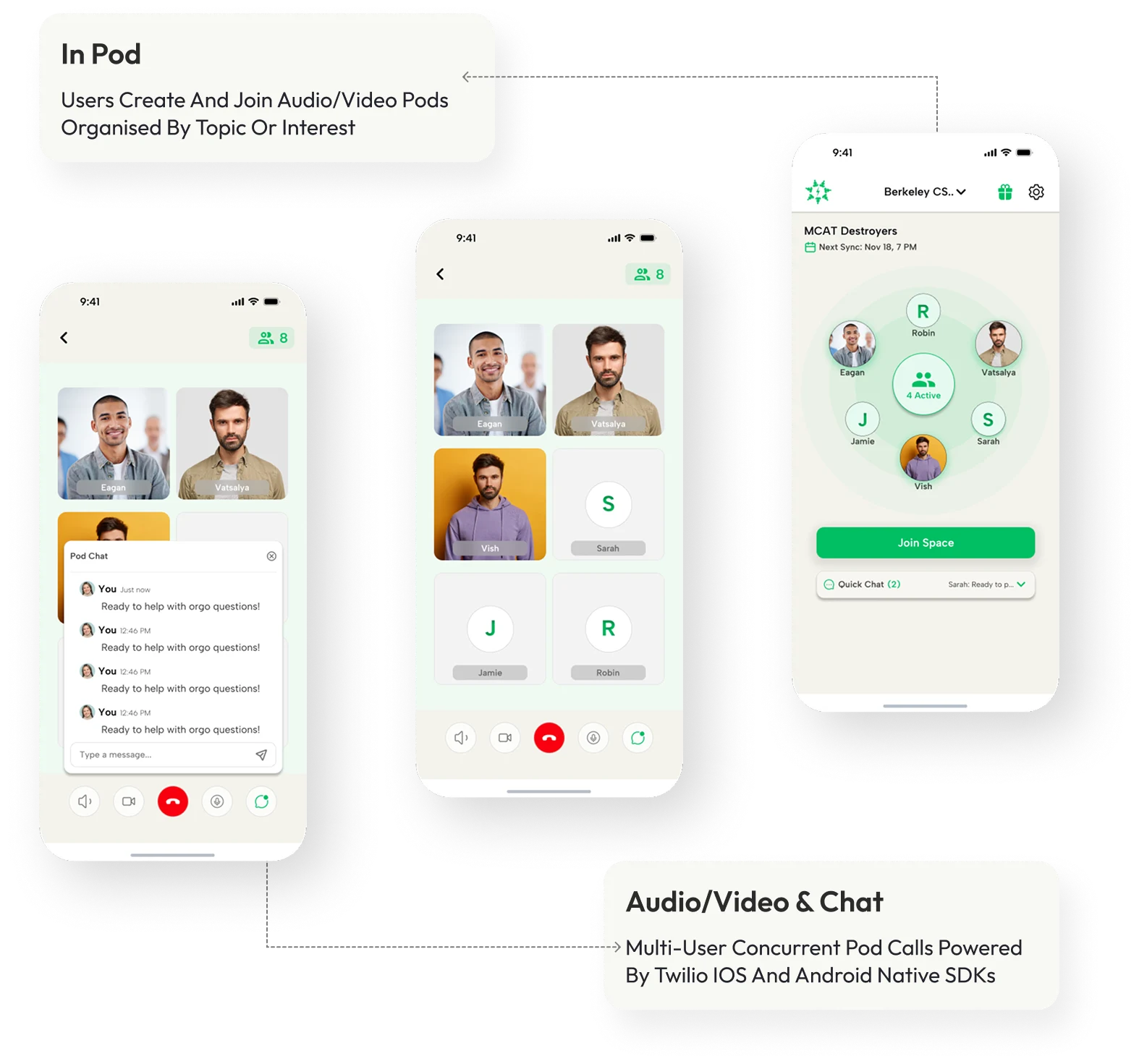
- Users create and join audio/video Pods organised by topic or interest
- Pod discovery feed surfaces relevant communities for new users on first session
- Audio/Video Calling
- Multi-user concurrent Pod calls powered by Twilio iOS and Android native SDKs
- Call quality validated at WhatsApp-level benchmark through concurrent QA testing
- Community Feed
- Post and comment creation with image and video sharing inside each Pod community
- Persistent content layer gives users a reason to return after a Pod session ends
- Push Notifications
- FCM on Android and APNs on iOS with deep link handling into the relevant Pod or post
- Server-side delivery via Laravel ensuring reliable notification routing across platforms
- Content Moderation
- Report and flag pipeline built into the Laravel backend from first production release
- Super admin dashboard lets moderators review, block, and remove content without a deployment
- In-Pod Chat
- Real-time text chat runs inside active Pod spaces alongside live audio and video calls
- Chat messages persist within the Pod so participants can follow the thread after a session ends
Create Pod Screens
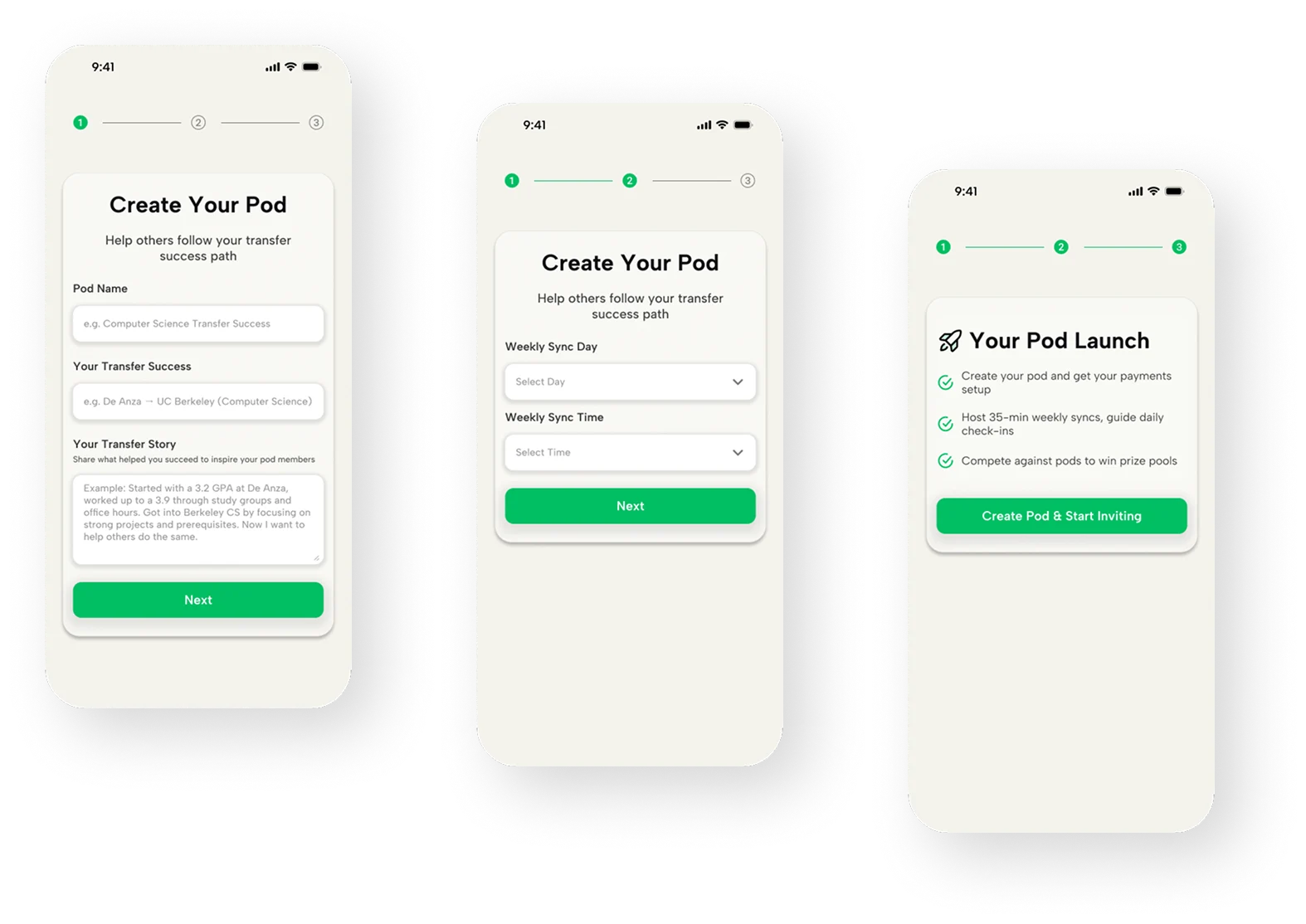
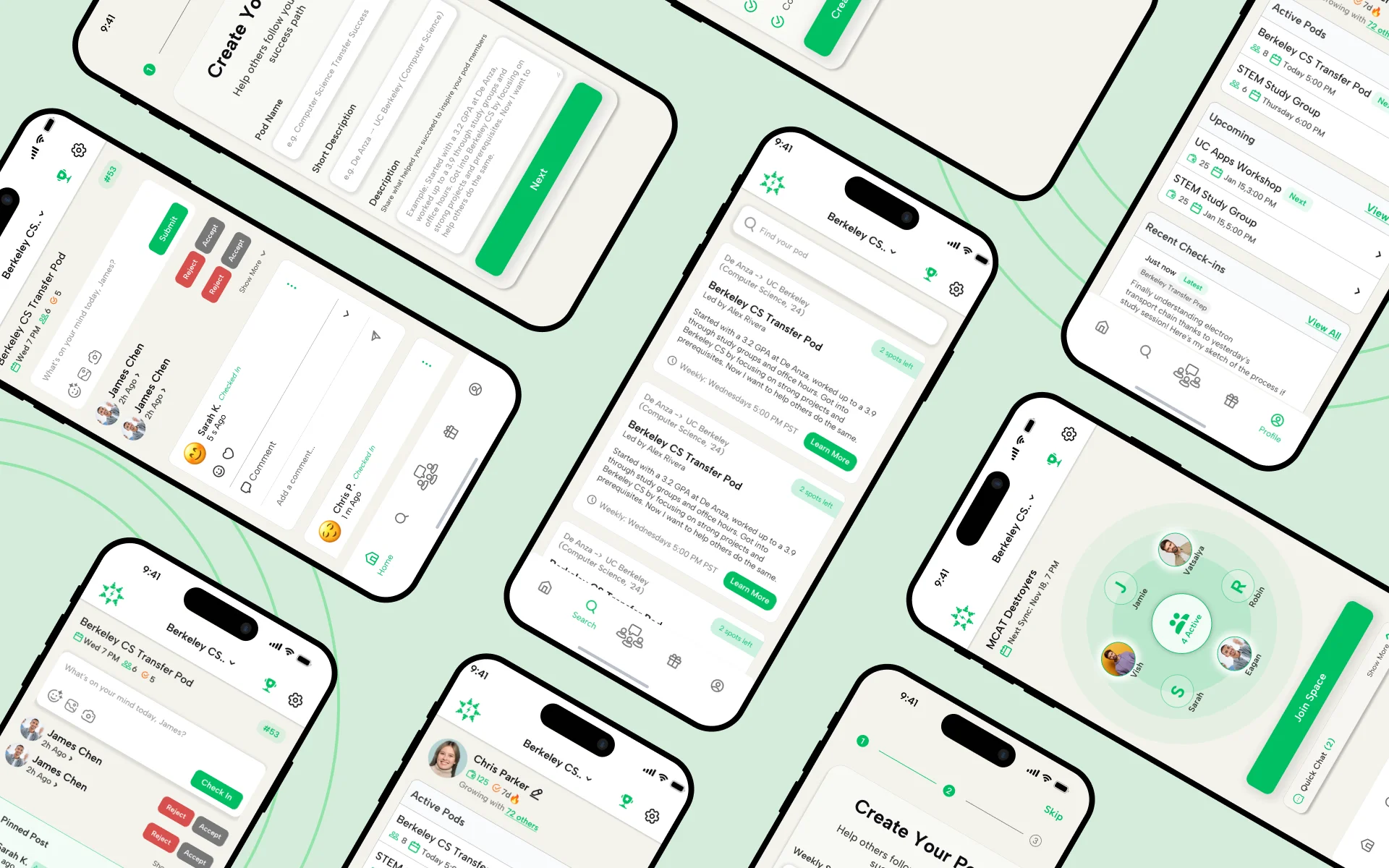
AppMatic Tech designed the Kadō Pod creation flow as a three-step wizard: name and story, weekly sync schedule, and launch confirmation. The flow was optimised to get a first-time Pod host live in under two minutes, with inline guidance at each step to reduce drop-off before launch.
Feed Flow Screen
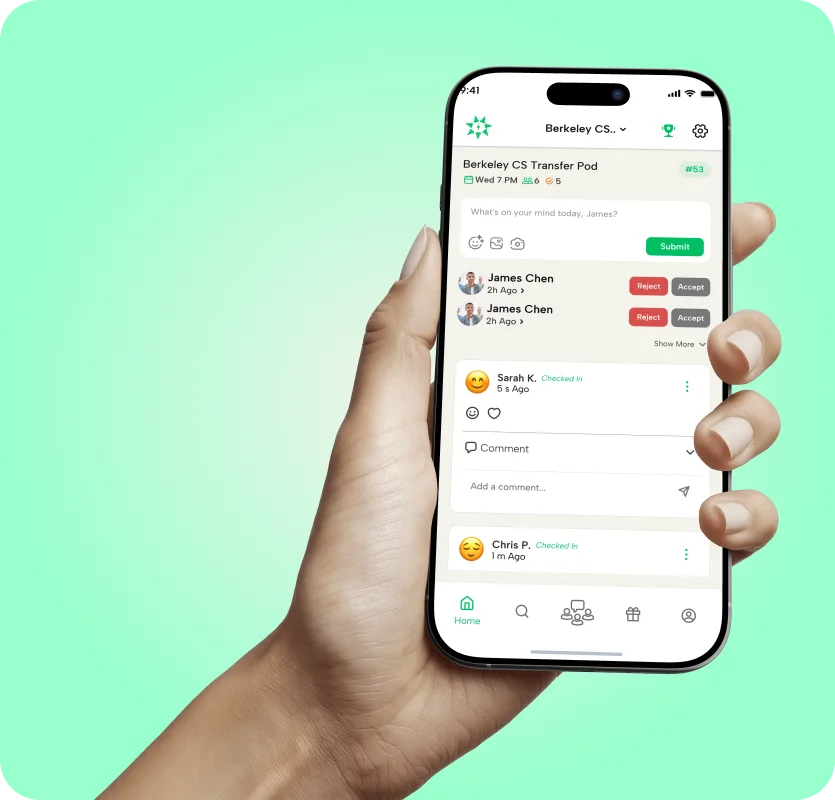
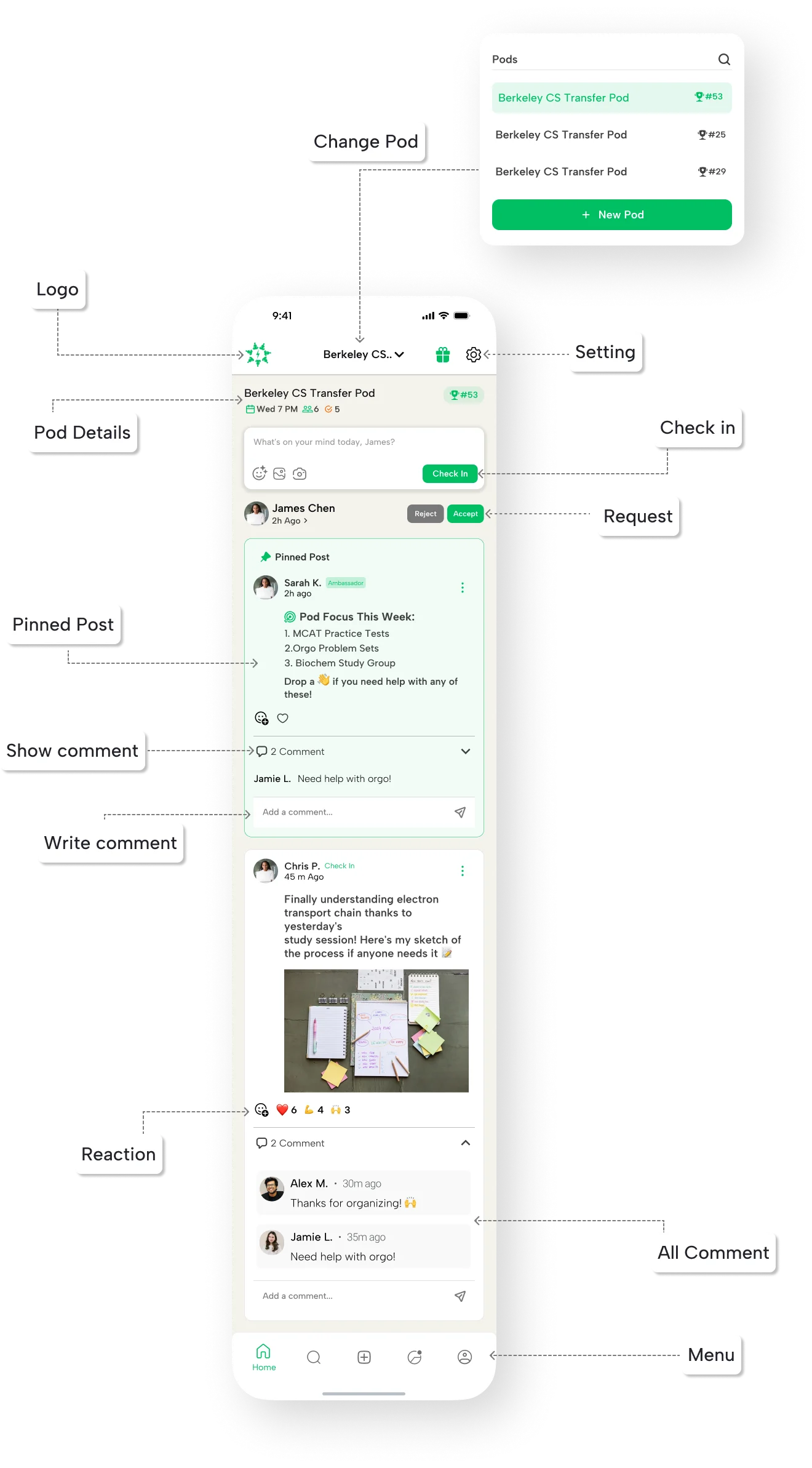
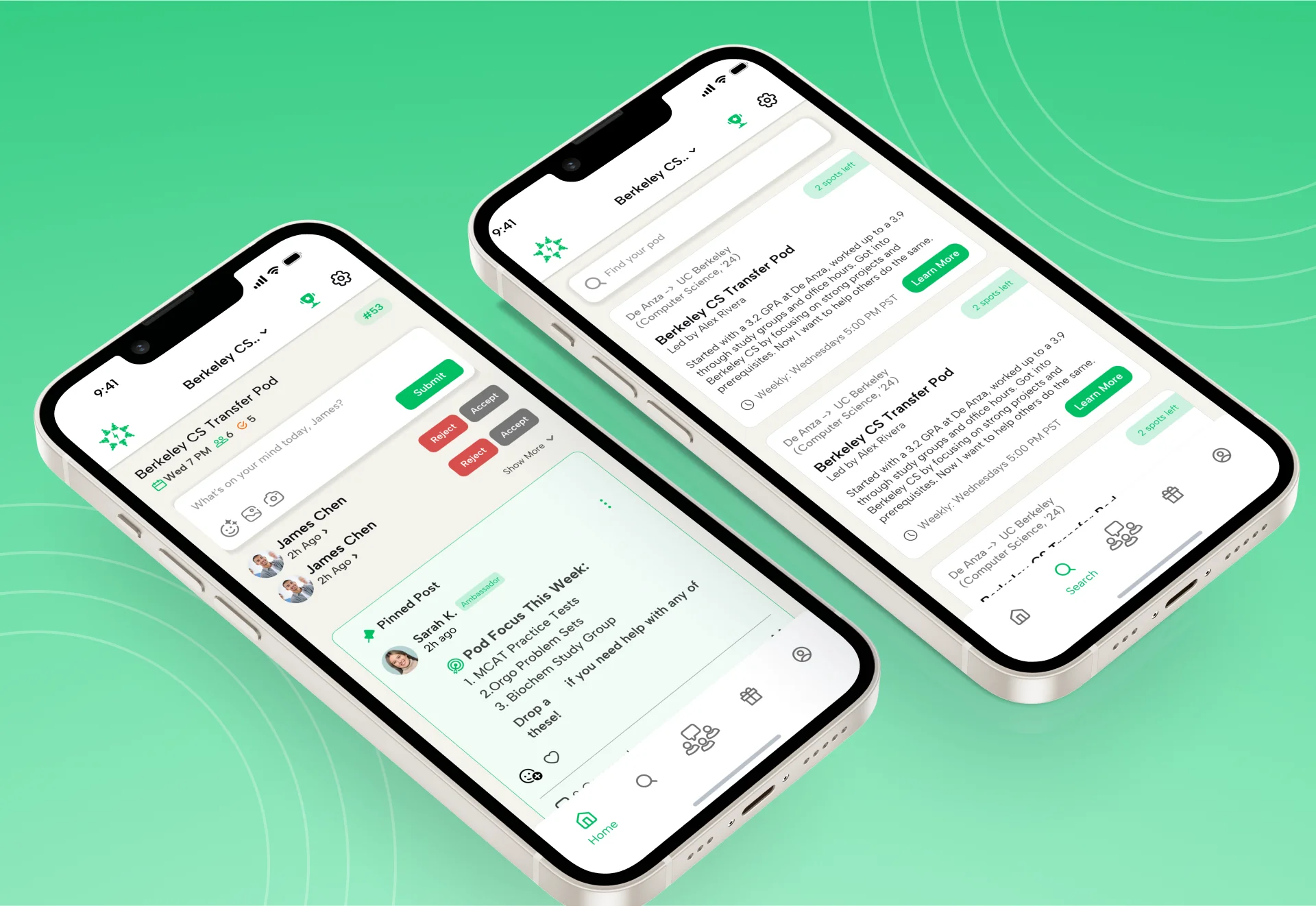
AppMatic Tech designed the Kadō feed as the primary surface for community discovery. Posts, comments, and Pod activity surface in a single unified scroll, with topic filters letting users narrow to the communities most relevant to them. Each feed card links directly into the Pod or post thread, reducing the navigation steps between discovery and participation to a single tap.
Pod Space Screens
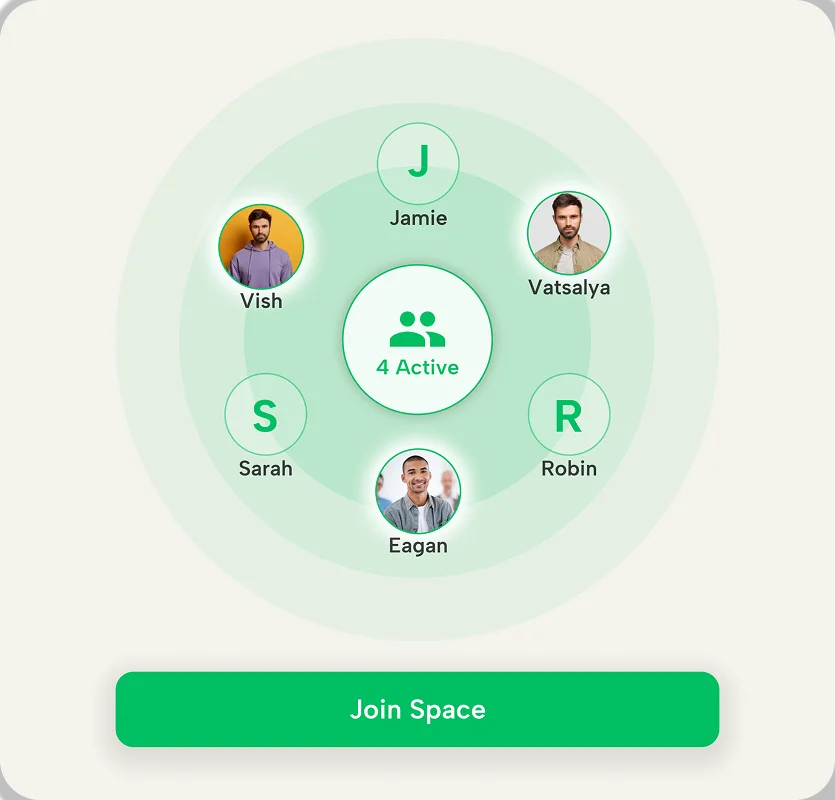
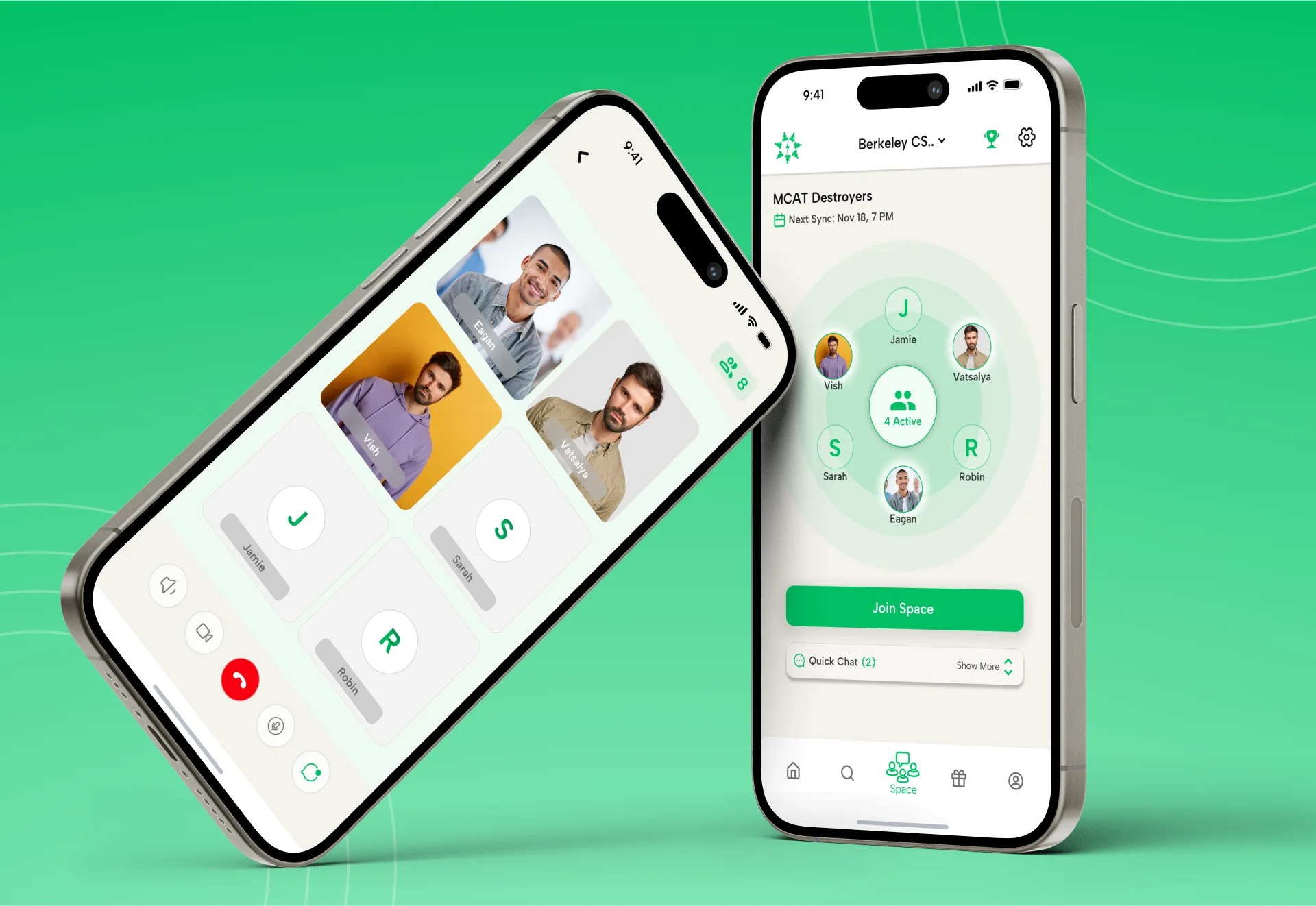
AppMatic Tech engineered the Pod space as the core real-time environment inside Kadō: a persistent room where members join audio and video calls, post to the community thread, and chat alongside live sessions. The in-Pod UI was designed to surface participant presence, active speakers, and community activity simultaneously, so users could move between listening, speaking, and posting without leaving the Pod context.
"AppMatic Tech delivered a product that looked and felt like it came from a much larger team. The Pod calling quality was the thing the founding team was most worried about: AppMatic Tech solved it completely and the UX made it easy for first users to understand the concept immediately."
Kadō Founder

Kadō Project Outcomes
| Metric | Value |
|---|---|
| MVP Delivery | 3 months from zero |
| Platforms Delivered | 4: iOS, Android, Laravel backend, admin panel |
| Audio/Video Call Quality | WhatsApp and Instagram level, verified through concurrent user QA |
| Calling SDK | Twilio: iOS and Android native integration |
| Concurrent Pod Testing | Multi-user concurrent calling validated before launch |
| UX Onboarding | Pod concept learned within first session |
Kadō Tech Stack
- Swift
- Native iOS application development
- Kotlin
- Native Android application development
- Laravel
- Backend APIs, Twilio token generation, and data models
- PHP
- Server-side runtime for Laravel backend
- React
- Super admin panel and moderation dashboard
- Firebase
- FCM push notifications and APNs authentication
- MySQL
- Relational database for users, Pods, posts, and sessions
- Figma
- UI/UX design, prototyping, and developer handoff
- Twilio
- Real-time audio/video Pod calling on iOS and Android
- AWS S3
- Media storage for image and video uploads
- Tailwind CSS
- Admin panel and moderation interface styling
- Postman
- API validation and backend workflow testing
- Google Analytics
- Product usage and engagement measurement
- Latency Testing
- API response time and Twilio call quality benchmarking
- Real-Device Testing
- On-device QA across iOS and Android hardware for Pod and call flows
- Socket.io
- Real-time bidirectional chat inside active Pod spaces
- Jenkins
- Build automation and deployment pipeline




Security Architecture on Kadō
AppMatic Tech implemented layered security across the Kadō iOS and Android apps, Laravel backend, and Twilio calling infrastructure, covering token server authentication, encrypted media transport, content moderation, social login integrity, and upload validation from the first production release.
- Twilio Token Server Authentication
AppMatic Tech built Twilio token generation server-side in Laravel, ensuring no Twilio credentials were stored or transmitted client-side. Every Pod session required a fresh server-issued token, preventing unauthorised access to audio and video channels.
- Encrypted Audio/Video Transport (SRTP + DTLS)
All Pod audio and video streams used Twilio's built-in SRTP and DTLS encryption, ensuring media content was encrypted in transit between all Pod participants with no plaintext audio or video exposure on any network path.
- Content Moderation Architecture
AppMatic Tech built the report and flag pipeline into the Laravel backend from day one, with a dedicated super admin dashboard allowing the moderation team to review flagged content, block users, and remove posts without requiring a backend deployment.
- Social Login Security
All social authentication flows were implemented using platform OAuth standards, with tokens stored securely and session expiry enforced server-side to prevent replay attacks on authenticated Pod sessions.
- Input Validation on Media Uploads
AppMatic Tech implemented server-side validation on all image and video uploads, checking file type, size, and content headers before storage, to prevent malicious file injection through the Kadō media sharing feature.
 Twilio Token Server Authentication
 Encrypted Audio/Video Transport (SRTP + DTLS)
 Content Moderation Architecture
 Social Login Security
 Input Validation on Media Uploads
How AppMatic Tech Delivered Kadō in Three Months
- Discovery and Architecture
AppMatic Tech mapped the Pod interaction model, defined the Twilio SDK integration points for iOS and Android, designed the content data model for posts and comments, and set up the Laravel project structure and super admin scaffolding.
Week 1
- UI/UX Design
AppMatic Tech designed the complete Kadō visual system: Pod discovery, topic browsing, in-Pod calling UI, user profiles, and community management, with an onboarding flow tested to ensure the Pod concept was legible to a first-time user within a single session.
Week 1 to 2 - Core Build: iOS, Android and Backend
AppMatic Tech built the Swift iOS app, Kotlin Android app, and Laravel backend in parallel. Twilio audio/video integration was developed and tested concurrently on both platforms with multi-user concurrent Pod calling as the primary QA benchmark.
Week 2 to 7 - Admin Panel and Integration QA
AppMatic Tech delivered the super admin panel and ran full integration QA across all four systems: Pod creation, Twilio calling, content moderation, push notifications, and deep linking, with concurrent user load testing on Pod sessions.
Week 7 to 9 - Delivery and Handoff
AppMatic Tech delivered production-ready iOS and Android builds, the deployed Laravel backend, and the super admin panel, with complete API documentation and deployment runbooks for the Kadō founding team.
Week 12
Services Behind This Build
Kadō combined native mobile, backend, design, and admin tooling into one real-time social platform. Explore the AppMatic Tech services that map directly to this product build. See the startup software development hub for similar builds.

Explore More Craft
Explore More
Chit Chat
Natta
Build a Social Platform with AppMatic Tech
All projects begin with a no-cost Discovery and Technical Scoping session. Contact the team at contact@appmatictech.com.
Start the Conversation